

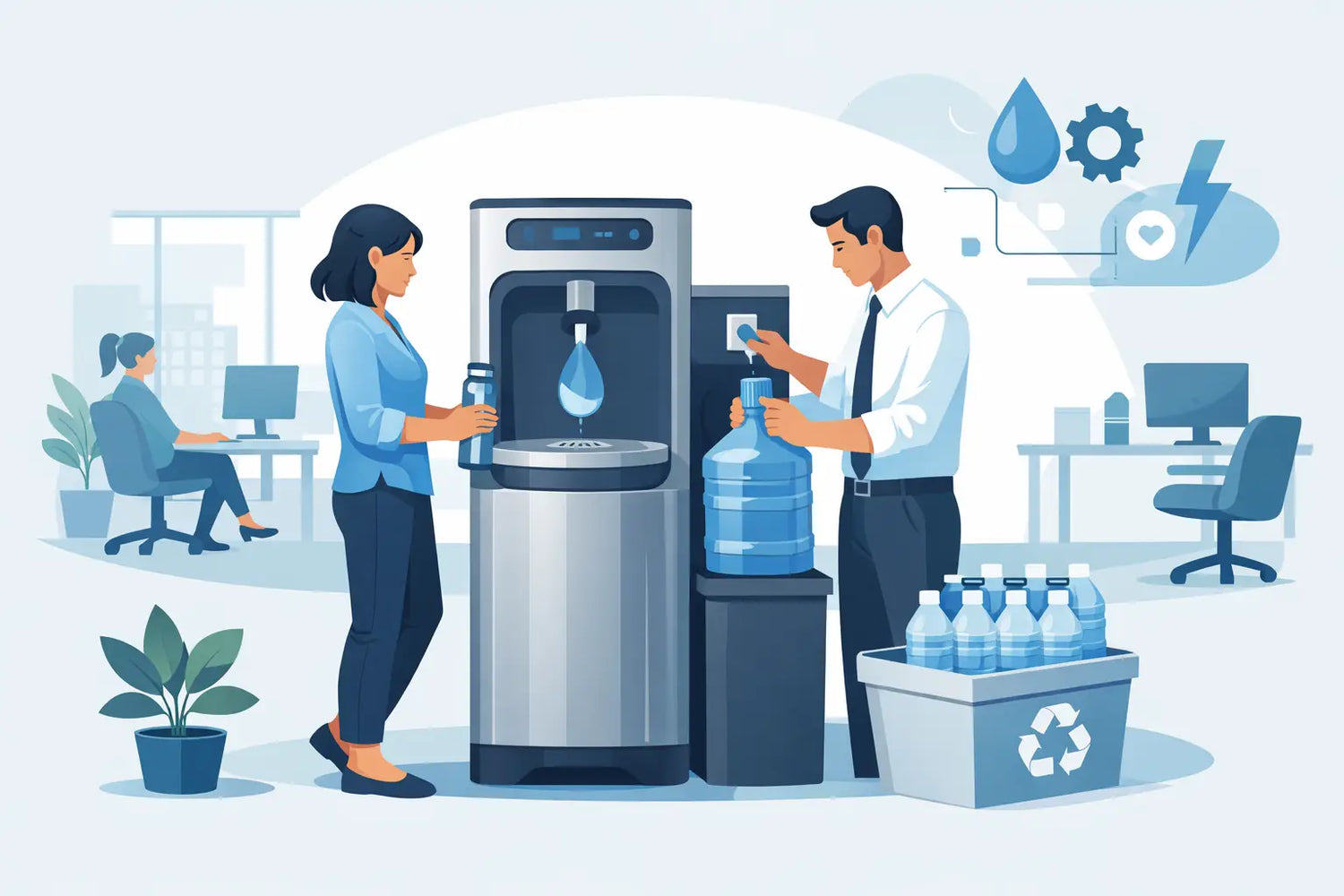
A stack of empty plastic bottles in the break room tells a familiar story: hydration is available, but the experience is not working hard enough. A workplace water refill station gives employees and guests a better everyday option - chilled, filtered water on demand, without the ordering, storage, and waste that come with cases of bottled water.
For facilities and people-experience teams, this is not simply a water upgrade. It is a practical way to make the workplace feel more thoughtful, reduce recurring operational friction, and support the routines that keep people focused throughout the day.
Why bottled water creates more work than it should
Bottled water is convenient until someone has to manage it. Cases take up valuable storage space, deliveries arrive on their own schedule, refrigerators need restocking, and empty bottles quickly fill recycling bins. In busy offices, medical settings, coworking spaces, and dealerships, those small tasks repeat every day.
The cost is not limited to the purchase order. Someone is moving cases, monitoring inventory, handling deliveries, and responding when the supply runs low. Meanwhile, employees may skip hydration when the only cold option is gone or the water cooler is across the building.
A refill station changes the model. Instead of managing individual bottles, your team provides a consistent amenity at the point of use. People bring a reusable bottle, select still or sparkling water where available, and get back to work. The result is less clutter, fewer interruptions, and a more polished employee and guest experience.
What a workplace water refill station should deliver
Not every water solution fits every location. A small professional office may need a compact dispenser for a shared kitchen, while a high-traffic coworking space or hospital waiting area may need a higher-capacity system with multiple drink choices. The right setup starts with how people move through the space and how often they will use it.
Cold, filtered water people actually want to drink
Temperature and taste matter. If water is not reliably cold and appealing, employees will still reach for packaged drinks. Quality filtration and dependable cooling make hydration an easy choice, especially in warm climates such as Miami, Orlando, and Tampa, where cold water is a year-round expectation.
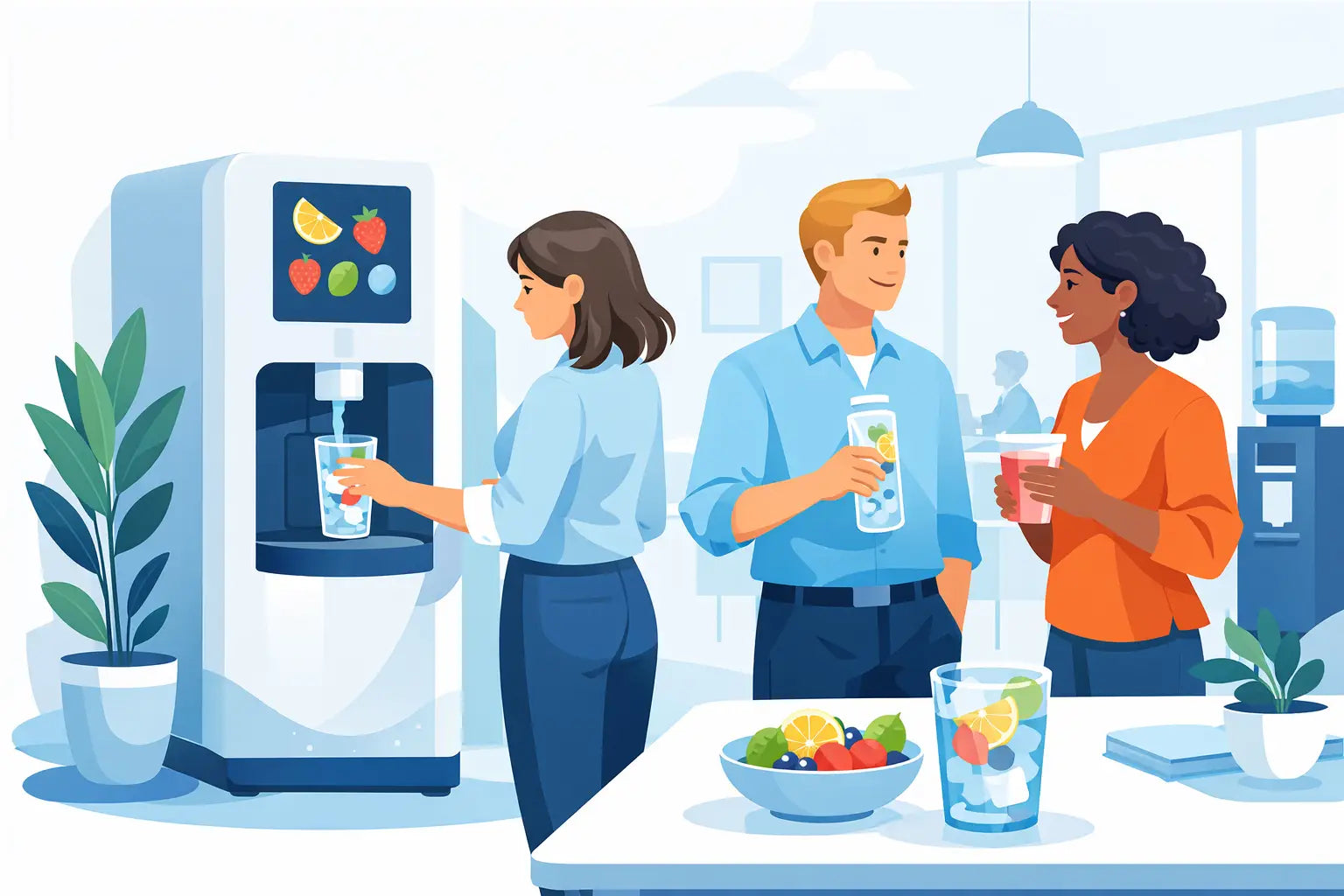
For many workplaces, sparkling water is also worth considering. It gives employees a satisfying alternative to soda or canned drinks and can make a shared beverage area feel more current. Flavor options can add even more variety, but they should support the setting rather than complicate it.
Capacity that matches real traffic
A system that performs well for 25 people may struggle in an office of 150, a busy dealership lounge, or a coworking floor with constant guest traffic. Usage patterns matter as much as headcount. Consider peak periods, shift changes, visitor volume, and whether the station will serve as the primary drinking-water source.
Placement matters too. A refill station hidden in a back hallway will not have the same impact as one near a break room, reception area, collaboration zone, or fitness space. Visibility encourages use, while a thoughtful location prevents traffic bottlenecks.
A finish that belongs in the workplace
Amenities communicate standards. A modern water station can reinforce the same message as a premium coffee system: this workplace is designed for the people who spend time here. Clean lines, intuitive controls, and a professional installation matter, particularly in client-facing environments.
For residential buildings, hospitality-minded offices, and automotive dealerships, the station also becomes part of the guest experience. Offering a cold, filtered drink while someone waits is a simple gesture, but it makes the space feel more considered.
The business case goes beyond bottle waste
Reducing single-use bottles is an immediate benefit, but it is not the only reason to invest. A workplace water refill station can simplify procurement and support a healthier workplace culture without placing another management task on your facilities team.
When hydration is easy, employees are more likely to take short, useful breaks rather than leave the building to buy drinks. That matters during long meetings, busy service shifts, and afternoons when energy drops. It also makes an office more appealing for employees who expect thoughtful, sustainable amenities from their workplace.
The financial picture depends on current bottled-water volume, the type of system selected, installation requirements, and service coverage. A refill solution will not eliminate every beverage expense, especially if your workplace keeps bottled drinks for events or guests. But it can reduce the routine dependence on cases of water while creating a more reliable daily experience.
There is also an operational advantage in consolidating service. When coffee, water, and ice needs are managed through coordinated workplace beverage support, teams spend less time chasing separate vendors and more time focused on the workplace itself.
Choosing the right station for your space
Start with the people using it, not the equipment catalog. Ask how many employees and visitors need access, when demand peaks, where water is currently consumed, and what frustrations your team hears most often. Those answers guide a setup that feels intentional instead of undersized.
A compact filtered-water dispenser can be an excellent fit for a smaller office or executive suite. Larger organizations may benefit from a freestanding station in a central common area, especially when sparkling or flavored water can reduce demand for packaged beverages. In a healthcare environment, sanitation practices, accessibility, and high-volume reliability deserve extra attention. In a dealership, a guest-facing solution may need to look as strong as it performs.
Before installation, evaluate water access, drainage needs where applicable, electrical requirements, available floor or counter space, and traffic flow. This is where an experienced provider adds value. The best machine on paper is not the best choice if it creates a queue, conflicts with the layout, or becomes difficult to service.
Service determines whether the amenity stays valuable
A refill station should feel effortless to the people who use it and to the team responsible for the building. That means installation should be planned around the space, and ongoing care should be clear from the start.
Filter changes, sanitation, maintenance, and responsive support are not secondary details. They protect water quality, equipment performance, and employee confidence. If a system is out of service for days, people return to buying bottles and the benefit disappears quickly.
The Coffee Corp designs managed beverage programs around each location's space and consumption needs, including water and ice solutions alongside premium bean-to-cup coffee. For workplace leaders, that creates a simpler path to an elevated break room or guest area without adding another inventory burden to the day.
Make hydration part of the workplace experience
A refill station has the greatest impact when employees understand it is there for them. Introduce the new amenity clearly, encourage reusable bottles, and place it where it naturally fits the rhythm of the workplace. A simple sign or launch message can be enough to build awareness without turning hydration into a campaign.
It also helps to think beyond the break room. A station near a meeting area can keep long sessions moving. One near reception can support visitors. In a coworking environment, it can become a useful shared amenity that adds value without creating waste. The best location is the one that makes a better choice the easiest choice.
A workplace that serves great coffee should make great hydration just as easy. When cold, filtered water is always within reach, employees and guests feel the difference in the moments that make up their day.


Leave a comment
This site is protected by hCaptcha and the hCaptcha Privacy Policy and Terms of Service apply.