
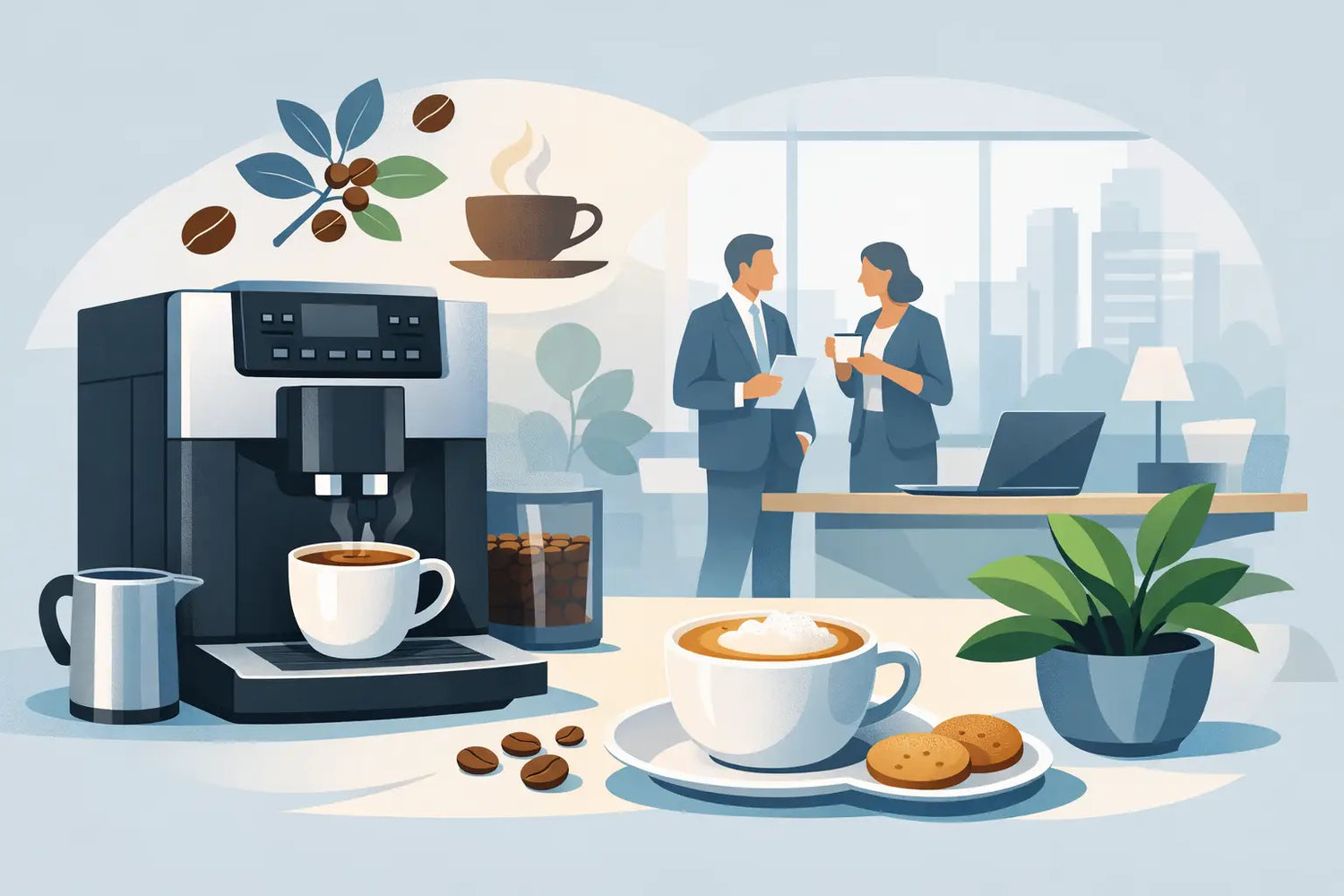
At 8:45 a.m., the office coffee station is already telling employees something about the workday ahead. Empty pods, weak coffee, a broken brewer, or a line at the break room sends the wrong message. Bean to cup coffee for offices changes that daily moment into a reliable workplace amenity: freshly ground coffee, personalized drinks, and a better reason for people to gather before the calendar fills up.
For office managers, facilities teams, and people-experience leaders, the goal is not to become a coffee expert. It is to provide an experience that works. The right coffee program should make employees feel considered, welcome clients with confidence, and remove the supply ordering, equipment troubleshooting, and waste management that often come with traditional break room coffee.
Why Bean to Cup Coffee for Offices Is Different
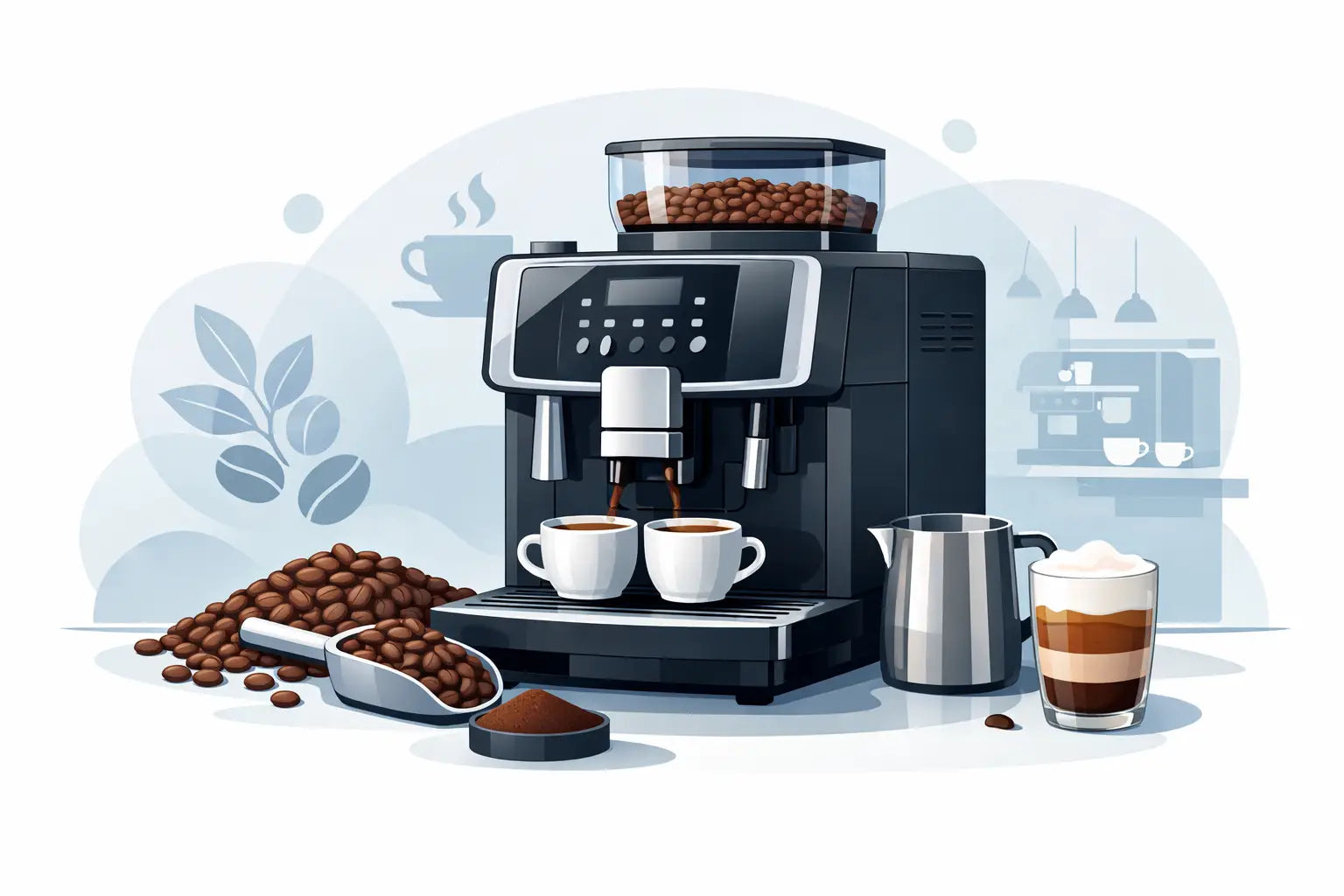
A bean-to-cup machine grinds whole beans for each drink, then brews it on demand. That simple difference matters. Coffee is not ground days or weeks before someone drinks it, and employees are not limited to whatever was made in a shared pot an hour ago.
Professional bean-to-cup systems can prepare espresso, coffee, cappuccinos, lattes, americanos, and other favorites in under a minute. Employees choose what they want, press a button, and return to work with a drink that feels made for them rather than dispensed as an afterthought.
This is especially valuable in offices where preferences vary. One person wants a strong espresso before a client call. Another wants a latte in the afternoon. A visitor may prefer decaf. A quality system accommodates those moments without requiring someone to stock a café counter or learn barista skills.
The experience also has a cultural benefit. Great coffee creates natural points of connection. It brings people out of individual workspaces, gives teams a reason to pause together, and makes the office feel more intentional on the days employees choose to come in. That does not replace a strong workplace culture, but it supports one in a practical, visible way.
Fresh Quality Without the Office Chores
Many workplace coffee programs fall short because ownership is unclear. Someone has to notice that pods are running low, filters need changing, milk is missing, or the machine has stopped working. That work often lands on an office manager, executive assistant, or facilities team already handling higher-priority responsibilities.
A managed bean-to-cup program shifts that burden away from the workplace. It combines the machine, premium whole beans, consumables, cleaning support, preventive care, and maintenance into one service. Instead of reacting to a problem after employees complain, the program is built around keeping the station ready for use.
The Coffee Corp pairs fully automatic machines with 100% premium Colombian whole beans and a pay-per-cup service model. There are no rental fees, and supplies and maintenance are included. For decision-makers, that means a clearer path to premium coffee without adding another piece of equipment to manage internally.
There is a meaningful distinction between buying a machine and operating a coffee program. Purchasing equipment may look less expensive at first, particularly for a smaller office. But the total experience includes beans, milk options, cleaning tablets, service visits, replacement parts, downtime, and the staff time spent coordinating it all. A managed program can make those costs and responsibilities easier to control.
Better for Guests, Teams, and Everyday Operations
Coffee service is often most visible when a guest arrives. A polished machine in a reception area, conference room, dealership lounge, or coworking common area communicates that details matter. It gives clients and visitors a choice beyond a disposable pod or a pot that has been sitting on a warmer.
For automotive dealerships, a high-quality drink can make a service appointment or purchase discussion more comfortable. In hospitals and healthcare settings, dependable coffee gives staff and visitors a welcome source of comfort during long shifts and difficult days. In residential buildings, a premium beverage station can strengthen common spaces and add value to the resident experience.
The setup should match the location, not force every location into the same solution. A compact office with 25 employees may need a straightforward machine near the kitchen. A busy coworking space may need a higher-capacity system built for continuous use. A multi-floor workplace may benefit from more than one station so employees are not walking across the building for a cup of coffee.
Consumption patterns matter too. Consider the number of people using the machine, peak demand periods, the drink menu employees expect, available counter space, plumbing access, and whether the station serves employees only or also welcomes guests. These details determine whether the experience feels effortless or becomes a bottleneck at 9 a.m.
Less Capsule Waste, More Thoughtful Service
Single-serve pods made office coffee convenient, but that convenience comes with trade-offs. Capsules create a steady stream of waste, require constant reordering, and often limit coffee quality and drink flexibility. Even recyclable options depend on employees separating and handling them correctly.
A capsule-free bean-to-cup approach reduces that packaging burden by using whole beans. It also lets organizations offer fresh coffee without keeping shelves full of assorted pods. For facilities and sustainability-minded teams, fewer disposable components can make the break room easier to maintain and better aligned with broader waste-reduction goals.
Sustainability is not only about the cup or the bean. It is also about avoiding unnecessary replacements, keeping equipment maintained, and choosing a service partner that helps the machine perform over time. Regular care protects the quality of each beverage and extends the useful life of the equipment.
That said, bean-to-cup is not automatically the right answer for every setting. A very low-traffic office that only wants basic drip coffee may not need a high-capacity professional system. Likewise, a location without a practical space for milk storage or machine service may need a different configuration. The best decision starts with how people actually use the space, not with a one-size-fits-all equipment list.
What to Look for in an Office Coffee Partner
The machine matters, but it is only one part of the decision. A strong office coffee partner should help you choose a system based on your space, beverage volume, and desired experience. It should also provide clear accountability when something needs attention.
Look for fresh whole-bean coffee, a drink menu that fits your team, and equipment designed for professional demand. Ask how maintenance works, how quickly service issues are addressed, what consumables are included, and whether pricing is predictable. If employees want dairy alternatives, decaf, or specialty drinks, confirm how those needs will be supported before the machine arrives.
A free demo is valuable because coffee is sensory. Your team can taste the drinks, see the equipment footprint, and understand how quickly the machine works. It also gives decision-makers a chance to assess the real user experience: Is the display intuitive? Can a first-time visitor make a drink without help? Does the machine fit the level of hospitality the workplace wants to provide?
For organizations managing several amenities, the opportunity is even broader. Coffee can be planned alongside water and ice coolers or flavored-water systems, creating one coordinated beverage experience instead of multiple vendors, invoices, and service schedules. That approach simplifies the back end while giving employees more reasons to stay hydrated and energized throughout the day.
Make the Break Room Earn Its Space
The best office amenities do more than fill a corner. They support the pace and personality of the workplace. A bean-to-cup coffee station can turn an underused break room into a place for a quick reset, an informal conversation, or a more welcoming start to a client meeting.
When evaluating the next upgrade, focus on the experience people will have every day: fresh coffee, real choice, fast preparation, and no surprise shortage of supplies. Choose a program that takes the maintenance and inventory burden off your team, then let the coffee station do what it should do - help people feel ready for what is next.

Leave a comment
This site is protected by hCaptcha and the hCaptcha Privacy Policy and Terms of Service apply.