
The difference between an office coffee station people tolerate and one they actively use often comes down to one moment: the first cup of the morning. A fully automatic commercial coffee machine with grinder turns that moment into a fresh, consistent experience without asking an office manager to become a barista, technician, or supply coordinator.
For workplaces, residential buildings, hospitals, dealerships, and coworking spaces, coffee is more than a breakroom extra. It is a daily point of hospitality and a practical way to support focus, conversation, and employee satisfaction. The right machine makes premium coffee available in under 60 seconds. The right service model makes it easy to keep that promise every day.
What a fully automatic commercial coffee machine does
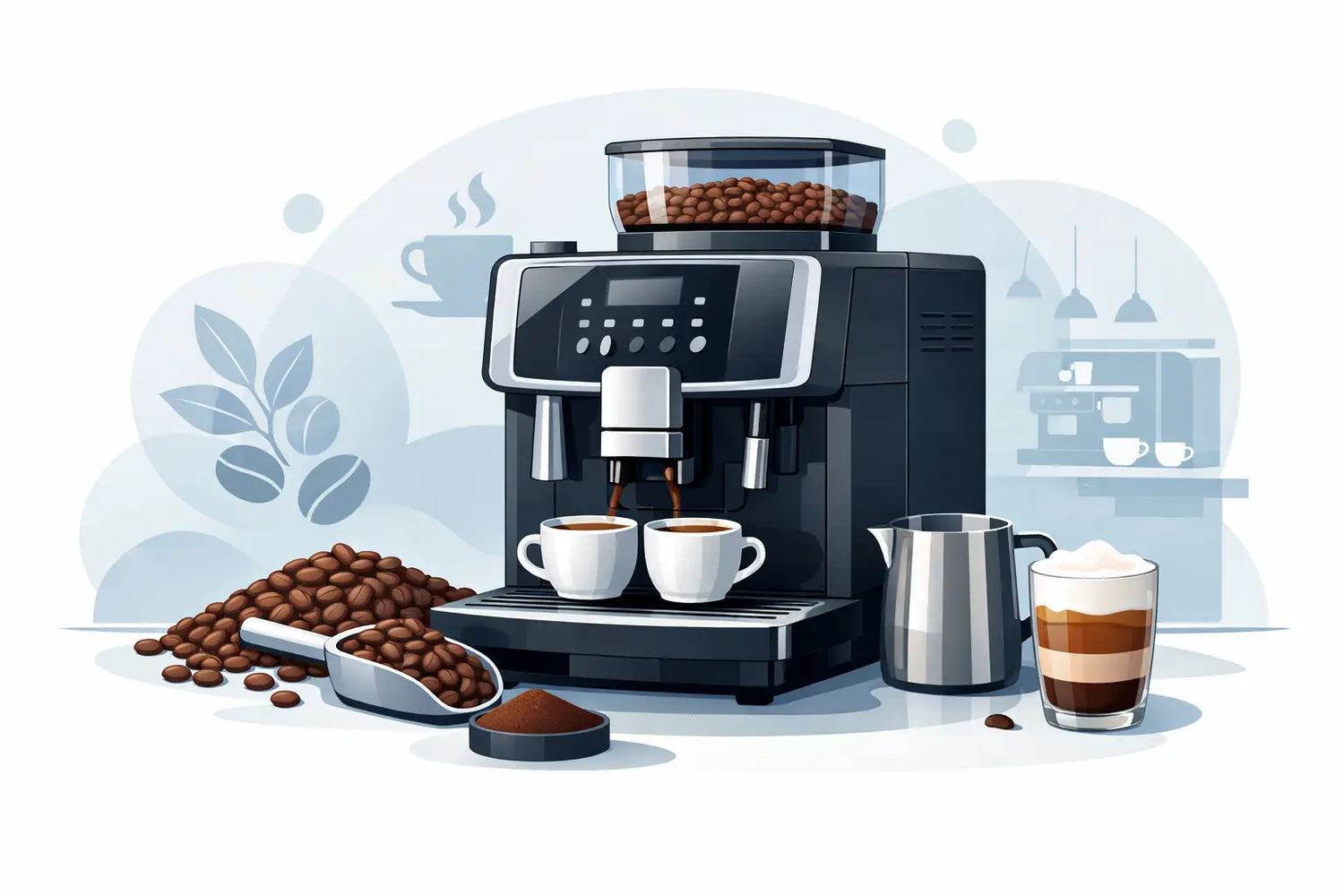
A fully automatic commercial coffee machine handles the full drink-making process at the touch of a screen or button. It grinds whole beans for each beverage, doses the coffee, brews it, and, on milk-capable models, prepares milk-based drinks such as cappuccinos and lattes. After brewing, it manages internal rinsing cycles to help keep the system ready for the next cup.
That is different from a traditional drip brewer, which can leave coffee sitting in a pot, and from a pod system, which relies on pre-portioned capsules. Fresh grinding gives each drink more aroma and flavor, while bean-to-cup technology gives users menu choice without adding counter clutter or a complicated workflow.
Commercial-grade equipment is designed for repeat use throughout the day. That matters when the lobby gets busy at 8:30 a.m., when a sales team needs coffee between client meetings, or when a hospital staff lounge has demand around the clock. Consumer machines may look polished, but they are rarely built for that kind of volume or for the service expectations of a shared workplace.
Why the built-in grinder changes the experience
Whole beans protect coffee better than pre-ground coffee. Once coffee is ground, exposure to air begins to reduce the aromatic qualities that make a cup taste fresh. A built-in grinder works on demand, producing grounds moments before brewing rather than relying on a bag that was opened days or weeks ago.
For the people using the machine, the result is simple: a more flavorful cup and a stronger coffee aroma in the space. For the person managing the amenity, the benefit is consistency. Employees and guests receive the same quality whether they choose an espresso, an Americano, a coffee, or a milk-based drink.
The grinder also supports a capsule-free approach. Instead of filling trash bins with single-use pods, a bean-to-cup program uses whole coffee beans and produces spent grounds. That can reduce visible waste in high-traffic breakrooms and support sustainability goals without limiting drink choice.
Fresh coffee without more work for your team
The main question is not whether a machine can make a good coffee. Many can. The better question is who will keep the program supplied, cleaned, calibrated, and working when demand is highest.
An unattended equipment purchase can shift a surprising amount of work to internal staff. Someone has to monitor beans and milk, order ingredients, resolve drink-quality issues, arrange repairs, and figure out what to do when the machine shows an error during a client visit. Those tasks may be small individually, but they add up quickly.
A managed coffee program changes that equation. Rather than treating equipment as a one-time purchase, it combines the machine, premium whole beans, consumables, maintenance, and ongoing care into one workplace service. The Coffee Corp designs that service around the location, expected beverage volume, available counter space, and the drinks people actually want.
For many organizations, a pay-per-cup model creates a more practical path than equipment ownership or rental. There is no rental fee to account for, and costs are tied to actual use. It gives decision-makers a clear way to offer a premium amenity while avoiding the uncertainty of separate equipment, supply, and repair expenses.
Choosing a fully automatic commercial coffee machine with grinder
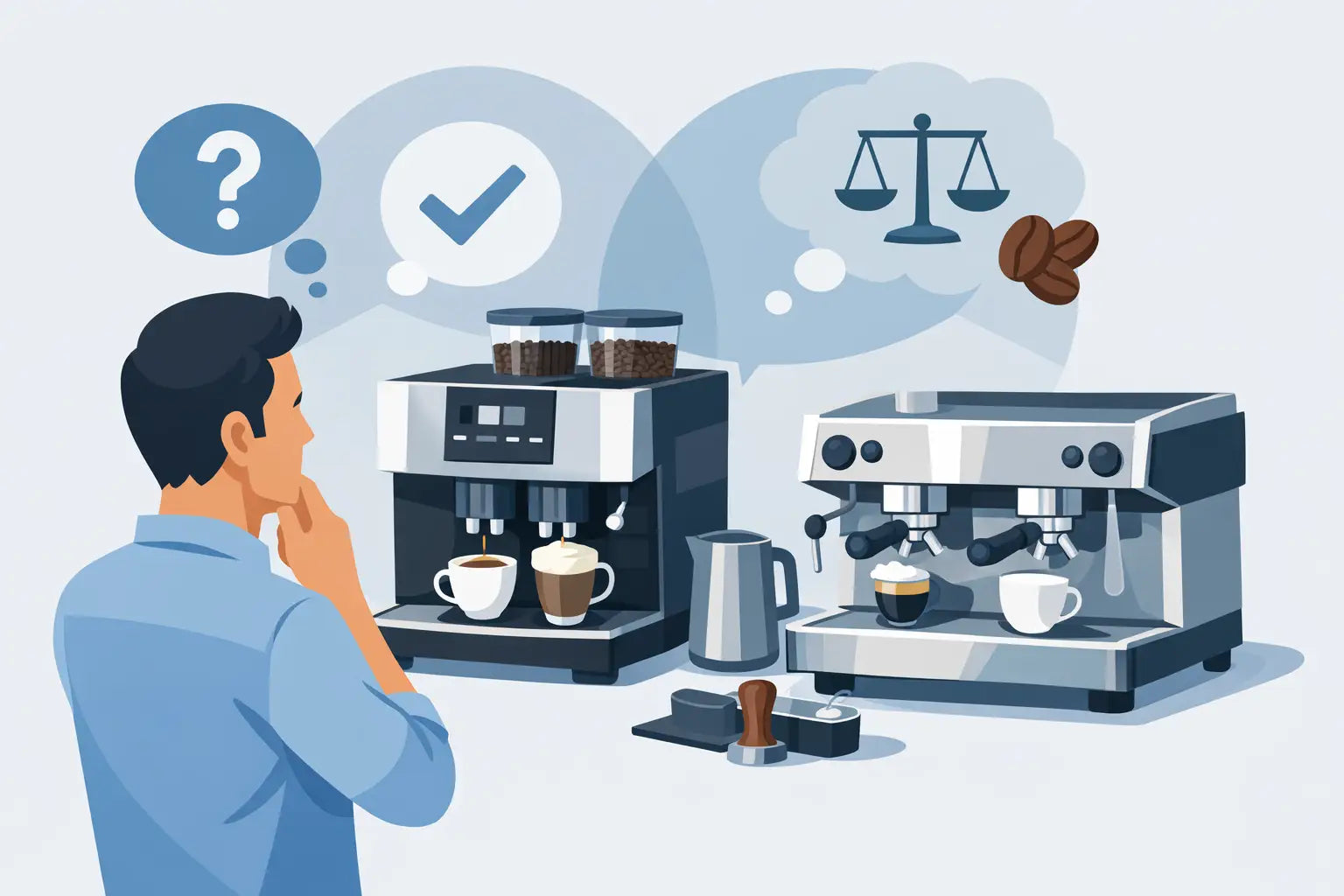
The best machine is not always the largest machine or the one with the longest drink menu. It depends on how many people will use it, how quickly they need drinks, and what role the coffee station plays in the workplace.
Start with real demand, not headcount alone
A 75-person office where most employees work remotely may need less capacity than a 30-person dealership with customers in the waiting area all day. Consider peak periods as well as total cups. If everyone arrives within the same 30-minute window, speed and capacity become more important than they would in a location with steady traffic.
Menu preferences matter, too. A team that mainly drinks black coffee has different needs from a workplace where lattes, cappuccinos, hot chocolate, and decaf options are part of the everyday routine. The goal is to provide choice without paying for features that will sit unused.
Plan for the physical space
A commercial coffee station needs more than a place on the counter. It may require convenient access to water, drainage, power, and space for beans, cups, and ingredients. Noise can also be relevant. A grinder is part of the fresh-bean experience, but placement matters in quiet reception areas, executive spaces, and healthcare settings.
A site review helps avoid the common mistake of choosing a machine first and working through installation constraints later. The most effective setup fits naturally into the traffic flow of the office, lounge, or guest area and gives users enough room to make a drink without creating a line across the breakroom.
Look at service coverage before comparing features
A touchscreen, drink customization, and attractive design are valuable, but they do not replace responsive service. Ask how cleaning is handled, how supplies are replenished, what maintenance is included, and what support looks like if a machine needs attention.
For locations in Miami, Orlando, Tampa, and Raleigh, local service coverage can be as important as the equipment specification. A good coffee program should feel dependable to the people using it and low-effort to the people responsible for it.
The workplace benefits are visible every day
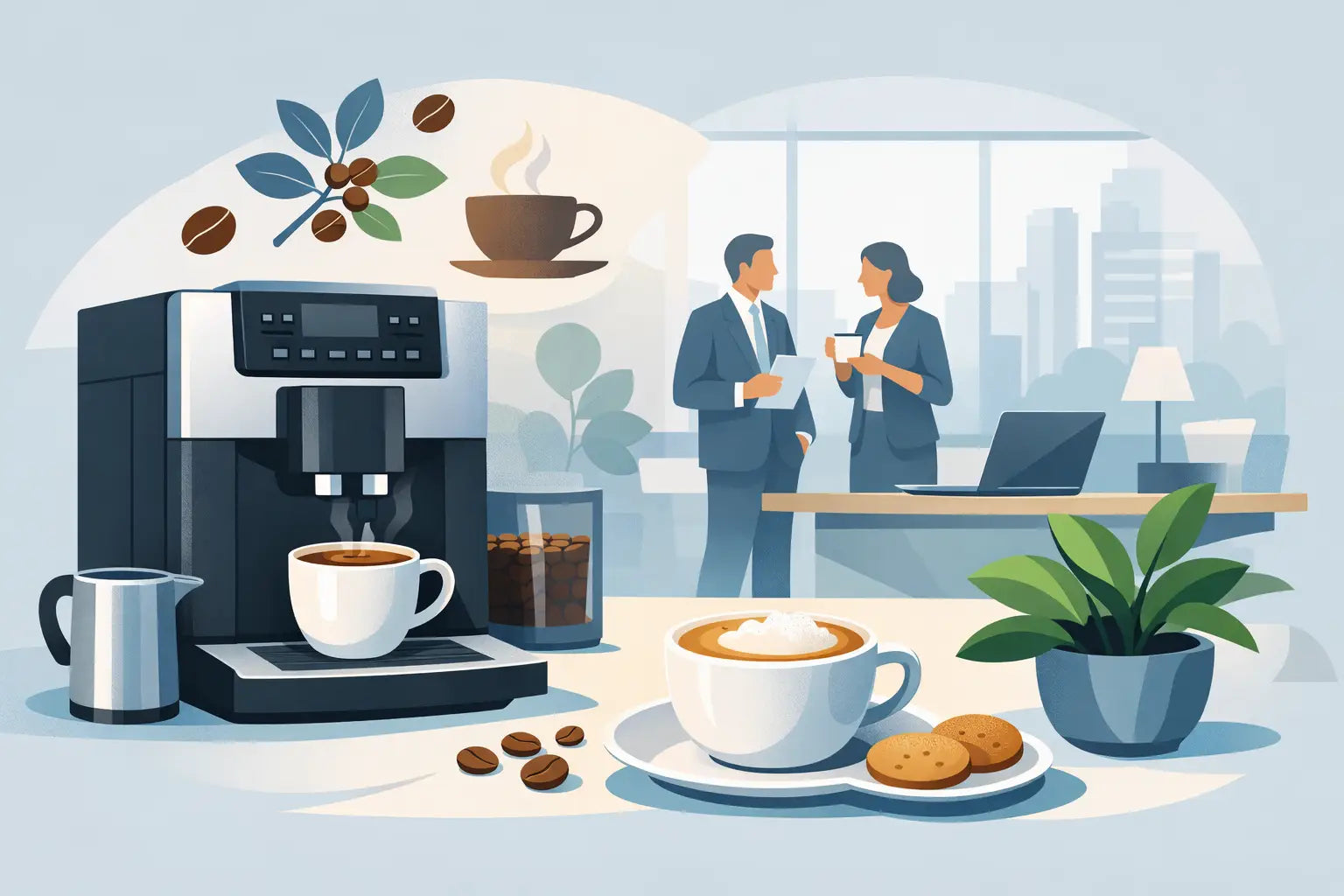
Coffee earns its place as a workplace amenity because it meets people where they are. It gives employees a reason to step away from their desks for a few minutes, creates natural moments of connection, and helps visitors feel considered from the moment they arrive.
In a client-facing environment, a fresh espresso or cappuccino can make a waiting room, showroom, or conference room feel more polished. In an office, it can reduce the daily stream of coffee runs and give teams a convenient option that feels better than a breakroom pot. In a residential building or coworking space, it becomes a service residents and members notice without needing an introduction.
There is also a practical productivity benefit. When drinks are fast, familiar, and available on-site, employees spend less time leaving the building for coffee and more time returning to work ready to focus. The value is not just in the cup. It is in the friction removed from the day.
A premium amenity should not create a maintenance project
The strongest coffee programs pair quality equipment with a plan for keeping it at its best. Freshly ground premium Colombian beans, customized drink settings, and fast preparation make the first impression. Regular care, supply management, and service support are what protect that impression over time.
Before committing, watch a machine in action with your own team’s needs in mind. Notice the drink speed, menu clarity, noise level, cleanup requirements, and how the station would fit your space. A short on-site demo can reveal more than a feature sheet and help you create a coffee experience people will look forward to using tomorrow morning.

Leave a comment
This site is protected by hCaptcha and the hCaptcha Privacy Policy and Terms of Service apply.