
A coffee machine can be one of the busiest pieces of equipment in your workplace - or one of the most frustrating. When drinks are slow, inconsistent, or unavailable, employees notice. So do clients, residents, patients, and guests. The right system makes premium coffee an easy part of the day. The wrong one creates supply orders, cleanup, downtime, and complaints.
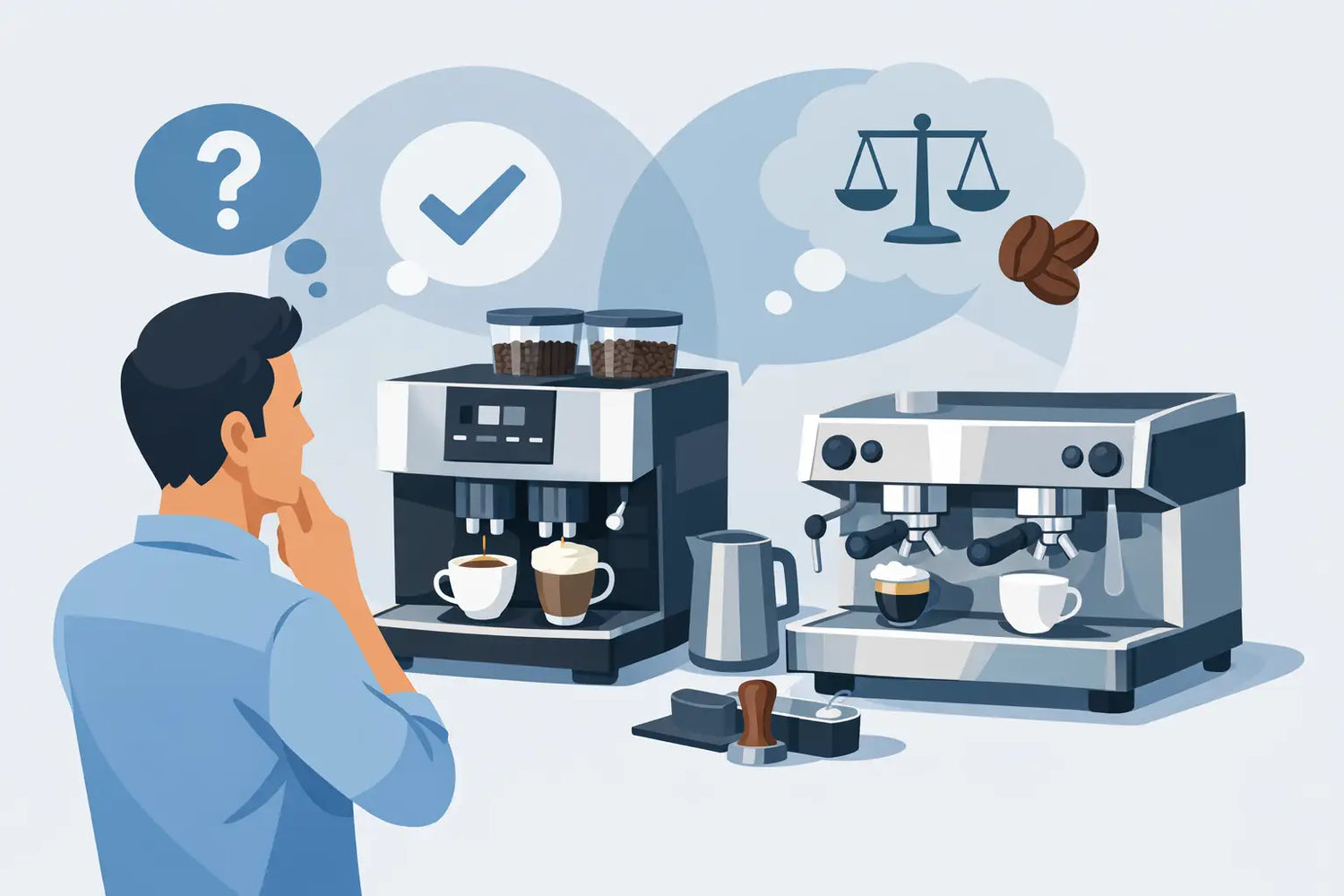
Knowing how to choose a commercial coffee machine starts with looking beyond the machine itself. The best fit is based on who uses it, how often they use it, where it will sit, and how much management your team is willing to take on.
Start with daily cup volume, not headcount
Headcount is a useful starting point, but it is not the same as demand. A 75-person office with hybrid schedules may serve fewer drinks than a 30-person automotive dealership with a steady flow of customers and a sales team on site all day. A coworking space may see concentrated demand during morning arrivals and afternoon meetings. A hospital break room can need reliable service around the clock.
Estimate the number of cups you expect to serve on an average weekday, then think about peak periods. A machine that can handle total daily volume but slows down during the 8:30 a.m. rush will still feel undersized.
For a smaller office, a compact bean-to-cup system may be enough. For a high-traffic lobby, large workplace, or shared amenity area, capacity matters more: larger bean hoppers, water connections, waste containers, and faster drink preparation keep the experience moving. Look for a machine that can produce customized drinks in under a minute without requiring a staff member to operate it.
Match the machine to the people using it
Commercial coffee equipment should serve the audience in front of it, not an abstract idea of what a coffee bar should be. In most workplaces, users want quality and choice without a learning curve.
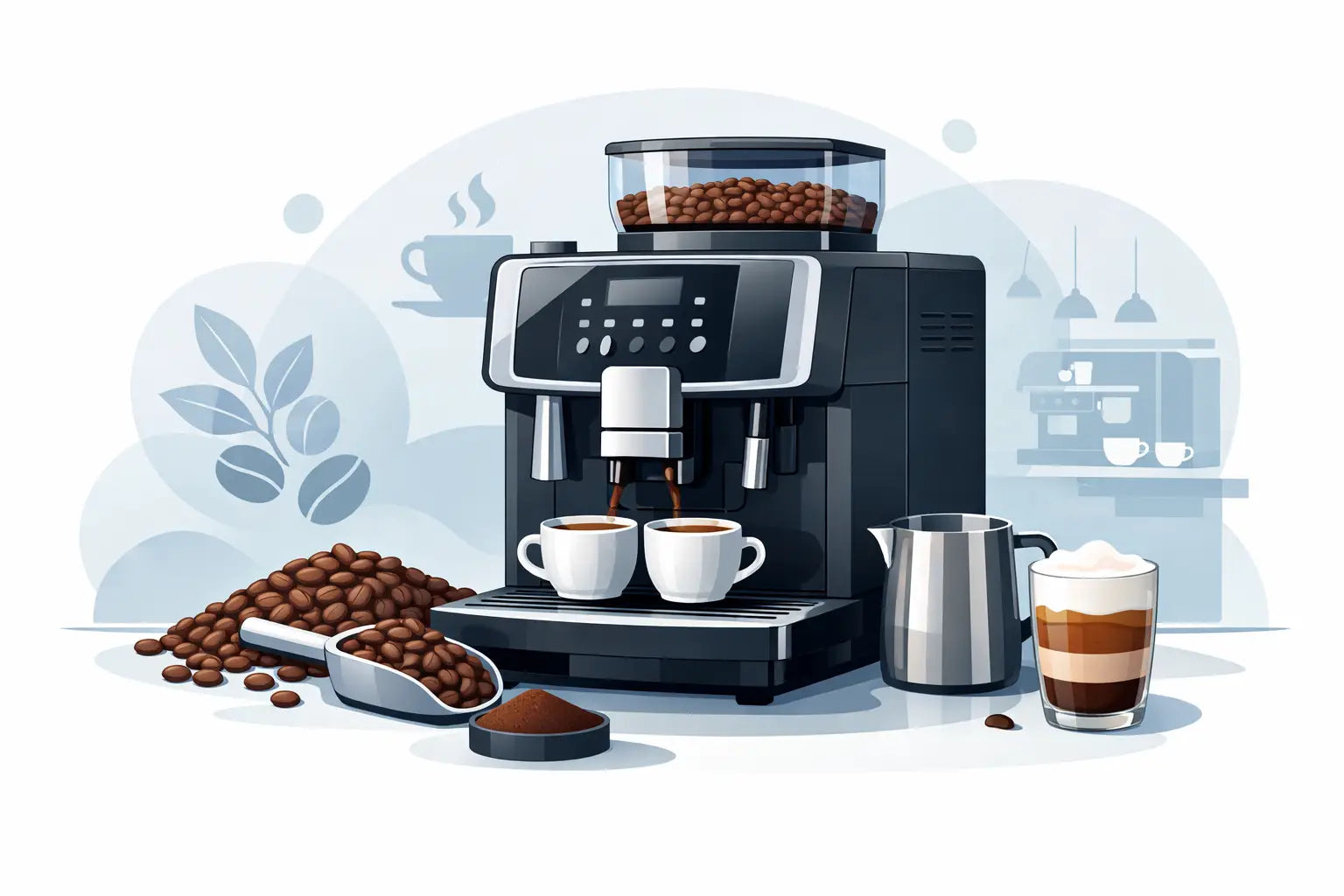
A fully automatic bean-to-cup machine works especially well where self-service matters. With fresh whole beans ground for each drink, users can select espresso, coffee, cappuccino, latte, or other favorites with a few touches. This offers a more polished experience than a traditional drip brewer while avoiding the training, pacing, and cleanup associated with a staffed espresso setup.
Think about the mix of drinkers, too. If your workplace has a strong black-coffee culture, prioritize brewing capacity and bean quality. If employees and guests regularly choose milk-based drinks, evaluate the milk system carefully. Fresh milk can deliver a premium café-style result but requires refrigeration and a disciplined cleaning routine. Powdered or shelf-stable milk options can reduce handling in some environments, though they may not match the flavor and texture expectations of every audience.
The best option depends on your standards, traffic, and operational preference. A machine should make the drinks people actually order, not simply offer the longest menu.
Consider the space and utility requirements early
A commercial coffee machine needs more than counter space. Before choosing equipment, assess the full installation area: countertop depth, clearance above the machine, access for refilling and service, nearby power, water supply, drainage, and ventilation if applicable.
Plumbed-in systems are often the practical choice for busy workplaces. They remove the need to refill water reservoirs and help maintain consistent service throughout the day. However, they require access to a water line and, in some cases, a drain. A tank-fed machine can be more flexible where plumbing is unavailable, but someone must monitor and refill it.
Placement affects adoption. Put the machine where people naturally gather, such as a break room, kitchen, amenity lounge, sales floor, or reception area. At the same time, avoid creating a bottleneck. A popular coffee station needs room for people to select a drink, wait briefly, add a lid or sweetener, and move on without blocking a hallway or work surface.
For offices, residential buildings, and coworking locations in Miami, Orlando, Tampa, or Raleigh, water quality and building infrastructure can vary. A site assessment before installation helps prevent surprises and ensures the equipment suits the location, not just the brochure.
Compare bean-to-cup, pods, and traditional brewers honestly
Each commercial coffee format has a place, but the trade-offs are clear.
Traditional drip brewers can serve a lot of black coffee quickly. They are familiar and may have a lower upfront equipment cost. But coffee can sit on a warmer, lose freshness, and offer limited personalization. They also require employees to brew, monitor, clean, and replenish pots throughout the day.
Single-serve pod machines are convenient and familiar, particularly in low-volume settings. Their limitations become more obvious as usage grows: pod inventory, packaging waste, inconsistent drink strength, and a less elevated guest experience. A busy location can go through boxes of capsules quickly.
Fully automatic bean-to-cup machines occupy a strong middle ground for many professional environments. They prepare fresh coffee from whole beans on demand, offer a range of drinks, and eliminate disposable capsules. The key is choosing a commercial-grade unit designed for your expected traffic, rather than placing a consumer machine in a high-use break room and hoping it keeps up.
Evaluate the total management burden
The purchase price is only one line in the cost of a coffee program. The bigger question is who owns the work after installation.
A machine may appear affordable until your office manager is ordering beans, milk, cups, cleaning products, filters, and replacement parts from separate vendors. Add time spent troubleshooting errors, coordinating repairs, refilling supplies, and responding when the machine is out of service. That hidden workload can quickly outweigh a lower equipment price.
Ask every provider what is included and what is not. Clarify who supplies coffee and consumables, handles cleaning guidance, performs preventive maintenance, responds to service calls, and replaces equipment when needed. Also ask whether there are rental fees, minimums, long-term commitments, or unexpected charges for repairs.
A managed pay-per-cup model can be a practical fit for organizations that want a premium coffee experience without managing a mini café. It aligns costs more closely with use while keeping equipment, beans, service, and maintenance in one program. For facilities teams and workplace leaders, that simplicity is often as valuable as the coffee itself.
Prioritize reliability and service coverage
When a machine is used every day, downtime is not a minor inconvenience. It affects morning routines, meeting hospitality, employee perception, and the impression you make on visitors. Reliability should be a procurement requirement, not an afterthought.
Look for commercial equipment with clear capacity specifications, automatic cleaning functions, intuitive alerts, and a provider that can service your area. Ask practical questions: What happens when the machine needs attention? How quickly can a technician respond? Is preventive maintenance included? Will your team receive basic guidance on daily care?
Technology helps, but support matters just as much. A high-quality machine with no dependable service plan can become a headache. A well-supported system turns coffee from another facility task into an amenity that runs in the background.
Make sustainability part of the decision
Workplace coffee creates waste in more places than people expect: capsules, cups, lids, stirrers, packaging, stale pots of coffee, and discarded product. A capsule-free bean-to-cup program can reduce one of the most visible waste streams while delivering fresher coffee.
Sustainability is not only about waste. It is also about using equipment that matches demand. An oversized setup can consume more energy and take up valuable space. An undersized machine can lead to frequent restocking and premature wear. The right machine produces what people want, when they want it, with less product and packaging left behind.
Choose a program that can grow with your workplace
Your needs may change after a move, renovation, hiring push, or shift in how people use the office. Choose a provider that can adjust the setup as traffic changes, whether that means adding another machine, upgrading capacity, expanding drink choices, or pairing coffee with filtered water and flavored-water options.
The Coffee Corp approaches commercial coffee as part of the workplace experience, not as a standalone appliance. That means designing the system around your space, beverage volume, and hospitality goals, then supporting it with premium Colombian whole beans, maintenance, and supplies.
A great commercial coffee machine should not make your team coffee experts. It should give employees and guests a consistently good reason to pause, recharge, and get on with their day.


Leave a comment
This site is protected by hCaptcha and the hCaptcha Privacy Policy and Terms of Service apply.