
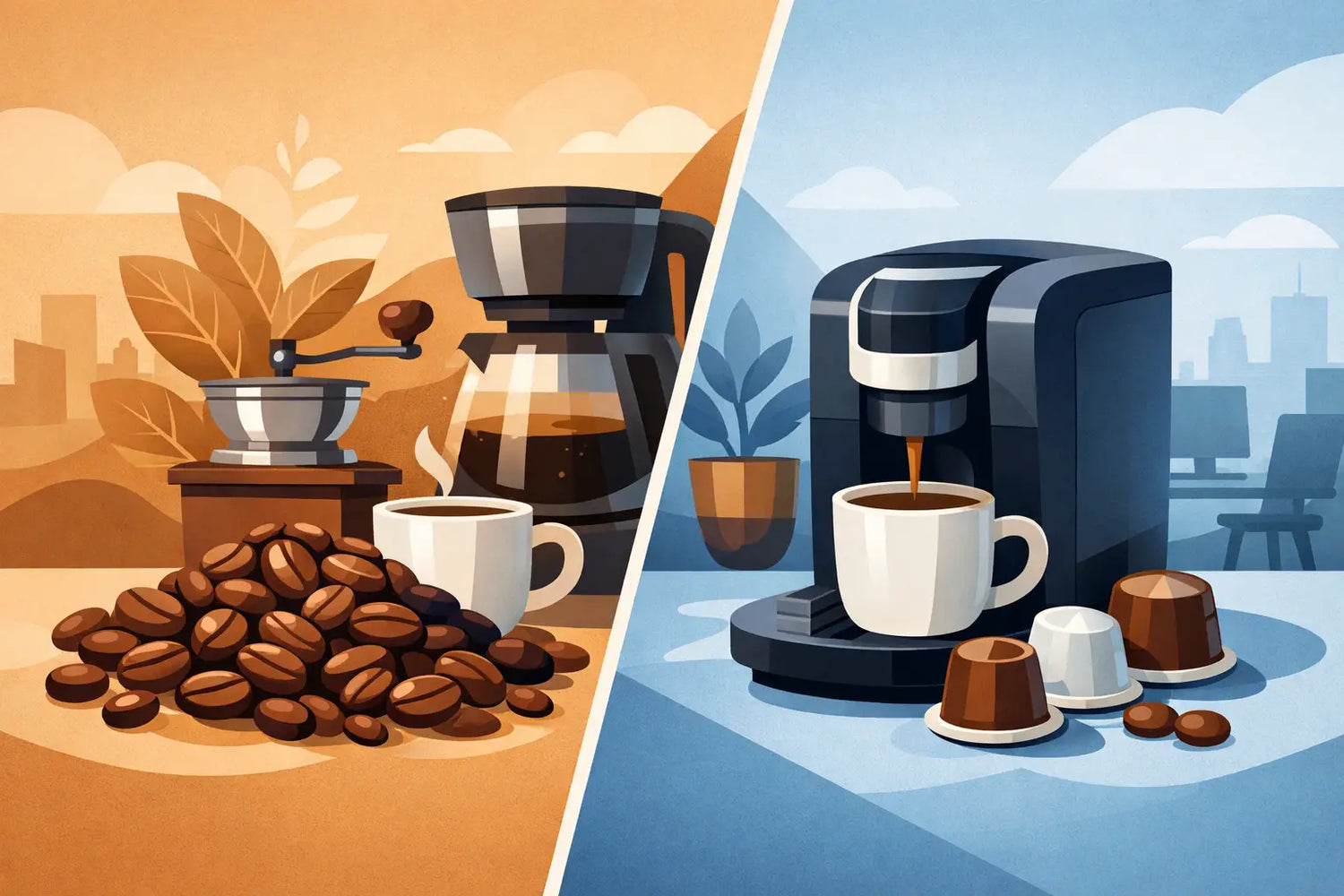
A busy office kitchen tells the real story of beans versus pods. When the morning rush starts, employees want a drink that tastes good, takes seconds to make, and does not leave someone hunting for the right capsule or clearing an overflowing pod bin. For workplace decision-makers, the choice also affects operating costs, waste, service calls, and the impression every cup makes on employees and guests.
Pod machines made single-serve coffee familiar and convenient. But convenience is not the same as a complete beverage program. Fresh whole-bean systems bring a different standard to the workplace: beans are ground on demand, drinks can be personalized, and the operation is designed around higher volume without creating a capsule for every cup.
Beans Versus Pods: The Workplace Difference
The central difference is freshness. A pod contains pre-ground coffee sealed in a capsule. That packaging protects the coffee to a degree, but grinding coffee releases aromas and oils that begin to fade over time. A bean-to-cup machine grinds whole beans immediately before brewing, which gives employees a noticeably fuller aroma and a fresher-tasting cup.
That difference matters when coffee is part of the employee experience. A breakroom coffee station is not just a utility. It is where people start their day, take a reset between meetings, welcome a visitor, or catch up with a colleague. When the coffee tastes consistently good, the space feels more considered.
Pods can work for a very small setting with limited daily use and a narrow drink menu. A single machine on a low-traffic desk may not need the capacity of a professional bean-to-cup setup. But offices, coworking spaces, hospitals, residential buildings, and dealerships tend to have changing traffic patterns and a wider range of preferences. In those environments, a commercial whole-bean system is usually the stronger long-term fit.
Freshness Is Only One Part of Quality
Coffee quality depends on more than the bean itself. It also depends on water, grinding, brewing, machine cleanliness, and how reliably the equipment performs throughout the day. A workplace system should make that quality repeatable without asking an office manager to become a coffee technician.
With bean-to-cup equipment, users can choose drinks such as espresso, coffee, cappuccino, latte, or hot water through a simple interface. The machine handles grinding and preparation automatically, often producing a customized drink in under 60 seconds. That creates the personal choice people expect from a coffee shop without slowing down the workday.
Pods offer consistency within a specific capsule line, but they can limit choice. Employees may need separate pod varieties for regular coffee, dark roast, decaf, and specialty drinks. Milk-based options can require extra capsules, separate steps, or a secondary milk solution. The result is a cabinet full of inventory and a less polished experience when a popular variety runs out.
A whole-bean program can simplify that experience. Premium Colombian beans, fresh milk options where appropriate, and a professional automatic machine can deliver a dependable menu from one managed setup. The goal is not to turn the office into a cafe. It is to give people a better cup without adding another task to someone’s schedule.
Pod Waste Adds Up Faster Than Most Teams Expect
The waste conversation is one of the clearest distinctions between beans and pods. Every pod comes with individual packaging. Even where recycling programs exist, used capsules can be difficult to separate, clean, collect, and process correctly. In a high-use workplace, those small containers accumulate quickly.
Whole beans create coffee grounds instead of single-use capsules. Grounds are easier to manage, and many locations can explore composting options where local collection supports it. The practical benefit is immediate: fewer containers in the trash, less storage devoted to boxes of pods, and fewer questions about what belongs in recycling.
Sustainability should still be evaluated honestly. Bean systems use energy and require regular cleaning, while pods may offer a controlled amount of coffee per serving. The better choice depends on usage, equipment efficiency, and the full service model. Yet for workplaces serving dozens or hundreds of cups each day, reducing a pod per drink can make a meaningful difference in waste volume.
Cost Control Is More Than the Price Per Cup
A pod may look inexpensive when evaluated one box at a time. The broader cost is often harder to see. There are multiple pod varieties to purchase, emergency orders when a favorite flavor disappears, equipment replacement, cleaning supplies, and the employee time spent managing it all. A machine may also sit unused when it needs service or a particular capsule is unavailable.
Whole-bean systems can create more predictable cost control, especially under a pay-per-cup model. Rather than purchasing equipment, stocking consumables, arranging maintenance, and tracking separate invoices, a business can receive a managed program built around actual consumption. The right plan includes beans, service, machine care, and support, without rental fees adding friction to the monthly budget.
This does not mean every bean-to-cup option has the same economics. Capacity matters. An undersized machine can create lines and wear faster, while an oversized setup can be more than a low-volume location needs. A good provider evaluates physical space, traffic, drink preferences, and expected daily volume before recommending equipment.
Reliability Should Be Part of the Decision
For facilities and operations teams, downtime is often more frustrating than the coffee debate itself. A breakroom amenity becomes a problem when the machine leaks, flashes an error message, or needs cleaning and nobody knows what to do next. That is why equipment selection and service coverage should be considered together.
Pod machines are familiar, but familiarity does not remove maintenance. They still need descaling, water management, cleaning, and occasional repair. Commercial bean-to-cup machines also require care, particularly with milk systems, but a managed service program can make that care routine instead of reactive.
The Coffee Corp supports professional systems with supplies, maintenance, and service built into the experience. That model gives workplace teams one point of contact and lets employees focus on the benefit: a reliable, freshly prepared drink when they want one.
Choosing Between Beans and Pods for Your Location
Start with the real experience you want to provide, not just the appliance on the counter. If your location serves only a handful of people and coffee is an occasional convenience, pods may be adequate. If coffee is a daily amenity for employees, residents, patients’ families, clients, or guests, whole beans offer more room to improve quality, choice, and operations.
Consider daily volume, peak-hour traffic, available counter space, plumbing or water needs, milk drink demand, sustainability goals, and who will handle replenishment and service. A dealership waiting area may benefit from fast, polished drinks that elevate the guest experience. A hospital department may need dependable access across long shifts. A coworking space may need a menu that makes membership feel more valuable. Each environment calls for a setup designed around how people actually use it.
The strongest coffee program is rarely the one with the most complicated menu or the lowest upfront price. It is the one that delivers a consistently good cup, fits the pace of the location, and stays easy to manage after installation. When coffee is freshly ground, fast, and fully supported, it becomes one less operational concern and one more reason people enjoy being there.


Leave a comment
This site is protected by hCaptcha and the hCaptcha Privacy Policy and Terms of Service apply.