
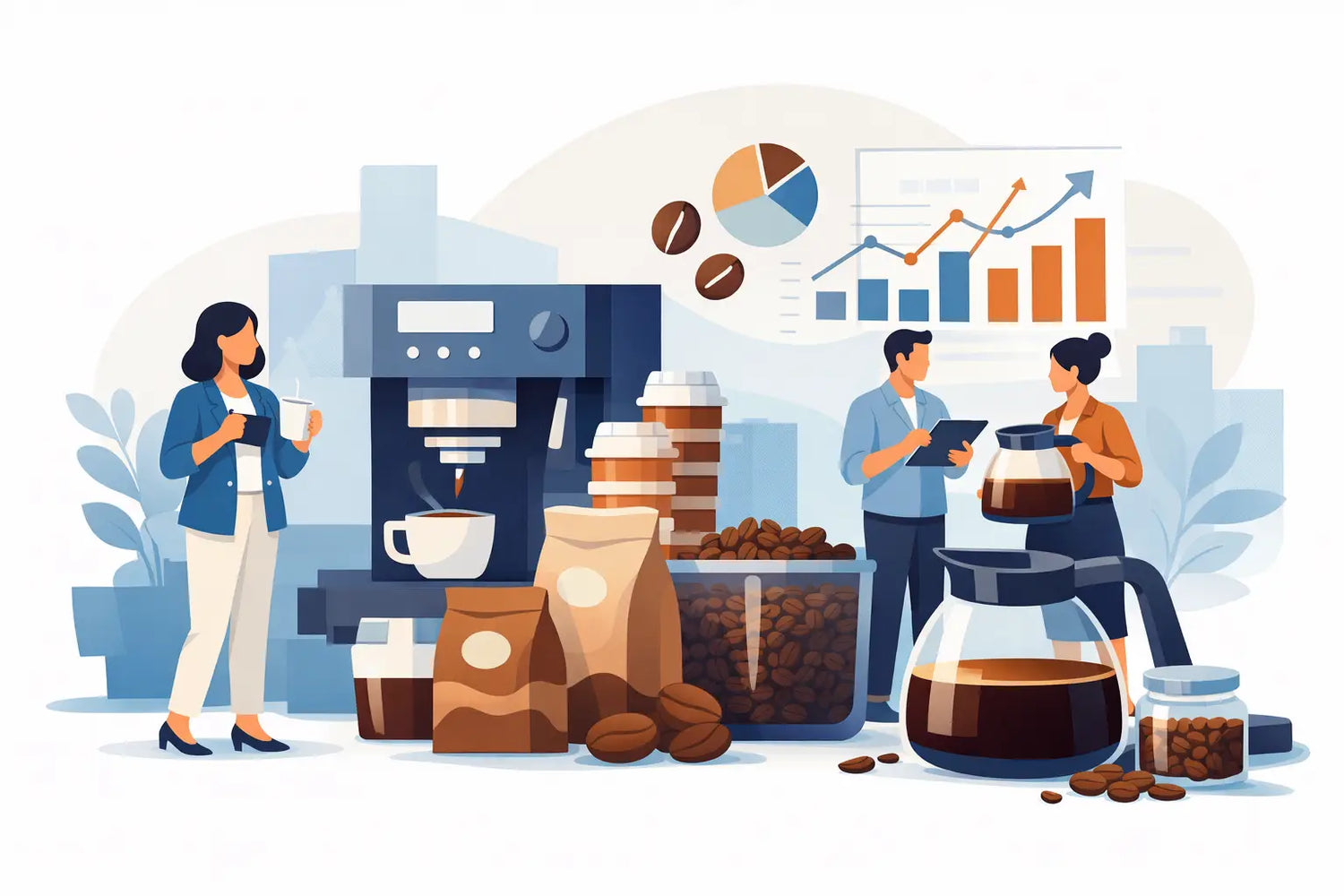
A 20-person office can go through more coffee than many managers expect. A few early arrivals, back-to-back meetings, afternoon pick-me-ups, and visiting clients can quickly turn one pot into several. Asking how much office coffee your workplace needs is not just a supply question. It is the starting point for creating a reliable employee amenity that feels premium without creating extra work for your team.
The right answer depends on who uses the space, how they work, and what kind of coffee experience you want to provide. A growing office with a steady flow of guests has very different needs than a hybrid team that gathers twice a week. The goal is not to overstock coffee. It is to make every cup consistently available, freshly prepared, and easy to manage.
How Much Office Coffee Should You Plan For?
A practical planning benchmark is one to three coffee drinks per person per workday. For most offices, two drinks per employee is a smart starting point. That includes the morning coffee many people rely on to begin the day and a second drink during the afternoon slump, meeting, or conversation break.
If 50 people are in the office every day, planning for around 100 cups per day is usually a reasonable baseline. But headcount alone can understate demand. Coffee consumption rises when your workplace hosts interviews, training sessions, client meetings, sales appointments, or regular visitors.
Here is a simple way to estimate your daily volume:
Average daily occupancy x estimated drinks per person + guest drinks = expected daily cups.
For example, an office with 75 employees, an average in-office attendance of 60 people, and two drinks per person would need about 120 employee drinks daily. Add 10 to 20 cups for guests and meetings, and the expected demand becomes 130 to 140 cups per day.
This estimate does not need to be perfect on day one. It should give you enough confidence to select equipment with the capacity, drink options, and service plan your workplace actually needs.
Look Beyond Headcount
The biggest mistake in office coffee planning is using total employee count as the only metric. A workplace beverage program should be designed around real consumption, not an org chart.
Measure daily attendance, not just team size
Hybrid schedules can make a major difference. A company with 150 employees may only have 70 people in the office on a typical Tuesday, then reach 120 on its busiest collaboration day. Use average daily occupancy and identify peak days so your coffee setup performs when the office is busiest.
For coworking spaces, residential buildings, hospitals, and dealerships, visitor volume matters even more. A dealership lounge may have a modest staff but serve coffee to customers throughout the day. A hospital department may run around the clock, creating demand patterns that a standard 9-to-5 office does not have.
Consider workplace habits
Some teams are highly coffee-driven. Creative agencies, sales organizations, fast-moving operations teams, and professional-service offices often see stronger all-day demand. Employees may also choose espresso drinks, cappuccinos, lattes, hot chocolate, or decaf rather than plain drip coffee.
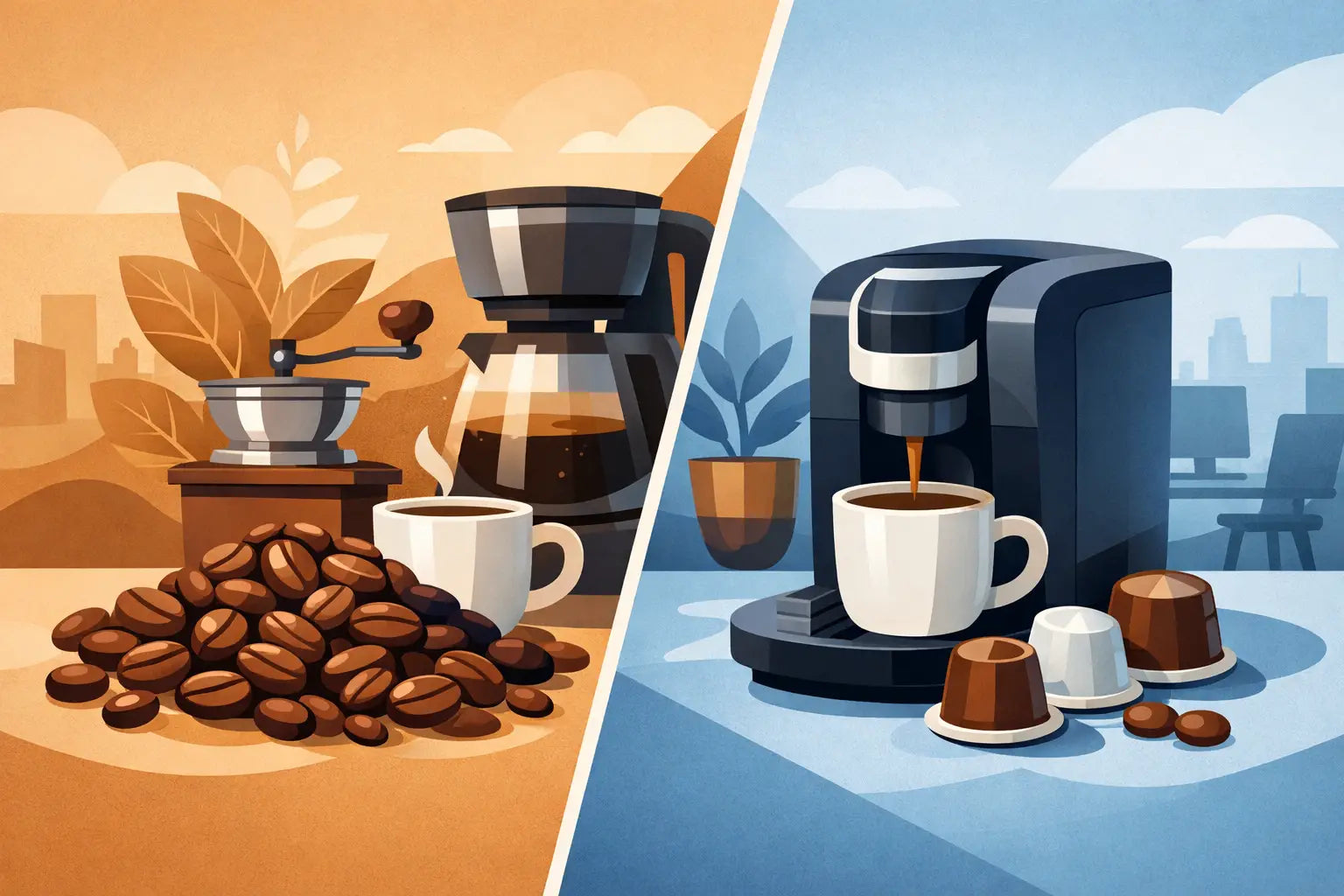
That is why beverage choice matters. A setup that only produces a basic cup can leave people reaching for coffee shops, single-use pods, or less convenient alternatives. A bean-to-cup system can give employees more choice while keeping preparation fast and consistent.
Include meetings and hospitality
Coffee is often the first detail a guest notices. It signals whether a workplace is prepared, thoughtful, and easy to do business with. If your team regularly hosts clients, candidates, vendors, patients, residents, or buyers, build that hospitality demand into your estimate.
A polished coffee station also helps meetings move more naturally. People can grab a drink in under a minute instead of waiting for someone to brew another pot or search for supplies.
Match Your Coffee System to Peak Demand
Knowing your expected cup count is only half the decision. The equipment must also handle the pace of demand.
A small office may need 30 to 50 drinks across an entire day. A larger office may serve 150 cups, with a rush between 8:00 and 10:00 a.m. Those are different operating conditions. A machine that technically supports the daily volume may still create a poor experience if it cannot keep up during busy windows.
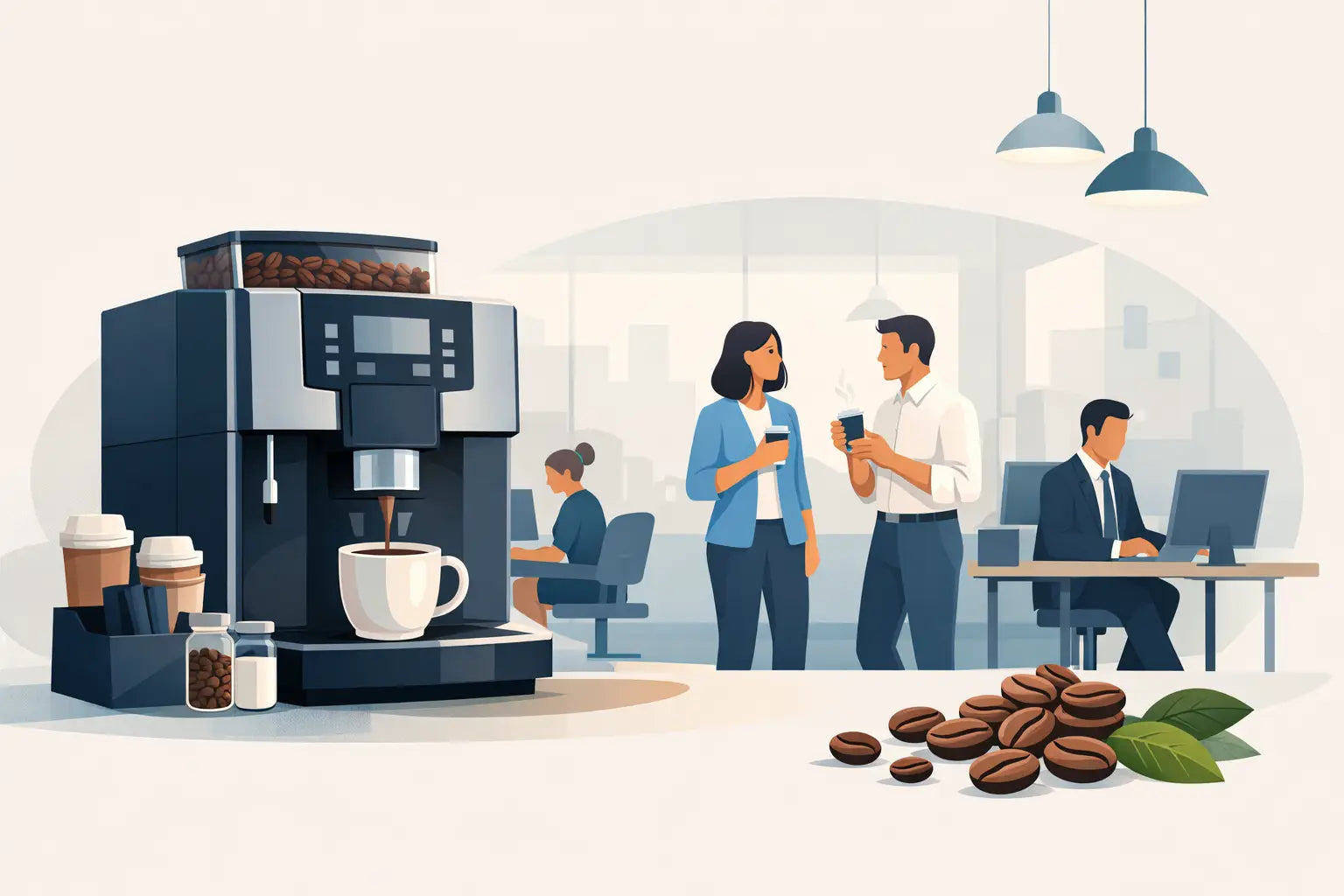
Professional bean-to-cup machines are designed for this kind of workplace use. They grind whole beans on demand, prepare a customized drink quickly, and remove the inconsistency of pre-brewed coffee sitting in a carafe. For employees, that means a better cup. For office managers and facilities teams, it means fewer moving parts to monitor.
When reviewing equipment, consider capacity, drink variety, physical footprint, water access, and user flow. A compact kitchen may need a different setup than a large break room, executive suite, dealership showroom, or shared amenity space. Placement matters, too. A machine tucked into a corner may reduce congestion, while a centrally located beverage station can encourage conversation and connection.
Avoid the Cost of Guessing
Underestimating coffee demand leads to empty hoppers, rushed supply orders, and employees who stop trusting the amenity. Overestimating can mean wasted inventory, oversized equipment, and unnecessary spending. Neither outcome supports a well-run workplace.
The better approach is to start with a realistic forecast and use actual consumption to refine it. A managed pay-per-cup model gives organizations more flexibility because costs follow usage. Instead of buying coffee, supplies, and equipment capacity based on a guess, you can align your program more closely with the cups your workplace serves.
This model is especially useful for teams with fluctuating attendance. It offers clearer cost control without requiring your office manager to become the person responsible for bean orders, milk inventory, cleaning tasks, service calls, and machine troubleshooting.
Coffee Is Only Part of the Beverage Picture
A strong office experience supports different preferences throughout the day. Not everyone wants coffee, and even coffee drinkers need water. Pairing a premium coffee system with filtered water, ice, or flavored water gives employees and guests more ways to stay refreshed without relying on bottles, cans, or separate vendors.
This matters in warm climates such as Miami, Orlando, and Tampa, where hydration is a daily workplace priority. It also matters in Raleigh and everywhere else where employees expect a more considered office experience. The benefit is not simply more beverage options. It is a cleaner, more convenient station that reduces restocking pressure and supports wellness alongside productivity.
What a Fully Managed Coffee Program Changes
The best coffee program should not add a recurring task to your operations team. It should remove one.
With a fully supported bean-to-cup service, the experience includes premium whole beans, professional equipment, consumables, routine care, and maintenance. Your team gets freshly ground coffee and customized drinks, while the service provider manages the details that can otherwise become daily friction.
That support is particularly valuable when the machine is a visible part of the workplace. Downtime is not just an equipment issue. It affects employee routines, guest hospitality, and the perception of your space. Fast service coverage and proactive care help keep the coffee experience dependable.
The Coffee Corp has built its workplace beverage service around that standard: premium Colombian whole beans, high-technology machines, and a capsule-free approach that serves customized drinks in under 60 seconds. The result is a coffee program that feels elevated but stays simple to run.
Start With the Experience You Want to Create
The question is not only how many cups your office will serve. Ask what those cups should do for your workplace. Should they make the morning routine easier? Help employees stay focused? Give guests a warm, professional welcome? Replace a cluttered pod station with a cleaner, more sustainable solution?
Start with daily occupancy, plan for two drinks per person, account for guests and peak periods, then choose a system that can grow with your needs. When coffee is fresh, fast, and consistently available, it becomes one of the simplest ways to make the workplace a place people are happy to return to.

Leave a comment
This site is protected by hCaptcha and the hCaptcha Privacy Policy and Terms of Service apply.