
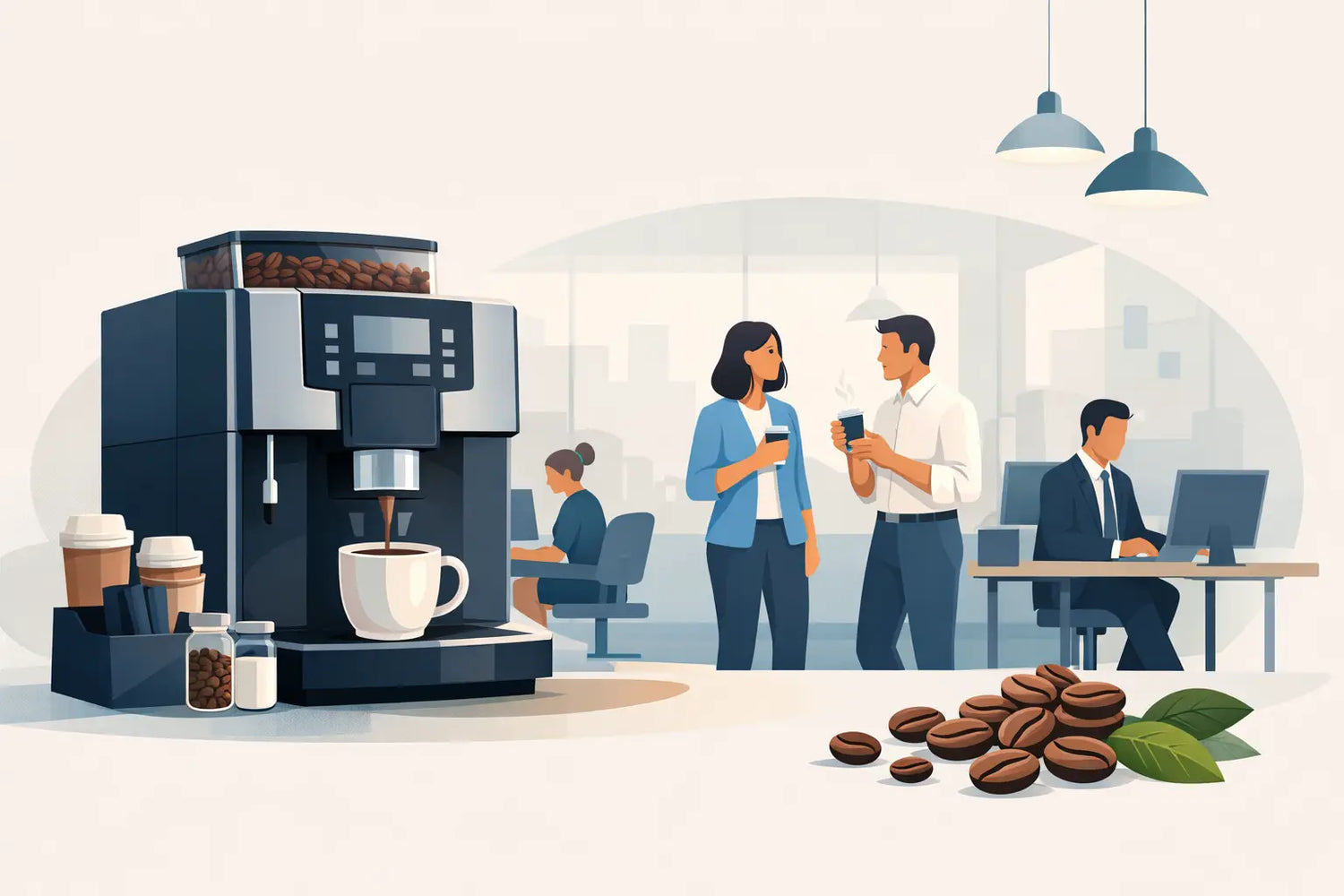
A lobby guest reaches for coffee at 8:15 a.m. An employee needs a second cappuccino before a client call. By 10:00, the old pod machine is empty, the counter is cluttered, and someone is hunting for supplies. Bean-to-cup machine reviews should start with this real workplace test: can the program deliver a great drink quickly, consistently, and without creating more work for your team?
For offices, residential buildings, hospitals, coworking spaces, and dealerships, the machine matters. But it is only one part of the experience. The strongest solution pairs professional equipment with fresh coffee, the right capacity, dependable maintenance, and a service model that keeps the beverage station ready all day.
What Bean-to-Cup Machine Reviews Should Actually Compare
Consumer reviews often focus on countertop appearance, app features, or whether one espresso tasted especially good. Those details have a place, but workplace buyers need a broader view. A machine that performs well for two people at home may struggle during a busy morning rush, require too much daily attention, or leave your team responsible for cleaning, ordering, and troubleshooting.
Start with the drink experience. A professional bean-to-cup system should grind whole beans for each drink, prepare espresso-based beverages on demand, and produce a consistent result in under a minute. Freshly ground coffee gives employees and guests a noticeable upgrade over pods, pre-ground coffee, and breakroom brewers that have been sitting on a hot plate.
Then consider choice. A good machine should make it easy to offer coffee, espresso, cappuccino, latte, hot chocolate, and other favorites without turning the breakroom into a café operation. Customizable drink settings are valuable because preferences vary, especially in shared workplaces. The goal is not to offer every drink imaginable. It is to give people the choices they genuinely want, with simple, intuitive controls.
Capacity is equally important. Ask how many cups the machine can comfortably support between service visits and refill cycles. An executive suite, a hospital waiting area, and a 150-person office need very different setups. The right machine is sized around peak demand, not just average daily usage. If 30 people want coffee between 8:00 and 9:00 a.m., speed and ingredient capacity become central to the review.
The Difference Between a Machine and a Managed Program
Many bean-to-cup machine reviews stop at equipment specifications. For workplace leaders, that leaves out the question that affects daily operations most: who owns the work after installation?
Buying or renting a machine can appear straightforward until the responsibilities add up. Someone must order beans and milk supplies, monitor inventory, clean the equipment, respond to error messages, schedule service, and cover downtime. These tasks may be small individually, but they become a recurring distraction for office managers, facilities teams, and executive assistants.
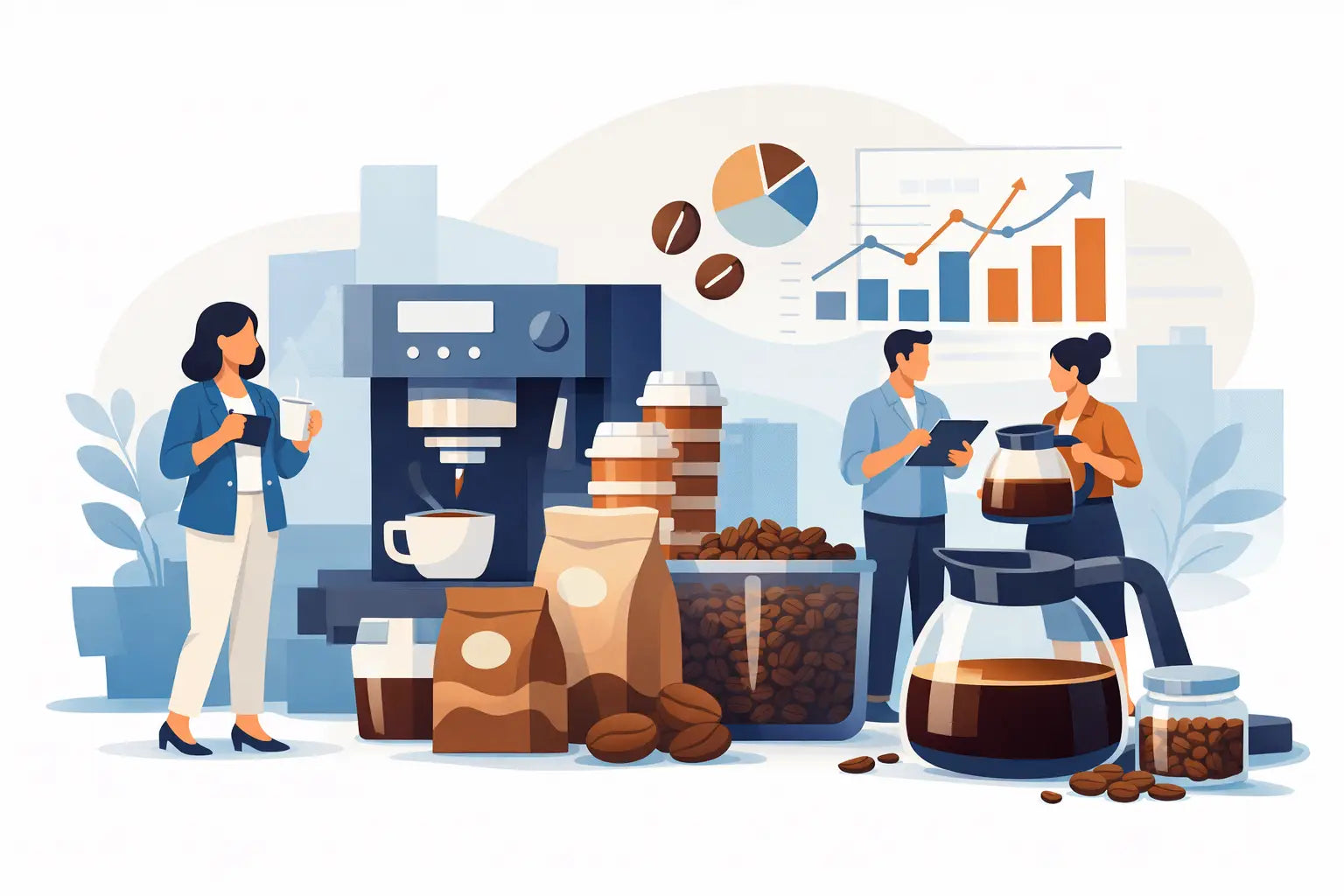
A managed pay-per-cup program changes the equation. Instead of purchasing a machine and managing the details internally, the organization receives equipment, premium whole beans, consumables, maintenance, and support as part of one service. This approach can also eliminate rental fees, which makes budgeting easier and avoids paying for equipment that is not meeting the location's needs.
When evaluating providers, look beyond the phrase "full service." Ask what is included, how preventive maintenance is handled, and what happens if the machine needs attention. Fast response matters in a hospitality setting. A machine that is technically excellent but out of service during a major meeting does not deliver the experience your workplace intended.
Quality Begins With the Coffee in the Hopper
The best equipment cannot improve stale or low-quality beans. Coffee quality should be a core part of any review, particularly when the beverage station represents your organization to employees, residents, patients, or visitors.
Whole beans should be fresh, consistent, and selected for broad workplace appeal. Premium Colombian coffee is a strong fit for many environments because it offers a balanced profile that works well as drip-style coffee, espresso, or milk-based drinks. It is approachable enough for regular coffee drinkers while delivering the depth people expect from a better cup.
There is a practical trade-off here. Very dark, highly specialized, or sharply acidic coffees can appeal to a small group of enthusiasts, but they may not satisfy the larger audience using a shared machine. Workplace coffee should feel elevated without becoming polarizing. Consistency wins when hundreds of cups are served each week.
Milk performance deserves the same attention. If your people expect lattes and cappuccinos, review how the system handles milk-based drinks and cleaning. Fresh milk can provide a premium result, while shelf-stable or powdered options may better fit some low-volume or restricted-access locations. There is no universal answer. Usage, refrigeration access, cleaning requirements, and beverage expectations should guide the decision.
Four Questions That Reveal the Right Fit
A polished display and long beverage menu can make any machine look impressive. These four questions reveal whether it belongs in your location:
- How many drinks will the location serve on its busiest day and busiest hour?
- Which drinks do employees and guests request most often?
- Who will handle refills, cleaning, service calls, and supply ordering?
- What experience should the beverage station create for visitors and staff?
Physical space matters too. Measure counter depth, power access, water access, clearance for refilling, and the flow of people around the station. A machine should make the area feel more organized, not create a crowded bottleneck. An experienced provider will assess the location before recommending a model, rather than placing the same unit in every environment.
Cost Control Is More Than the Price of the Machine
The lowest equipment price is rarely the lowest total cost. Pods, emergency service, repairs, bottled drinks, employee time, and unused inventory can quietly increase spending. There is also the cost of a disappointing experience: employees leave the building for coffee, guests are offered an ordinary cup, and your amenity falls short of the standard you want to set.
A pay-per-cup structure offers a more direct way to manage the program. You pay according to actual consumption rather than making a large upfront equipment investment or guessing how much inventory to keep on hand. For many workplace decision-makers, that visibility is more useful than a low initial machine price paired with unpredictable operating costs.
Capsule-free systems add another advantage. They reduce the recurring pile of single-use pods and make it easier to support workplace sustainability goals without asking people to give up convenience. Freshly grinding whole beans also turns the act of making coffee into a visible quality signal. People can see and smell that the drink is being prepared for them, not pulled from a prepackaged capsule.
How to Read Reviews Without Getting Misled
Reviews are useful when they describe conditions similar to yours. A positive comment from a home user may tell you the interface is intuitive, but it cannot confirm how a machine holds up in a 100-person office. Likewise, a complaint about cleaning may be less relevant if a managed provider handles regular care at your site.
Look for patterns rather than isolated opinions. Repeated praise for drink quality, reliability, speed, and responsive service is meaningful. Repeated concerns about refill frequency, breakdowns, confusing controls, or difficult cleaning deserve attention. Consider when the review was written as well. A machine may have been updated, or a provider's service process may have changed.
Most of all, separate the product review from the service review. Workplace coffee succeeds when both are strong. Great coffee without maintenance creates frustration. Excellent service without quality drinks fails to excite employees and guests. The right partner brings both together and designs the program around how your location actually operates.
For organizations in Miami, Orlando, Tampa, or Raleigh, a live demonstration can answer more than a page of specifications. Taste the coffee, test the menu, see the drink speed, and ask how support works after installation. The Coffee Corp builds these details into a managed workplace experience, so the beverage station supports productivity, hospitality, and the kind of everyday moments people remember.
The best choice is not necessarily the machine with the longest feature list. It is the one that makes a better cup feel effortless for every person who walks up to it.

Leave a comment
This site is protected by hCaptcha and the hCaptcha Privacy Policy and Terms of Service apply.