
The coffee station is one of the few workplace amenities employees and guests experience every day. A capsule free office coffee system turns that routine stop into a better experience: freshly ground coffee, personalized drinks in under a minute, and far less waste left behind. For facilities and office leaders, it also removes a familiar headache - managing pods, placing supply orders, and dealing with a machine that is out of service when the morning rush begins.
Premium workplace coffee should feel easy for everyone. Employees want a drink they enjoy. Visitors notice whether hospitality feels considered. The person responsible for the office needs quality, predictable costs, and support that does not create another task on an already full list.
Why capsules create more work than they solve
Single-serve capsules made coffee more convenient than a communal pot, but they brought a different set of operational problems. Each drink requires a new pod, which means a constant stream of packaging, storage needs, and restocking. In a busy office, coworking space, dealership, or hospital waiting area, that volume adds up quickly.
There is also a quality question. Capsules offer consistency, but the coffee is pre-ground and sealed long before a drink is made. That is a compromise employees can taste, especially when they are used to café-quality coffee outside the office. A premium amenity should not feel like the lesser version of what people already choose for themselves.
Then there is variety. Stocking enough capsule options to satisfy different preferences can turn a simple coffee station into an inventory project. Regular, decaf, espresso, flavored options, tea, hot chocolate, milk alternatives - the choices multiply, and someone has to monitor what is running low.
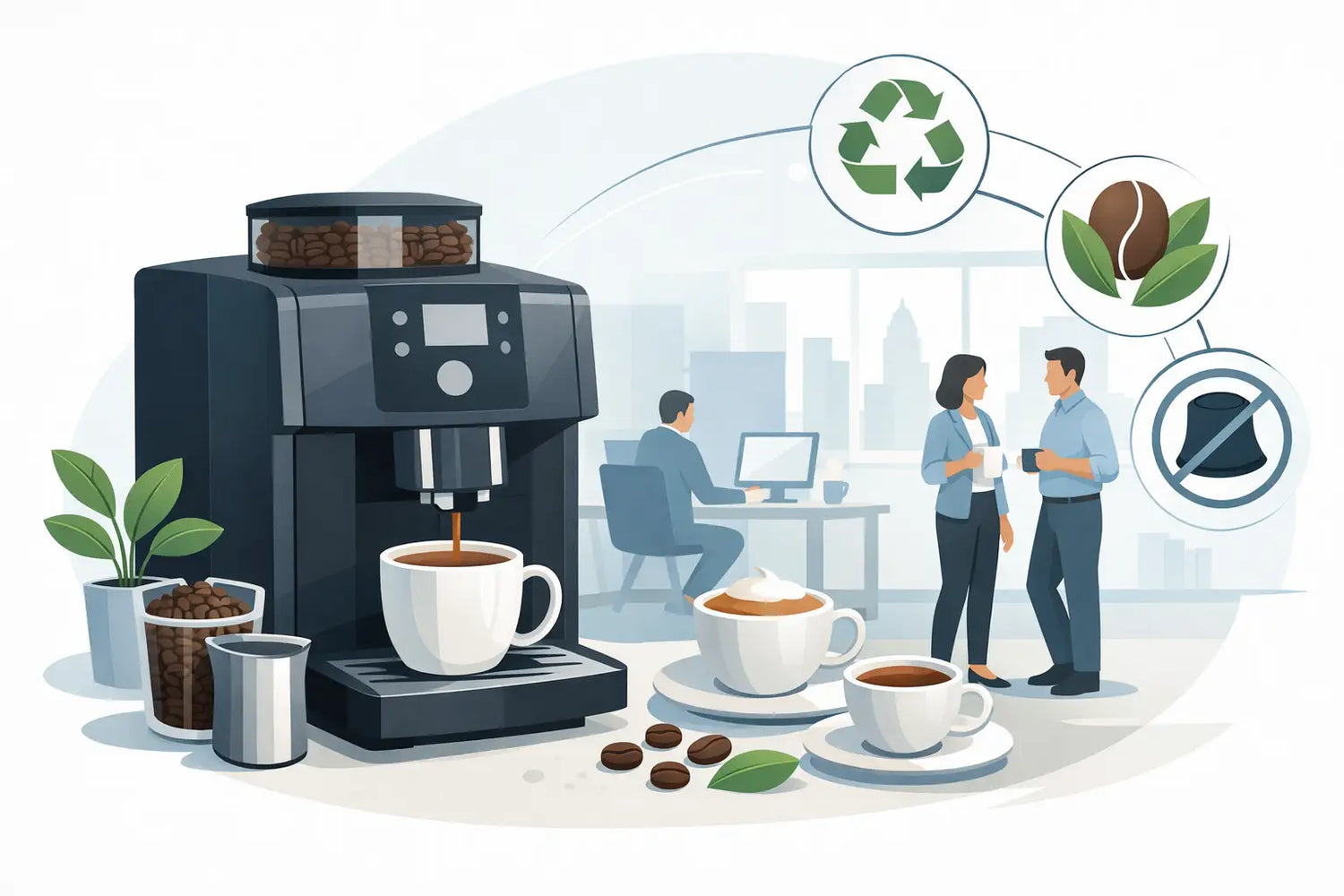
A capsule-free model replaces that cycle with whole beans and a fully automatic machine designed to grind and brew on demand. The result is a fresher cup without the pile of single-use capsules.
What a capsule free office coffee system does differently
A modern bean-to-cup machine brings the coffeehouse format into the workplace without asking employees to become baristas. Whole beans are stored inside the equipment, ground only when a drink is selected, and brewed immediately. The machine handles the measured dose, water temperature, milk options, and cleaning cycles required for consistent results.
That matters because the workplace coffee experience has to work at real office speed. People are heading into meetings, greeting clients, returning to the floor, or taking a short break between tasks. A system that delivers an espresso, coffee, latte, cappuccino, or other customized drink in under 60 seconds creates a meaningful upgrade without slowing down the day.
For many locations, the best setup also includes more than coffee. A coordinated beverage program can pair bean-to-cup coffee with filtered water, ice, or flavored sparkling water. Instead of managing separate vendors and separate supply chains, teams can create a more complete breakroom or hospitality station around how people actually use the space.
Freshness people can recognize
Freshly grinding premium whole beans before brewing is not a small detail. It is the difference between coffee that simply checks a box and coffee that invites people to take a real break, start a conversation, or welcome a guest with confidence.
The Coffee Corp uses 100% premium Colombian whole beans to deliver that fresh, balanced experience cup after cup. With customized machine settings and drink selections, organizations can offer a premium coffee program without requiring staff to measure grounds, steam milk, or troubleshoot brewing variables.
Less packaging, less clutter
A capsule-free program reduces the visible waste that accumulates around a coffee station. There are no towers of boxes waiting in a supply closet and no overflowing bins of used pods after a busy morning.
It is not a claim that coffee service creates no waste. Whole-bean systems still generate spent grounds, milk containers may need replenishing, and machines require care products. The operational difference is that a single-use capsule is not required for every drink. That makes it easier to support workplace sustainability goals while keeping the beverage area cleaner and more polished.
The operational value is bigger than the machine
The right coffee system is not just a piece of equipment. It is a managed workplace service. That distinction matters when a facilities manager is comparing options based only on the machine price or coffee cost.
A low-cost brewer can become expensive in staff time if someone has to track inventory, clean components, arrange repairs, and answer questions whenever the coffee runs out. A premium bean-to-cup machine also needs professional attention to continue producing great drinks. Water quality, cleaning schedules, ingredient replenishment, and preventive maintenance all affect the experience at the cup.
With a pay-per-cup model, organizations can avoid rental fees while keeping their cost structure straightforward. Supplies, machine care, and maintenance are included, so the program is designed to stay on track without unexpected service burdens. Instead of owning another operational problem, the workplace receives a supported amenity.
That is especially useful for multi-use properties. An office may have a reliable weekday pattern, while a residential lobby, hospital, or automotive dealership may have fluctuating guest traffic. The appropriate equipment and service plan depend on drink volume, available counter space, water access, peak times, and the types of drinks people expect.
How to choose the right capsule-free setup
The best system is not necessarily the largest machine or the one with the longest drink menu. It is the setup that fits the location and the people using it.
Start with volume. A 20-person office with a modest morning rush needs something different from a coworking space serving members all day. Consider the peak period, not just the daily average. If 40 people want coffee between 8:30 and 9:15 a.m., speed and capacity matter.
Next, consider the setting. A client-facing reception area may prioritize an elegant machine and broad drink selection. A breakroom may need a durable, high-capacity configuration. Healthcare and dealership environments often benefit from intuitive operation because many guests will use the station without assistance.
Finally, think about ownership of the experience. If no one on-site has time to manage supplies and repairs, a fully managed service delivers more value than a machine-only purchase. The goal is to make premium coffee feel effortless, not to transfer the work from one vendor to an internal team.
A better amenity for employees and guests
Coffee is often discussed as a perk, but its effect is more practical than that. It gives employees a reason to step away from their desks for a few minutes. It creates natural points of connection between teams. It helps make the office a place people want to return to, particularly when expectations for workplace experience are higher than ever.
For guests, the signal is immediate. A freshly made latte or espresso says the organization has thought about the details. That can matter in a sales meeting, a patient waiting room, a leasing office, or a dealership lounge. Hospitality is rarely about one grand gesture. It is built through small moments that feel considered.
A capsule free office coffee system supports those moments while reducing the administrative work behind them. The best programs combine premium beans, reliable technology, rapid drink preparation, and responsive service so the station continues to perform long after installation day.
For workplaces in Miami, Orlando, Tampa, and Raleigh, the practical next step is to look at the current coffee routine honestly. Count the pods, the supply orders, the complaints, and the time spent keeping the station running. A better coffee experience should give people something they look forward to - not give your team one more thing to manage.



Leave a comment
This site is protected by hCaptcha and the hCaptcha Privacy Policy and Terms of Service apply.