
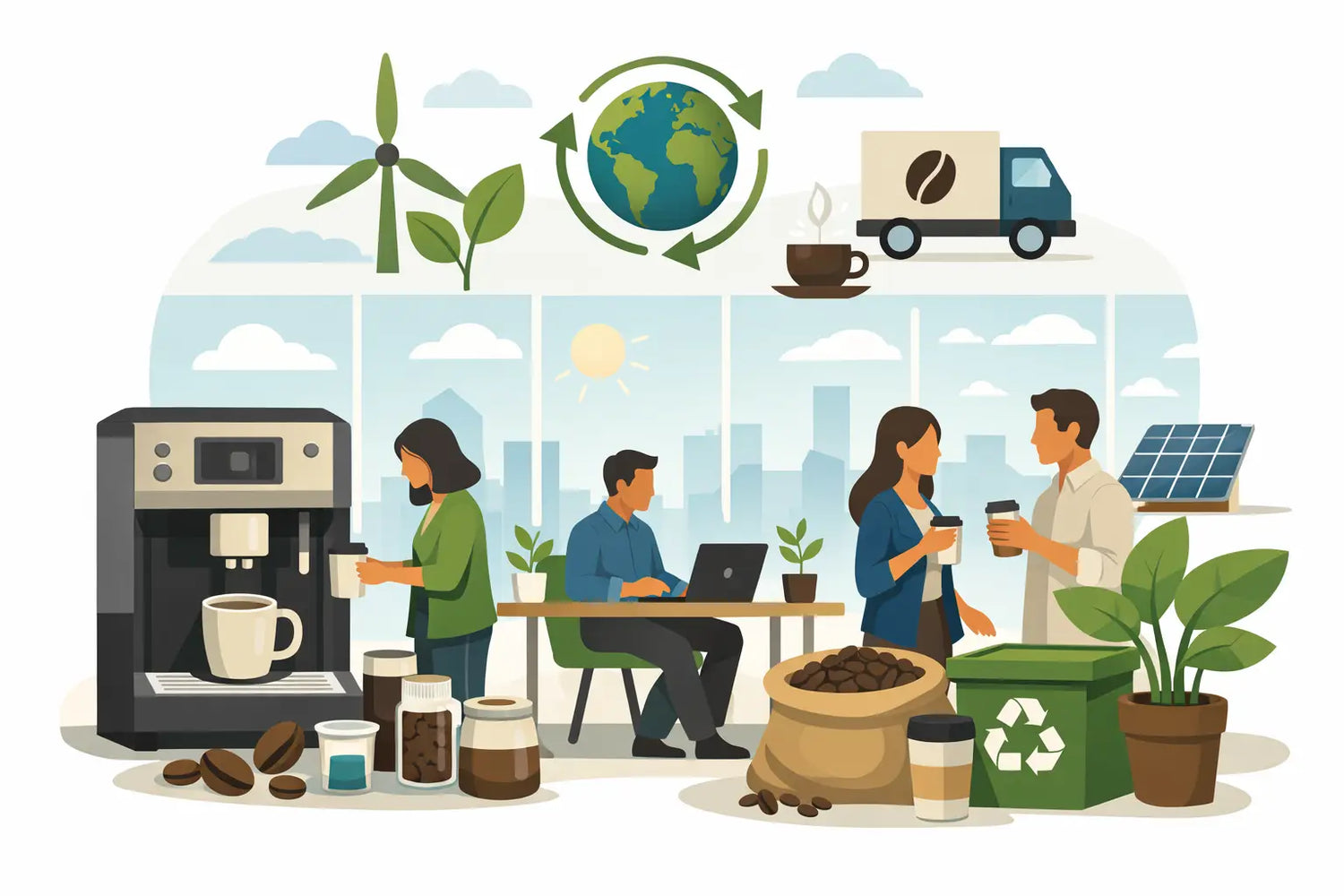
The trash bin beside the breakroom coffee machine tells a story. If it fills with single-use pods before lunch, the office is paying for convenience with unnecessary waste, clutter, and ongoing supply headaches. A sustainable workplace coffee program changes that equation by making great coffee easier to serve, easier to manage, and far less dependent on disposable packaging.
For workplace leaders, sustainability is not about adding another complicated initiative to an already full operations checklist. It is about choosing a beverage setup that reduces waste at the source while still giving employees, residents, patients, or guests the fast, personalized drinks they expect.
What a Sustainable Workplace Coffee Program Should Deliver
A sustainable coffee program must work in the real world, not just look good in a sustainability report. The strongest setups balance four priorities: less waste, consistent quality, reliable equipment, and simple cost control.
That starts with the coffee format. Capsule systems create a familiar, quick experience, but they also create a steady stream of used pods. Even when pods are technically recyclable, workplace recycling is rarely perfect. Collection, sorting, contamination, and employee participation all affect whether those capsules actually avoid the landfill.
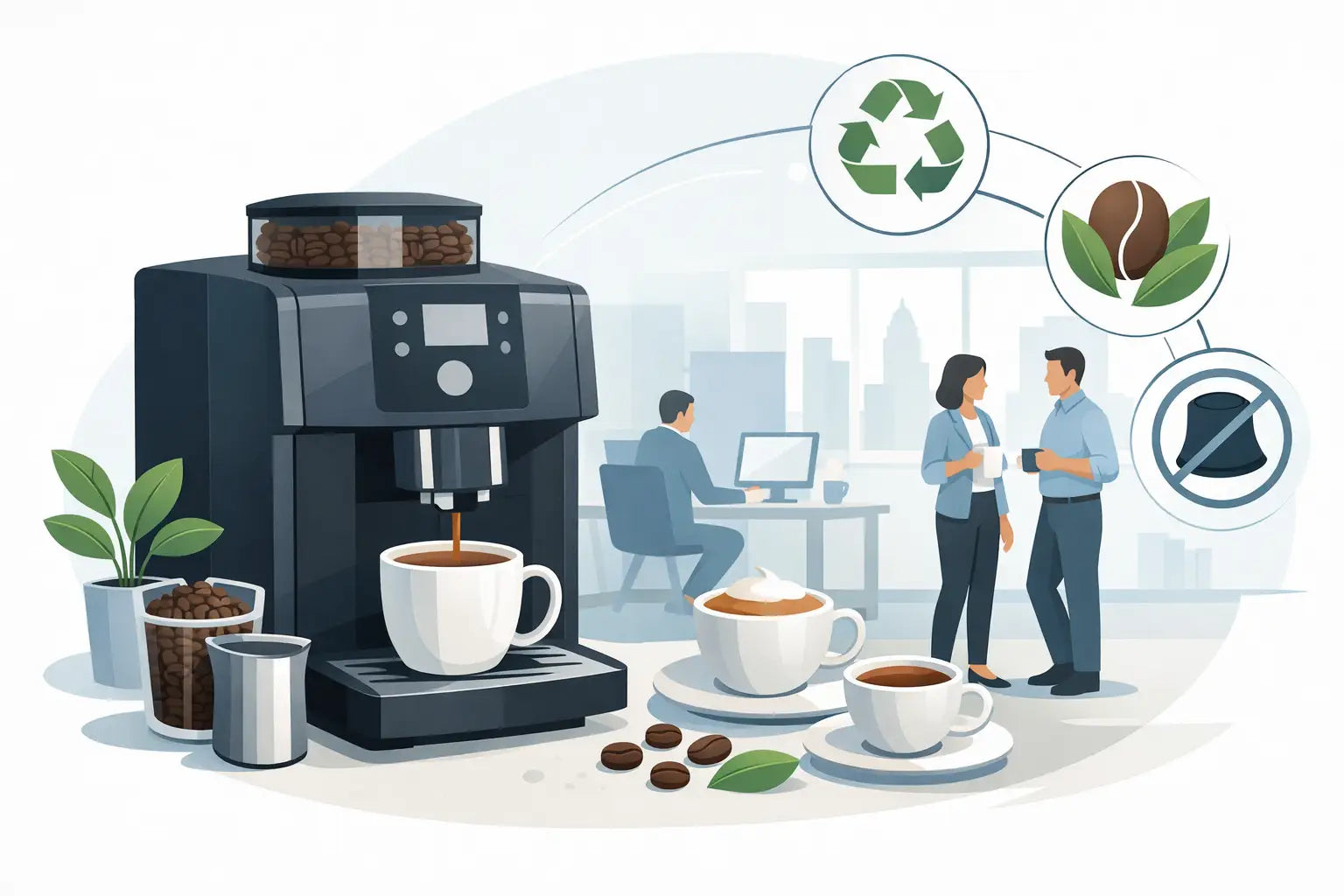
A bean-to-cup system takes a more direct approach. It freshly grinds whole beans for each drink, then prepares espresso-based coffee, cappuccino, latte, or other selections in under a minute. There are no coffee capsules to collect, store, or sort. The remaining coffee grounds are biodegradable and far less bulky than pod waste.
Sustainability should not mean asking employees to settle for weak coffee or a slower breakroom experience. When quality falls short, people bring in bottled drinks, visit coffee shops more often, or lose confidence in the amenity altogether. A better program makes the responsible choice the preferred choice.
Start With Waste, Not Equipment
Many organizations begin by comparing machine features. A more useful first step is to look at what the current program throws away and why.
Track the volume of pods, stirrers, cups, creamers, sugar packets, bottled water, cans, and failed coffee supplies leaving the breakroom each week. Consider the operational waste too: duplicate deliveries, emergency supply runs, expired products, and machines that sit idle while staff wait for service.
This assessment often reveals that coffee is part of a broader beverage challenge. An office may reduce pod waste but still rely heavily on single-use water bottles and canned sparkling water. A property may offer a premium lobby coffee station but use multiple vendors to maintain coffee, water, ice, and flavored drinks. Sustainability improves when those decisions are planned together.
The right solution depends on traffic and space. A 20-person office may need a compact machine with a focused drink menu. A busy coworking lounge, hospital waiting area, or automotive dealership may need higher capacity, multiple stations, or a dedicated guest-facing setup. The goal is not to install the biggest machine. It is to match capacity to demand so quality stays high without over-ordering supplies.
Choose Capsule-Free Fresh Coffee
Whole-bean, bean-to-cup coffee is one of the clearest ways to reduce breakroom waste without reducing choice. Freshly ground coffee also gives the program a noticeable quality advantage over pre-portioned systems, particularly in workplaces where employees expect café-style drinks.
Look for professional equipment that can prepare beverages on demand, manage milk options appropriately, and maintain a consistent recipe from cup to cup. Speed matters as much as taste. If the line forms during the morning rush, employees will not see the station as a convenient workplace benefit.
A premium coffee program should also make better use of every pound of coffee. Reliable settings, proper calibration, and routine cleaning help prevent waste caused by poorly extracted drinks, inconsistent portions, or repeated remakes.
Rethink Disposable Drink Packaging
Coffee is only half the opportunity. Hydration programs can substantially reduce the bottles and cans circulating through a workplace.
Filtered water and ice systems reduce the need to stock, chill, and dispose of cases of bottled water. Flavored-water dispensers can give employees still, sparkling, and flavored options from one station, making reusable bottles a more appealing daily habit. For offices trying to reduce beverage waste, choice is critical. People are far more likely to refill a bottle when the water station offers a drink they genuinely want.
Reusable mugs and branded refillable bottles can support the program, but they are not a substitute for better infrastructure. A mug campaign has limited impact when the only convenient option remains a pod machine and a case of plastic bottles.
Make Service Part of the Sustainability Plan
A machine is only sustainable if it remains in service. Equipment downtime can push employees back to disposable alternatives or send facility teams searching for last-minute replacements. Poor maintenance also wastes coffee, water, energy, and staff time.
That is why managed service matters. Regular machine care, included maintenance, supply planning, and responsive support keep the program performing as designed. They also remove a common burden from office managers and executive assistants, who should not have to troubleshoot a coffee machine, count inventory, or chase separate vendors.
A pay-per-cup model can be particularly practical for organizations that want clearer spending without rental fees or surprise maintenance costs. Rather than buying equipment and hoping consumption estimates are correct, leaders can align cost more closely with actual use while keeping service and supplies under one program.
At The Coffee Corp, this approach combines premium Colombian whole beans, fully automatic professional machines, consumables, and ongoing care in a managed workplace service. The result is a coffee experience designed around the location, consumption level, and expectations of the people using it.
Measure What Matters After Launch
A sustainable workplace coffee program is not a one-time equipment decision. Check performance after the first few weeks, then revisit it as occupancy, work patterns, or beverage preferences change.
Measure a few practical indicators: disposable pod and bottle volume, drink consumption, service calls, supply waste, and employee feedback. These figures tell a more useful story than a broad sustainability claim. They show whether the program is convenient enough to change behavior and dependable enough to stay in place.
Employee feedback also helps fine-tune the experience. One location may need stronger coffee options and a faster morning workflow. Another may see higher demand for decaf, hot chocolate, sparkling water, or ice. Customization is not an extra feature. It is what keeps the beverage station useful, reduces off-site purchases, and prevents products from going unused.
Common Trade-Offs to Plan For
No beverage program is waste-free, and credible sustainability planning means acknowledging the trade-offs. Bean-to-cup systems use electricity and water, so machine selection, maintenance, and usage patterns matter. Milk-based drinks can create more cleaning needs, and fresh milk can produce spoilage if the menu does not match demand.
Capsule recycling programs may be suitable for certain low-volume locations with disciplined collection processes. But for high-traffic offices and shared environments, removing the capsule from the workflow is usually more reliable than asking hundreds of people to recycle it correctly.
Likewise, reusable cups are valuable, but some guest-facing settings will still require disposables. When that is the case, choose appropriate cup sizes, avoid automatic double-cupping, and make lids, sleeves, and stirrers available only when needed. Small operational decisions add up across thousands of drinks.
The most effective programs prioritize reduction first, then make the remaining materials easier to manage. That approach is practical, visible, and easier for employees to adopt.
Build a Better Daily Ritual
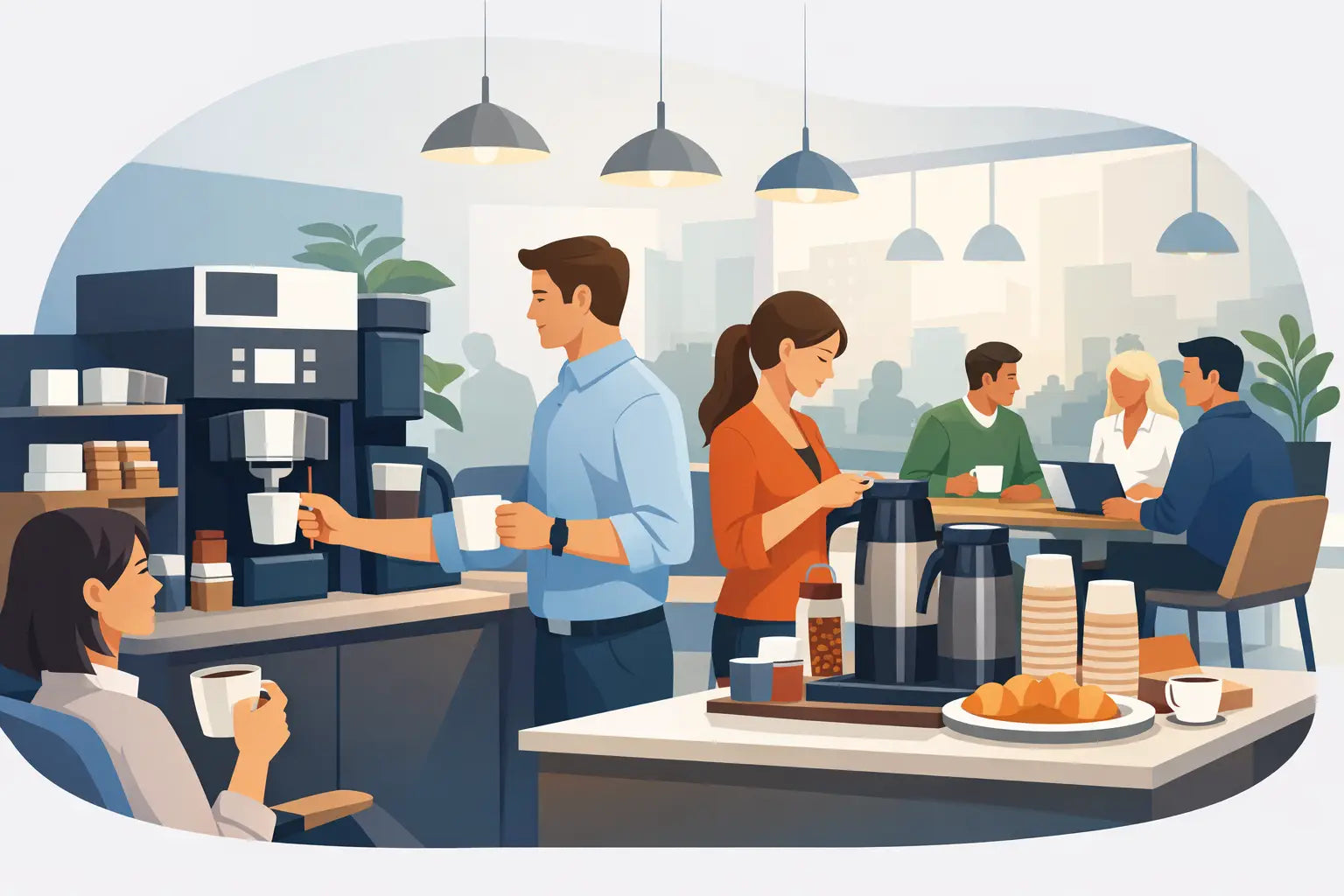
Coffee is where employees pause, catch up, welcome a client, or reset between meetings. It should feel like a benefit, not another source of waste and maintenance work.
A well-designed sustainable workplace coffee program replaces disposable routines with fresh coffee, better hydration, dependable service, and a station people want to use. Start with the waste you can eliminate, choose equipment that fits the pace of your location, and make ongoing support part of the decision. The best daily cup should improve the workplace long after the last sip.

Leave a comment
This site is protected by hCaptcha and the hCaptcha Privacy Policy and Terms of Service apply.