
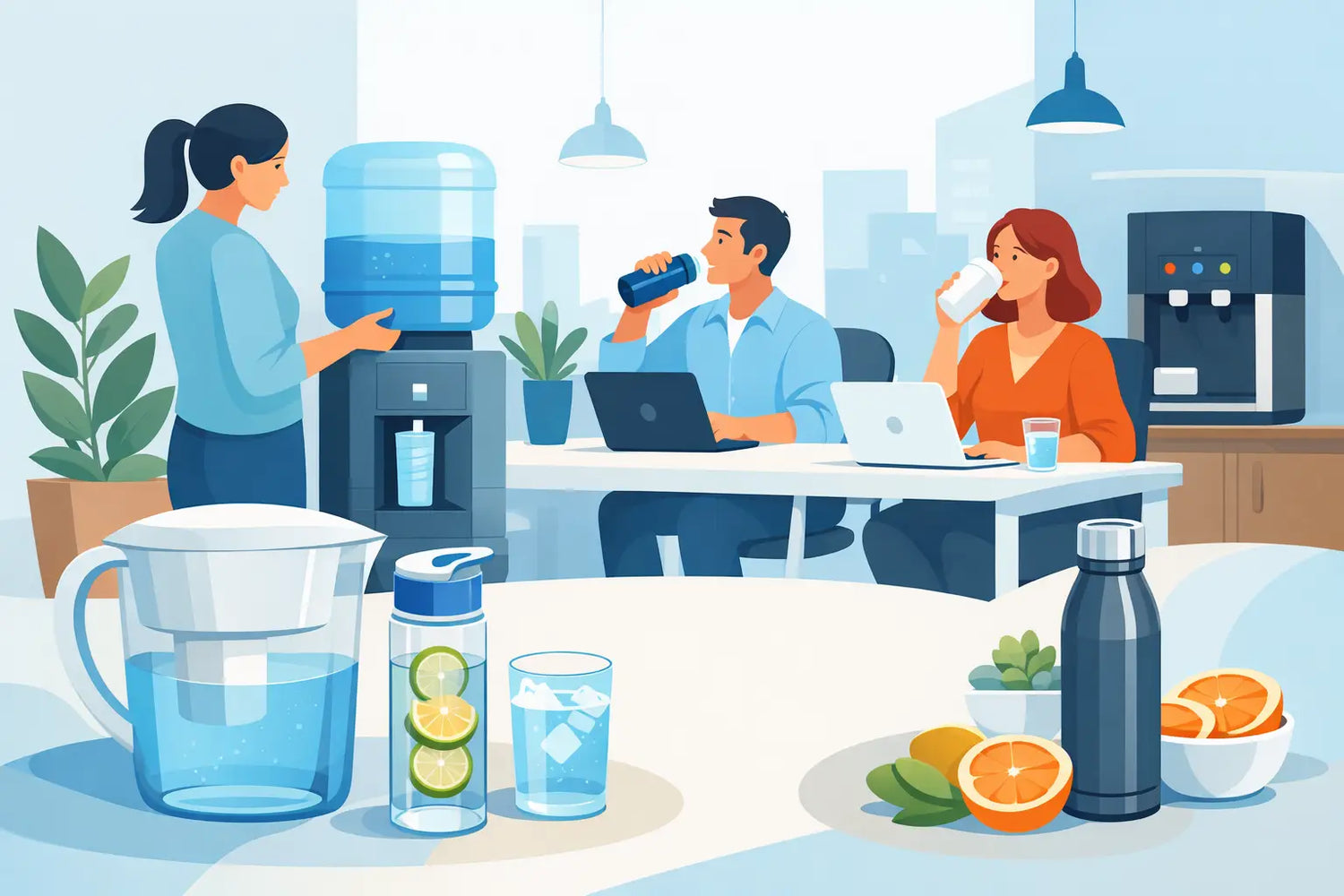
A stack of empty water bottles beside the breakroom bin is more than a cleanup issue. It signals a workplace amenity that creates waste, requires constant restocking, and still may not give people a drink they actually want. The right workplace hydration solutions make water easier to choose, easier to manage, and more appealing throughout the day.
For offices, residential buildings, hospitals, coworking spaces, and dealerships, hydration has become part of the daily experience. Employees expect more than a basic water fountain. Guests notice the details. Facilities teams need an option that does not create another inventory problem. A modern hydration program can meet all three needs when it is designed around how people use the space.
Why Workplace Hydration Deserves More Attention
Hydration supports the moments that keep a workplace moving: the first meeting of the morning, a long afternoon at a desk, a visitor waiting in a lobby, or a technician moving between service bays. When water is convenient and enjoyable, people are more likely to drink it consistently rather than reach for another canned beverage, sugary drink, or single-use bottle.
The operational case is just as clear. Bottled water programs can involve deliveries, storage, lifting, stock checks, and recurring waste. Cans and flavored drinks add recycling volume, cooler space demands, and the risk of running out of popular choices. Those small tasks often land with office managers, executive assistants, or facilities teams already responsible for dozens of other details.
A well-planned system moves hydration from a recurring supply chore to a dependable workplace service. That is especially valuable in high-traffic environments where a basic dispenser may not keep up with demand or match the quality of the rest of the amenity experience.
What Effective Workplace Hydration Solutions Include
The best setup is not always the largest unit or the most elaborate menu. It is the one that fits your people, traffic level, physical layout, and service expectations. For some locations, chilled filtered still water in a central breakroom is the practical choice. For others, sparkling water and flavored options create the pull needed to replace bottled drinks.
Filtered water that people trust
Taste is the starting point. If drinking water has an off taste, inconsistent temperature, or a slow fill rate, employees will look elsewhere. Quality filtration and dependable cooling make a noticeable difference because they remove the friction from a basic daily habit.
Placement matters too. A premium system hidden in a low-traffic corner will not deliver the same value as a unit positioned near a kitchen, collaboration area, reception space, or employee entrance. The goal is to put refreshment where the day already happens.
Choice without the bottle and can clutter
Variety changes behavior. Still water is essential, but sparkling water and zero-sugar flavor options give people a more satisfying alternative to soda or packaged drinks. A system with customization can also make the breakroom feel more current and considered, without filling refrigerators and storage closets with cases of beverages.
Bevi flavored-water systems are a strong fit for workplaces that want to offer still, sparkling, and flavored water from one streamlined station. The appeal is not simply the menu. It is the ability to give employees and guests more choices while reducing reliance on bottles and cans.
There is a trade-off to consider. More beverage options can increase usage, which is often a positive sign of employee adoption, but it also means the system should be sized correctly and supported with responsive service. An undersized unit in a busy coworking space or hospital waiting area can quickly become a point of frustration.
Ice where it serves the operation
Ice is often treated as an afterthought until teams need it. In a busy office, it can improve the everyday beverage experience. In a healthcare environment, dealership, or shared building amenity area, dependable ice may support staff comfort and guest service at a larger scale.
The right ice solution depends on volume, available space, drainage, cleaning requirements, and local conditions. A compact unit may be ideal for a small office kitchen, while a higher-capacity ice machine makes more sense for a location with continuous traffic. Matching equipment to actual demand prevents the two common problems: paying for capacity that goes unused or constantly running short when demand peaks.
Design the Program Around Real Behavior
Workplace beverage decisions work best when they begin with a few practical questions. How many people are regularly on site? Are they working standard office hours, rotating shifts, or flexible schedules? Is the water station meant for employees, visitors, residents, patients, or all of the above? What does the existing space allow for plumbing, power, drainage, and access?
A 25-person office may need one versatile station that covers chilled water, sparkling water, and a few popular flavors. A larger headquarters may benefit from multiple points of access so teams do not have to cross the floor for a refill. A dealership may place hydration near the customer lounge while maintaining a separate solution for the service team. The right answer depends on traffic patterns, not just headcount.
It also helps to consider visibility. When a hydration station is attractive, intuitive, and easy to reach, it becomes part of the workplace culture. People stop for water, exchange a few words, and return to work refreshed. That does not require turning the breakroom into a destination. It requires equipment that feels worth using.
Keep Service Simple for Your Team
A hydration amenity should not introduce more vendor coordination or equipment maintenance for your staff. The strongest programs include planning, installation, maintenance, and ongoing support as part of the service experience.
Before choosing a provider, ask how service requests are handled, who maintains the equipment, how filters and consumables are managed, and what happens when a unit needs attention. Fast response matters because a water station is used repeatedly throughout the day. If it is unavailable for a week, people immediately return to bottled alternatives.
Cost structure deserves the same attention. Low upfront pricing can look appealing until it is paired with separate delivery bills, filter replacements, repair charges, or administrative time. A managed program can provide clearer cost control by putting equipment care and service responsibilities in one place.
This is also where beverage service becomes more strategic. When water, ice, and coffee are planned together, facility leaders can avoid a patchwork of machines and vendors. A coordinated setup creates a cleaner amenity area, simplifies day-to-day oversight, and gives employees a more consistent experience.
Measure Value Beyond Gallons Served
Hydration programs are not judged only by how much water they dispense. Their value shows up in the employee and guest experience, the reduction in single-use packaging, and the time your team no longer spends managing beverage stock.
Look for practical indicators after installation. Are employees using refillable bottles more often? Is the refrigerator less crowded with cans? Are reception and customer-facing spaces more welcoming? Has the office manager stopped placing emergency beverage orders? These are meaningful signs that the solution is working.
For employers competing for attendance, retention, and stronger workplace culture, small daily conveniences carry weight. People may not choose a job because of sparkling water, but they recognize when an employer has made the workplace easier, more comfortable, and more thoughtfully equipped.
Build a Better Daily Beverage Experience
The most effective workplace hydration solutions do not ask employees to change their routines through policy or reminders. They make the better choice the easy choice: cold, filtered water nearby; flavors people enjoy; ice when it is needed; and no pile of packaging left behind.
For workplace leaders, that is the real opportunity. Treat hydration as a performance and hospitality tool, then choose a service model that keeps it reliable long after installation day. A well-used water station can make every coffee break, meeting, lobby visit, and afternoon reset feel a little more considered.

Leave a comment
This site is protected by hCaptcha and the hCaptcha Privacy Policy and Terms of Service apply.