
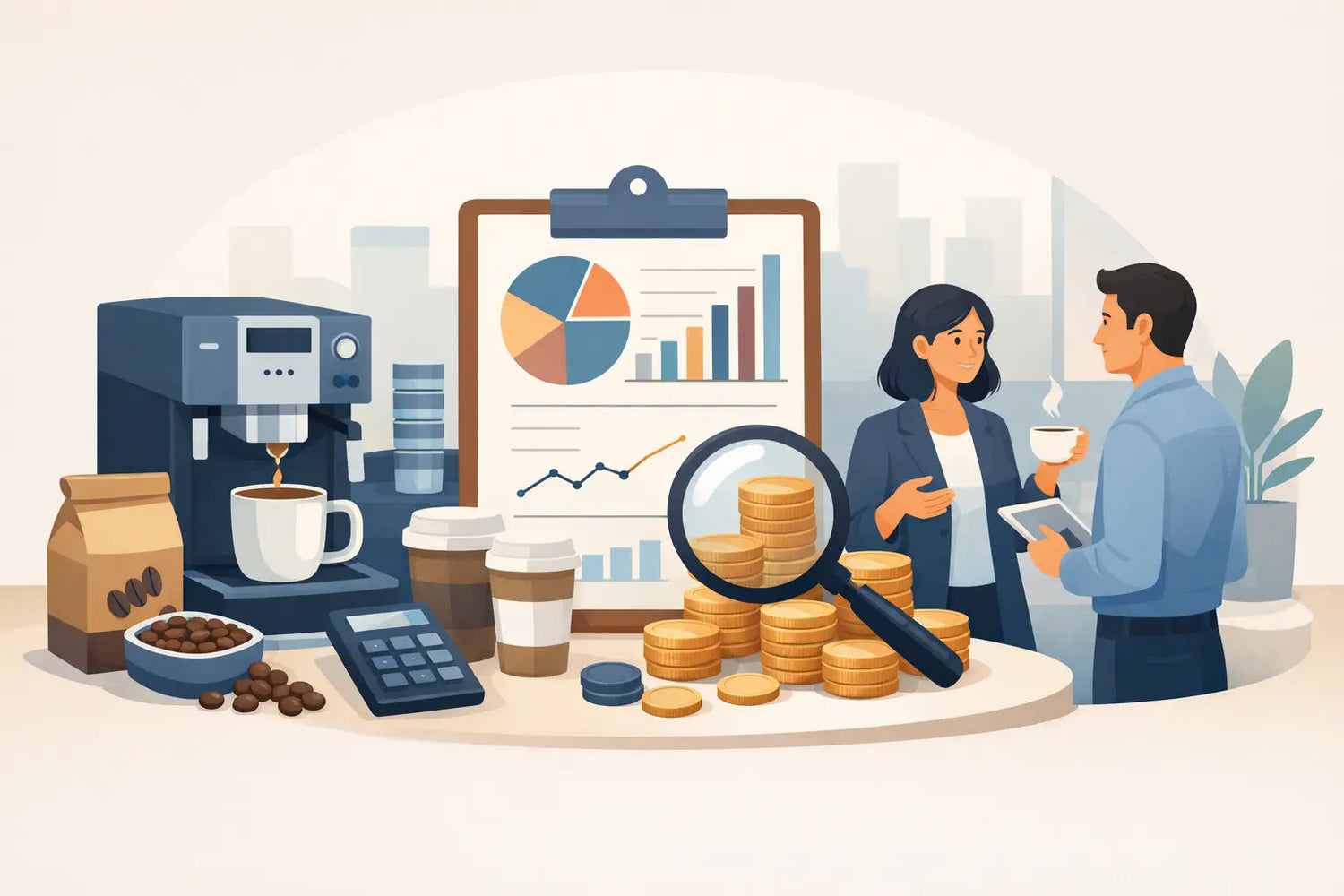
A coffee budget can look reasonable on paper and still create daily friction in the workplace. The machine may be inexpensive but unreliable. The coffee may be cheap but go untouched. Pods, milk, cups, filters, and emergency supply runs can turn a simple line item into a recurring operational headache. This workplace coffee budgeting guide helps decision-makers build a budget around the experience people actually expect, while keeping costs visible and manageable.
For offices, residential buildings, hospitals, coworking spaces, and dealerships, the goal is not simply to provide caffeine. It is to create a dependable amenity that supports productive mornings, better conversations, and a more polished welcome for guests.
Start With Consumption, Not Equipment
The first budgeting question is not, “Which machine should we buy?” It is, “How many drinks will this location actually serve?” A setup designed around 20 cups a day will struggle in a busy office with 75 employees, frequent visitors, and a rush between 8:30 and 10:00 a.m.
Estimate consumption using employee count, visitor volume, work schedules, and current beverage habits. In a typical office, not every employee drinks coffee every day, while some will have two or three beverages. A practical starting range is one to two hot drinks per person per workday, then adjust for your environment.
A customer-facing dealership or a high-traffic coworking space may see greater guest demand than an internal office. A hospital department may need service across multiple shifts. Residential amenity areas can have lower but less predictable usage. The right forecast accounts for those patterns instead of applying one flat number to every site.
Consumption also affects machine selection. Higher volume does not only mean more beans. It may require a larger hopper, additional milk capacity, a faster recovery time, or more than one machine. Budgeting for adequate capacity upfront protects the employee and guest experience when demand peaks.
Build a Complete Workplace Coffee Budget
A coffee program has more cost components than the equipment invoice. A clear budget captures the full cost to serve each cup, including the resources required to keep the program working day after day.
Your plan should account for four core areas:
- Equipment, including purchase, rental, installation, filtration, and any required electrical or plumbing work.
- Consumables, including coffee beans, milk options, sweeteners, cups, lids, stirrers, and cleaning products.
- Service, including preventive maintenance, repairs, technician visits, and machine downtime.
- Internal labor, including supply ordering, stock checks, cleaning coordination, invoice processing, and employee time spent troubleshooting.
A managed pay-per-cup model can simplify this calculation. Rather than separating a machine lease, service contract, repair fund, and consumable orders, decision-makers can budget around beverage consumption with service and maintenance included. It is not always the lowest apparent cost per item, but it can be the more predictable total cost of ownership.
Compare Cost Per Cup With the Experience Delivered
Cost per cup is a useful metric, provided it is measured honestly. Divide your monthly program cost by the number of drinks served, then compare that number with the quality, speed, reliability, and choice the program provides.
For example, a low-cost coffee pot may produce a low per-cup figure if employees drink it. If they leave it sitting in the kitchen and buy coffee elsewhere, the business is paying for an amenity that is not delivering value. At the other end, an elaborate café-style setup can be excessive for a small team that needs a fast, consistent black coffee and occasional specialty drink.
The best value usually sits between those extremes: premium whole beans, a professional bean-to-cup machine, customized drink options, and fast preparation without a complicated process. Freshly grinding beans for each drink helps create the quality people notice. Fully automatic equipment keeps the experience simple enough for a busy workplace.
Ask a direct question during budget planning: what should a cup accomplish here? For an executive office, the answer may be a more impressive guest experience. For a large operations team, it may be fast access to reliable coffee during shift changes. For a property manager, it may be a clean, premium common-area amenity that residents appreciate.
Use This Workplace Coffee Budgeting Guide to Avoid Hidden Costs
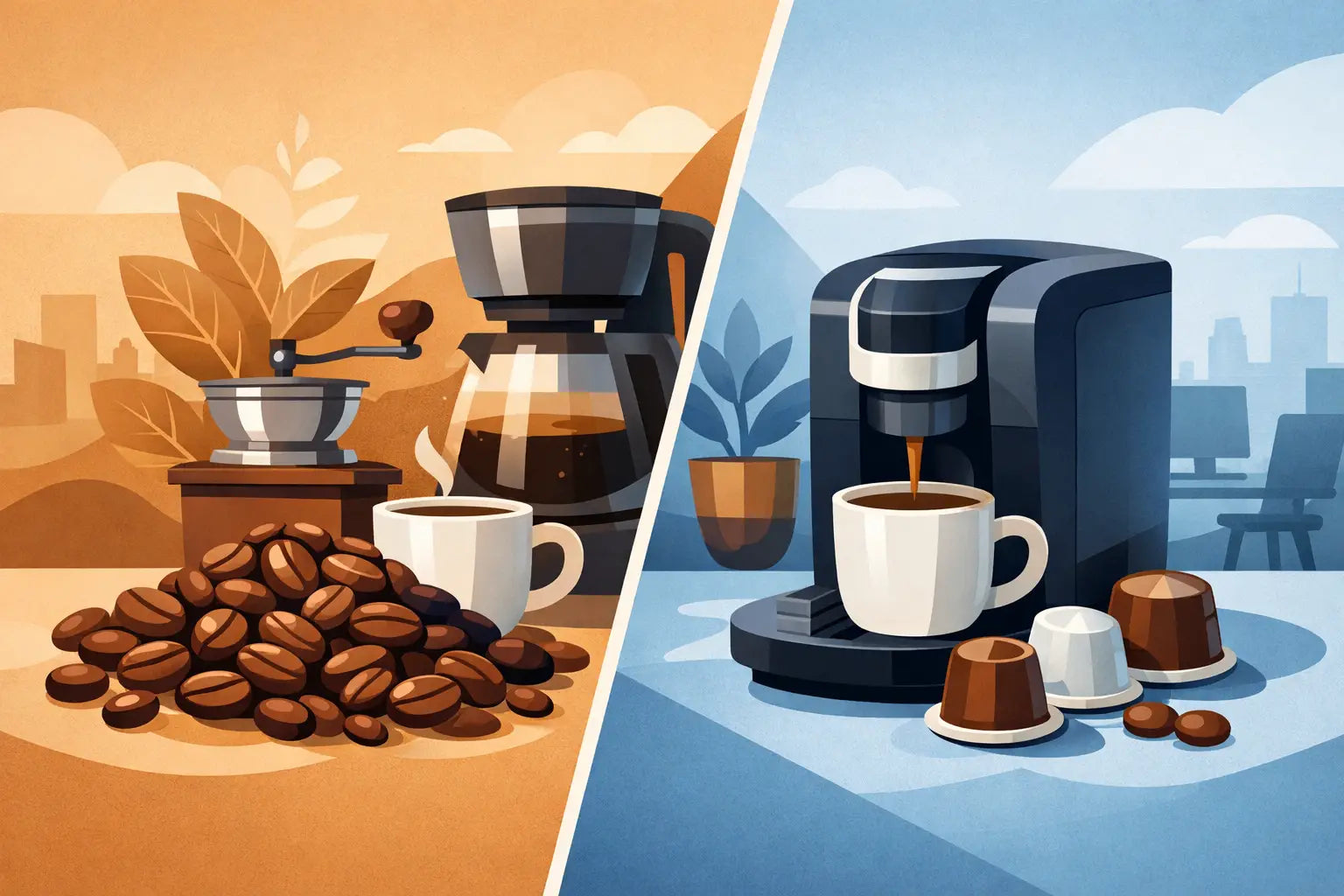
The lowest equipment price is rarely the full story. Traditional ownership models can bring surprise expenses: a repair after warranty coverage ends, a replacement machine after heavy use, a water filtration issue, or a service visit that takes days to schedule. Capsule systems can introduce another issue - ongoing waste and a supply chain that requires constant monitoring.
Consider the operational trade-offs before selecting a model. Buying equipment can make sense for organizations with in-house facilities support, predictable usage, and a willingness to manage service contracts and inventory. It gives the business direct ownership, but ownership also creates responsibility.
A rental approach can reduce the initial investment, though recurring rental fees may make monthly costs harder to evaluate over time. A fully managed service can be especially attractive when the priority is dependable quality without asking internal teams to become coffee and equipment specialists.
The Coffee Corp structures its workplace beverage service around premium Colombian whole beans, professional bean-to-cup equipment, supplies, and ongoing maintenance, with no rental fee. That approach can give teams a clear path to premium coffee while reducing the routine work behind it.
Budget for Choice Without Creating Waste
Today’s workplace beverage expectations extend beyond regular coffee. Employees may look for espresso drinks, hot chocolate, decaf, dairy alternatives, sparkling water, or flavored still water. Offering choice can support workplace culture, but too many slow-moving products create waste and complicate inventory.
Use actual demand to guide the menu. Start with the beverages most likely to be used every day, then add options that make sense for your employee population and visitors. A machine with customizable drinks can provide more variety without filling cabinets with multiple formats, syrups, pods, and single-use products.
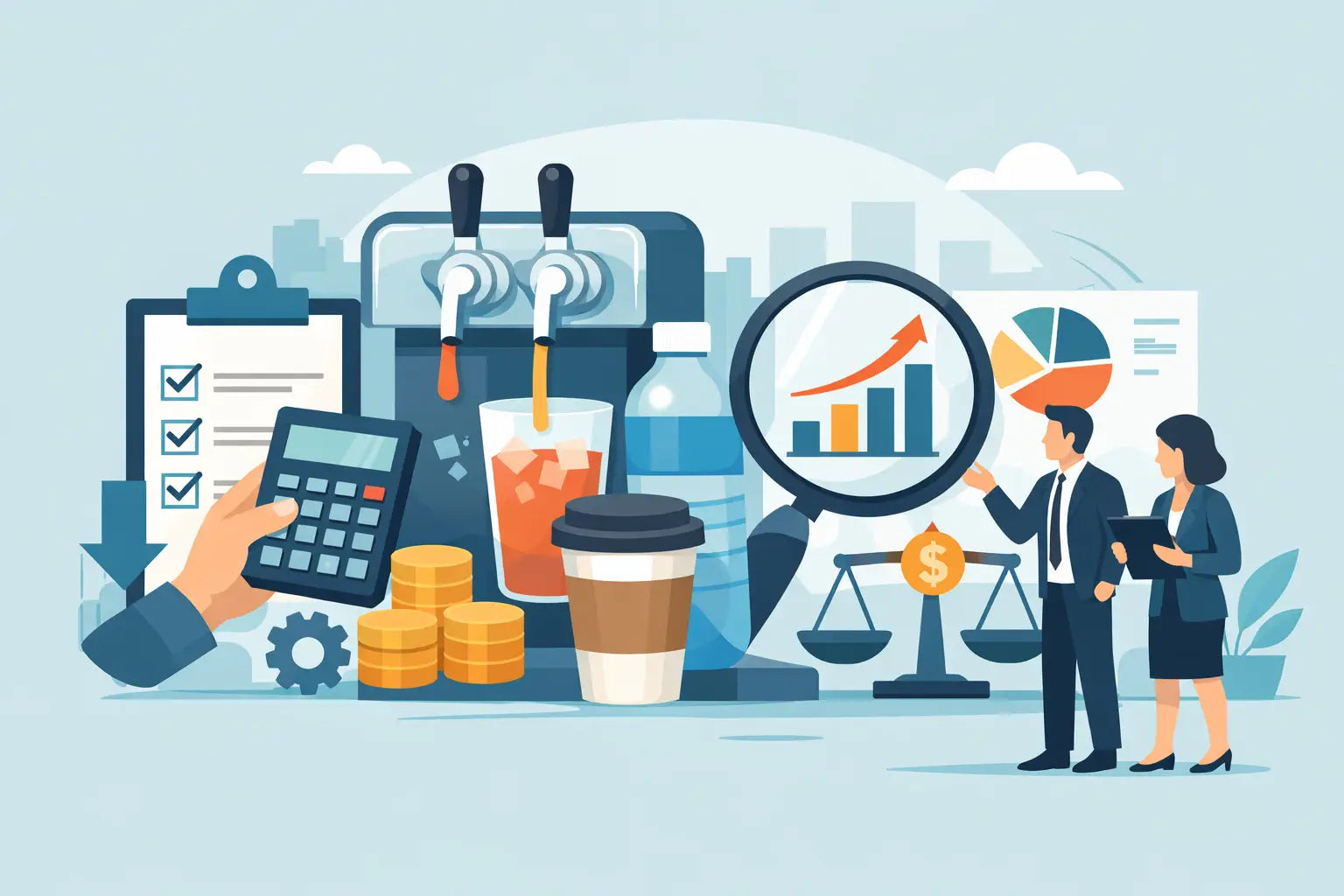
Water and ice should be considered alongside coffee, not as a separate afterthought. When employees have convenient filtered water, ice, and flavored hydration available on site, the workplace can reduce bottled drink purchases and the restocking burden that follows. For a busy office or shared building, consolidating beverage service can also make vendor management easier.
Sustainability belongs in the budget conversation as well. A capsule-free coffee program can reduce single-use waste, while refillable water and flavored-water systems may reduce the flow of bottles and cans through the workplace. The financial return varies by location, but less waste often means fewer supplies to purchase, store, move, and dispose of.
Set a Budget That Can Adapt
A beverage program should be reviewed regularly, particularly after a move, headcount change, return-to-office shift, or expansion of guest traffic. Monthly cup data reveals whether the current budget reflects reality. It can also show when a machine is undersized, when a second unit is justified, or when certain consumables should be adjusted.
Avoid treating coffee as a fixed annual expense that cannot move. Consumption can rise when a company adds employees, opens more days, or improves the quality of the offering. That is not automatically a problem. If the added usage reflects a better employee experience and stronger guest hospitality, it may be evidence that the program is working.
The key is setting practical guardrails. Define expected monthly volume, establish a target cost per cup, identify who reviews usage, and confirm what service response is included if equipment needs attention. A good provider should make those numbers easier to understand, not bury them across multiple invoices.
A well-planned coffee budget does more than keep spending under control. It gives employees a reason to pause, connect, and recharge without leaving the building, while giving every guest a stronger first impression of the workplace.

Leave a comment
This site is protected by hCaptcha and the hCaptcha Privacy Policy and Terms of Service apply.