
A coffee machine can look like a simple workplace purchase until the first empty hopper, service call, stale bag of beans, or Monday-morning breakdown. That is where service versus ownership becomes a practical business decision, not just a budget line item. For offices, residential buildings, hospitals, coworking spaces, and dealerships, the better model is the one that keeps great drinks flowing without creating another operational task for your team.
What Ownership Really Means for Your Workplace
Buying a coffee machine gives your organization control over the equipment. It can also create the impression of a lower long-term cost, especially when the purchase price is spread over several years. For a small setting with predictable usage, an internal team that enjoys handling details, and a basic beverage need, ownership can be a reasonable fit.
But the machine is only one part of the program. Someone still needs to select coffee, order supplies, monitor inventory, clean the system, manage repairs, coordinate technician visits, and decide what happens when usage changes. If the machine goes down before a client meeting or during a busy shift, the purchase price does not solve the immediate problem.
Ownership also makes quality consistency harder to protect. A premium bean-to-cup machine can produce excellent drinks, but only when it has fresh whole beans, proper cleaning, calibrated settings, and the right consumables. Without a clear process, a workplace can end up with sophisticated equipment delivering an inconsistent experience.
For facilities and office managers, the question is not simply, “Can we buy this machine?” It is, “Who owns the result every day?”
Service Versus Ownership: Compare the Full Cost
The most useful comparison looks beyond the equipment invoice. Ownership often includes a collection of costs that appear at different times and in different departments: the initial machine purchase, replacement parts, repairs, water filtration, cleaning products, beans, milk options, cups, employee time, and the cost of downtime.
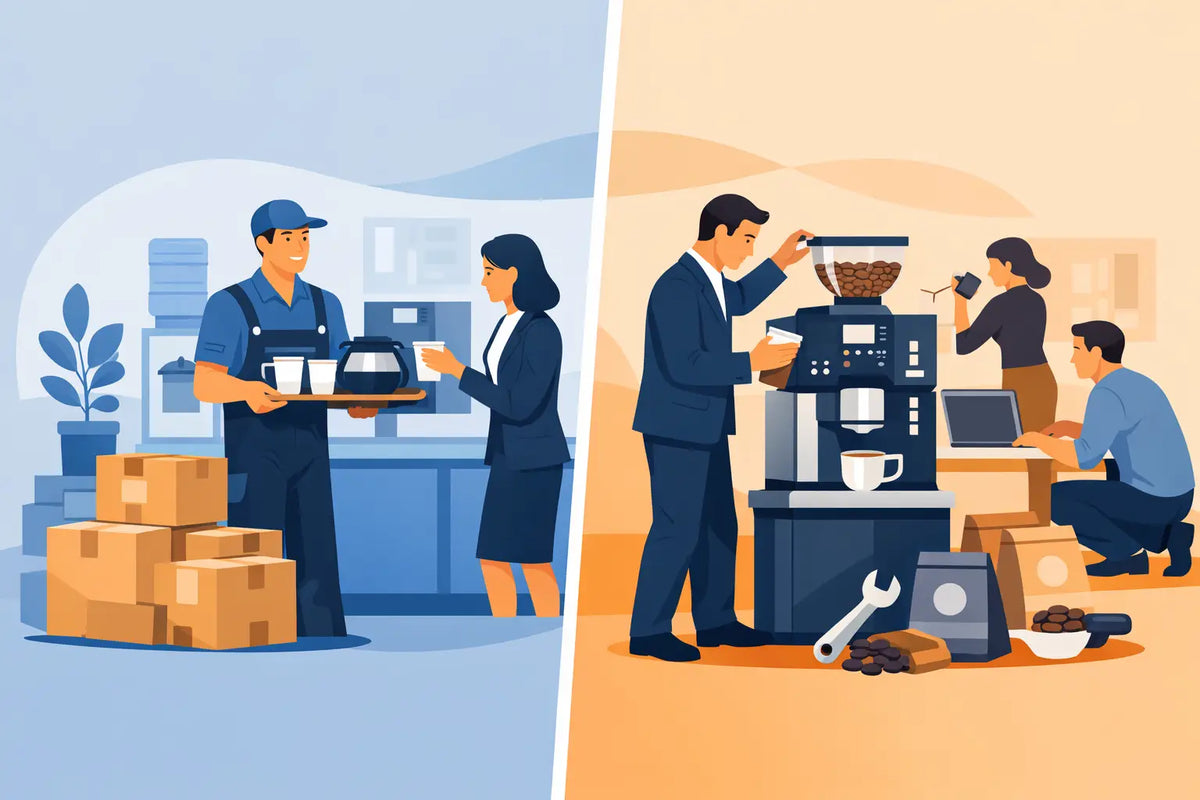
A managed service model organizes those variables into a program built around consumption. With a pay-per-cup approach, clients receive a premium beverage experience while service, supplies, machine care, and maintenance are handled as part of the offering. There is no rental fee to layer onto the monthly bill, and teams are not left chasing multiple vendors when coffee, equipment, and service needs overlap.
That does not mean ownership is always the wrong answer. A company with a dedicated hospitality team, a very specialized equipment preference, or unusually low volume may prefer to manage its own program. The trade-off is clear: ownership offers more direct control, while service shifts the administrative burden and operating risk to a beverage partner.
For most busy workplaces, that shift has real value. It protects the employee and guest experience while giving internal teams time back for the work they were hired to do.
The Cost of Downtime Is Bigger Than a Repair Bill
When coffee is unavailable, the impact is rarely limited to one broken machine. Employees leave the building for drinks, reception teams apologize to guests, and managers spend time looking for a quick workaround. In a dealership or medical setting, where hospitality shapes perception, a beverage station that is out of service can feel noticeably out of step with the rest of the experience.
A service model is designed to prevent small issues from becoming prolonged disruptions. Regular care, responsive maintenance, and a provider that understands the installed equipment help keep the station ready for the next cup. That reliability is especially valuable in high-traffic locations where a machine may support dozens or hundreds of drinks each day.
Premium Coffee Is an Experience, Not an Appliance
Workplace coffee has changed. People expect more than a pot sitting on a warmer or a cabinet full of disposable pods. They want a fresh drink that fits their preferences and is ready quickly enough to fit between meetings, shifts, appointments, and conversations.
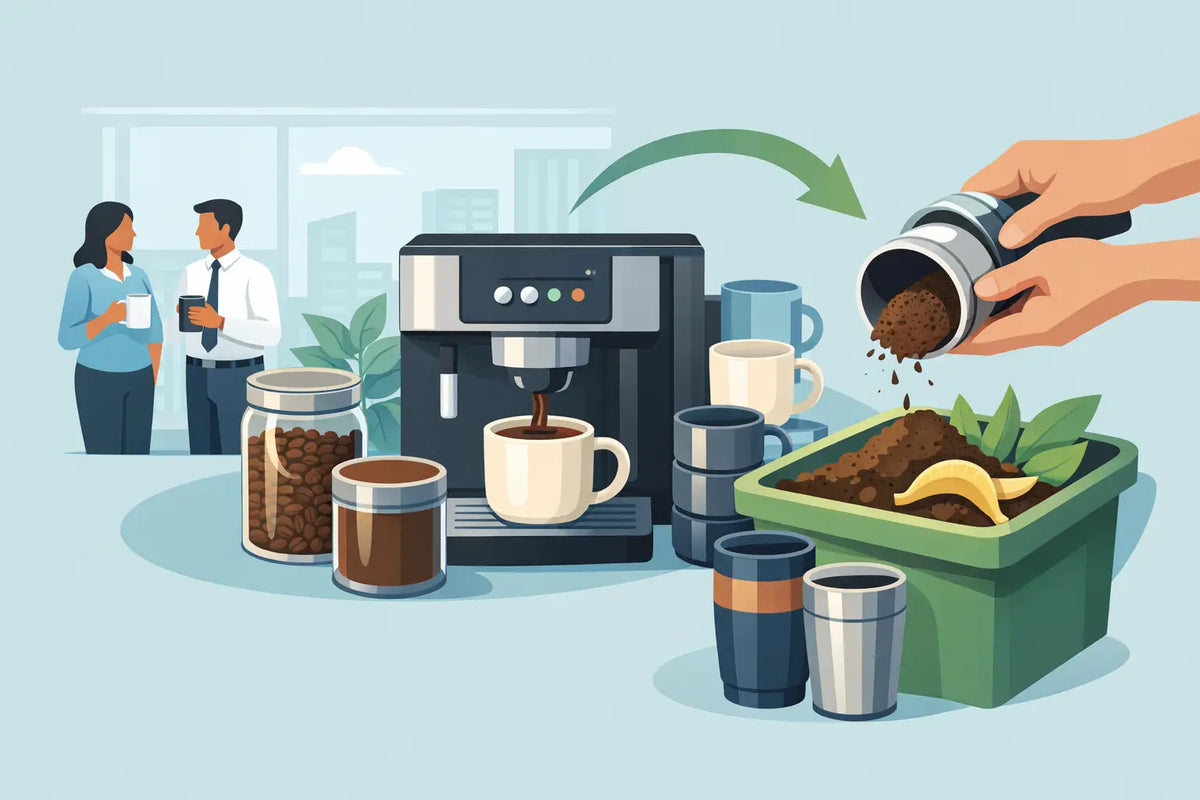
Professional bean-to-cup systems meet that expectation by grinding whole beans on demand and preparing customized drinks in under 60 seconds. With premium Colombian coffee, the difference is easy to taste: fresher aroma, better flavor, and a more polished daily ritual for employees and visitors.
The equipment still matters, but it should be selected around the space and the people using it. A compact office kitchen has different needs than a coworking lounge, a hospital staff area, or a dealership showroom. Traffic patterns, available plumbing, counter space, peak demand, and menu preferences all affect the right setup.
A managed provider can design the program around those details instead of asking your team to become coffee-equipment experts. The goal is simple: provide the right drink experience in the right place, with as little friction as possible.
The Same Decision Applies to Hydration
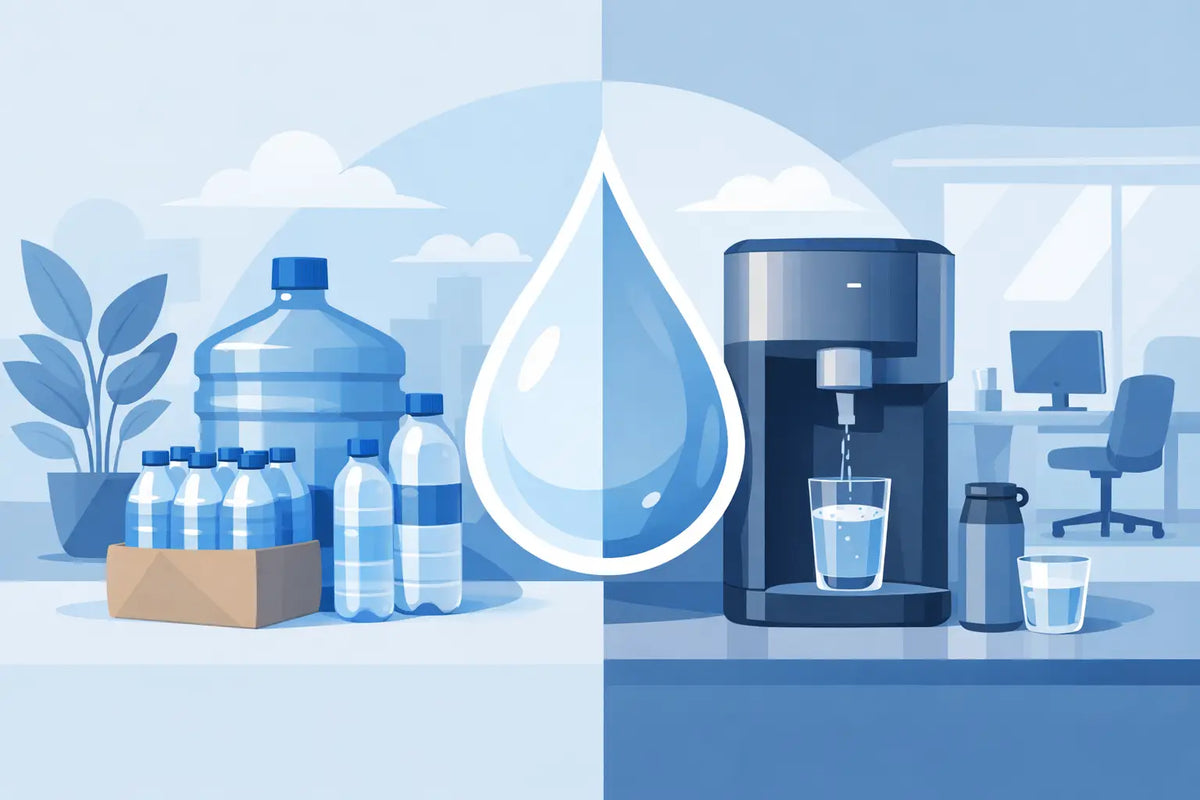
Coffee is often the starting point, but workplace beverage strategy includes water as well. Bottled water and canned beverages can create a constant restocking cycle, fill storage rooms, and add packaging waste to the facility’s daily workload.
Modern water and ice coolers, along with Bevi flavored-water solutions, offer a more flexible alternative. Employees and guests can choose still, sparkling, chilled, flavored, or enhanced water without relying on stacks of single-use bottles and cans. For a workplace, that means better access to hydration and a more intentional amenity without adding another inventory headache.
The service versus ownership decision follows the same logic. A cooler or dispenser needs installation, filter changes, sanitation, maintenance, and attention when demand shifts. When those responsibilities are included in a managed program, hydration becomes easier to sustain at a high standard.
When a Managed Model Makes the Most Sense
A fully supported beverage service is particularly effective when your location serves a steady volume of employees, residents, patients, customers, or guests. It also makes sense when the person responsible for amenities already manages competing priorities such as vendors, building operations, employee experience, or reception.
Consider service when reliability matters more than owning an asset, when consumption can vary from month to month, or when you want premium drinks without stocking a supply closet. It is also a strong choice for organizations that want to reduce pod waste while offering a better coffee experience.
For example, a growing office may not know how many employees will be in the space six months from now. A pay-per-cup structure can be more adaptable than purchasing equipment based on a forecast that quickly changes. A residential building may want a coffee station that makes its lobby feel more welcoming, but its property team should not have to troubleshoot a grinder. A busy dealership may need drinks that support guest hospitality from opening to closing, not another vendor relationship to manage.
In each case, the value is not only in the beverage. It is in the confidence that the program is actively supported.
Questions to Ask Before You Decide
Before choosing service or ownership, start with the daily reality of your location. How many drinks will the station serve? Who will order beans, cups, cleaning materials, and replacement filters? What experience do you want employees and guests to have? How quickly can a repair be addressed? And how much internal time are you willing to dedicate to keeping the program running?
It also helps to ask whether the proposal accounts for the complete experience. A low equipment price may not include installation, maintenance, consumables, training, or a response plan when something goes wrong. A clear service proposal should make responsibilities easy to understand and costs easy to anticipate.
The Coffee Corp has built its workplace programs around that clarity, with more than 20 years of experience, over 2,000 installed machines, and 40,000 daily cups served. The model is designed for teams that want premium coffee and hydration without taking on the behind-the-scenes work.
A workplace beverage program should make the day better, not add another item to someone’s checklist. Choose the model that keeps the coffee fresh, the water accessible, and your team focused on the people and work that matter most.

Leave a comment
This site is protected by hCaptcha and the hCaptcha Privacy Policy and Terms of Service apply.