

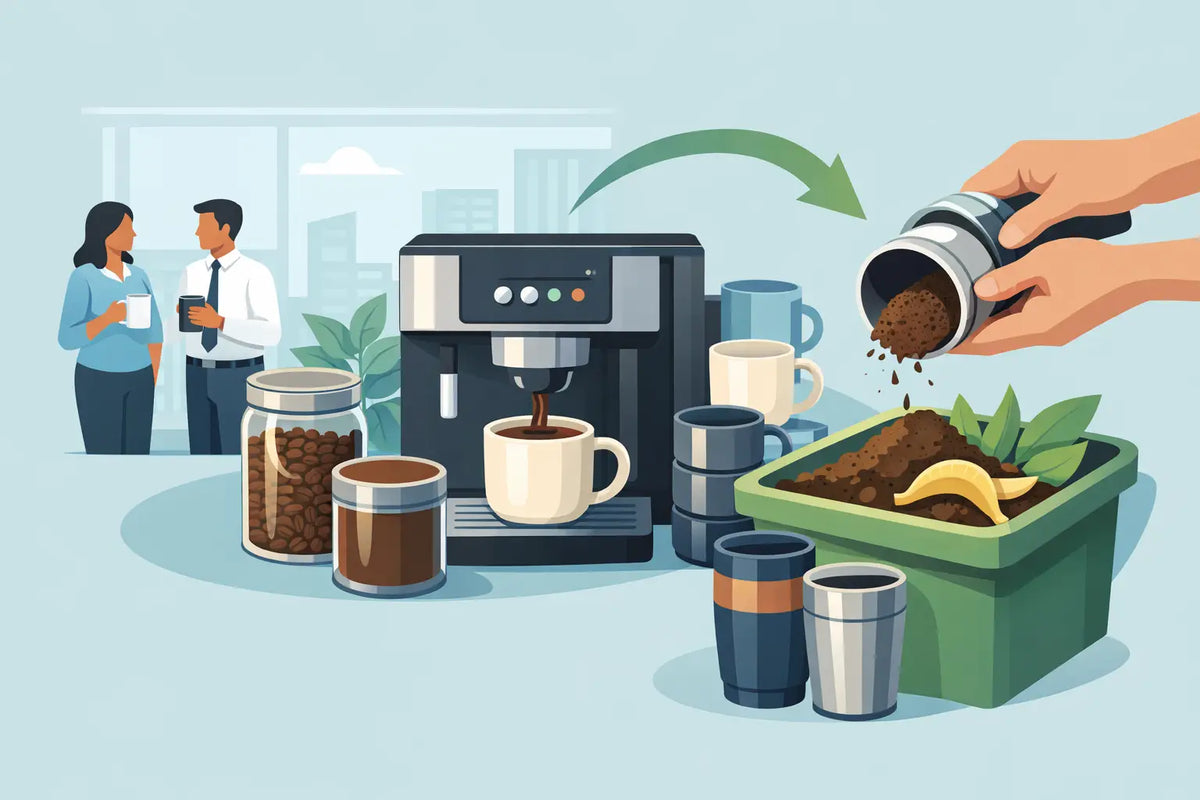
The trash can beside the office coffee station tells a story. It may be full of single-serve pods, half-used bags of stale coffee, disposable cups, and drinks poured out because the machine was down or the taste was inconsistent. Learning how offices reduce coffee waste starts with seeing that waste is not one problem. It is a chain of small operational decisions, from the machine selected to the way supplies are replenished.
For workplace leaders, the goal is not simply to use less coffee. It is to deliver a better cup with less unnecessary packaging, fewer product losses, and less time spent managing the beverage station. The right program can support sustainability goals while giving employees and guests a faster, more premium experience.
How Offices Reduce Coffee Waste at the Source
The biggest opportunity is often the format of the coffee itself. Capsule and pod systems are convenient on the surface, but every drink creates a piece of packaging that must be collected, sorted, and processed correctly. Even recyclable capsules can end up in general waste when a busy office does not have a clear collection program.
Bean-to-cup systems remove that recurring layer of packaging. Whole beans are stored in the machine, ground only when a drink is selected, and brewed on demand. The result is fresh coffee without a pod for every espresso, cappuccino, or regular coffee.
This approach also reduces a less visible form of waste: pre-brewed coffee that sits too long. A traditional drip pot is often made in anticipation of demand. If the morning meeting changes rooms or employees choose another beverage, the remaining coffee loses quality and is poured out. On-demand preparation matches production to actual consumption. One person selects one drink, and the machine prepares that drink in under a minute.
That does not mean every office needs the same equipment. A small executive suite, a large hospital breakroom, and a high-traffic coworking lounge have very different peaks in demand. The most effective setup is sized around real usage, traffic patterns, available counter space, and the drinks people actually choose.
Replace Pods With Freshly Ground Coffee
Moving beyond pods is the most visible waste reduction decision, but it should not mean asking employees to accept a lower-quality experience. In fact, fresh-ground coffee can be an upgrade.
A professional bean-to-cup machine gives users menu choice without creating a separate package for each choice. Employees can select espresso-based drinks, coffee, and specialty options from a single system. For workplaces trying to improve an amenity while reducing waste, that combination matters. Sustainable choices tend to stick when they are also the most convenient choice.
There is a practical trade-off to consider. Whole-bean systems need routine cleaning, calibration, and supply management to perform consistently. An under-supported machine can waste water through excessive rinsing, dispense poorly calibrated drinks, or go unused when it needs service. That is why the equipment alone is not the entire solution. Ongoing maintenance and responsive support protect both the coffee experience and the waste-reduction benefit.
Order for Real Demand, Not Worst-Case Demand
Overordering is a common source of workplace coffee waste. Facilities teams understandably want to avoid running out before a busy week, so they build a large cushion of coffee bags, creamers, cups, and flavor supplies. Over time, products get lost in storage, expire, or are opened before older inventory is used.
A better approach is to establish a consumption baseline. Track how many drinks the location serves each day, identify high-volume periods, and review whether demand changes with hybrid work schedules, seasonal visitors, or major meetings. A workplace with a Tuesday-through-Thursday attendance spike should not be stocked like a five-day, fully occupied office.
For a managed pay-per-cup program, consumption data can make this easier to control. Instead of guessing how much inventory to purchase and store, decision-makers can align service and replenishment with actual use. It creates a clearer picture of beverage spending while reducing the odds of unused supplies accumulating in a supply closet.
Freshness should guide inventory decisions too. Premium whole beans produce their best results when they are turned over regularly. Ordering a reasonable amount more often is usually better than storing excess coffee for months. The same principle applies to milk alternatives, syrups, sweeteners, and cups.
Make the Reusable Choice the Easy Choice
Coffee waste is not limited to what happens inside the machine. Disposable cups, lids, stirrers, and sleeves can quickly become the largest visible waste stream in a busy office.
The simplest change is also one of the most effective: give people a practical reason to use their own mug. Keep clean ceramic mugs readily available near the machine, position a mug rack where it is easy to see, and make sure the equipment accommodates common travel mugs. If employees have to hunt for a clean mug or cannot fit it under the dispenser, disposable cups will remain the default.
Some workplaces still need disposable options for guests, meetings, or employees on the move. That is reasonable. The goal is not to eliminate every cup at all costs. It is to reserve single-use items for situations where they add real convenience, rather than treating them as the only option.
Water service can support the same habit. A filtered water or flavored-water station makes refillable bottles more useful throughout the day, reducing the need for bottled water and canned drinks alongside coffee. When hydration and coffee are designed as one workplace beverage program, teams can simplify both purchasing and waste management.
Turn Coffee Grounds Into a Useful Material
Used grounds are organic material, not a reason to overcomplicate an office program. They can be composted where building services, local collection, or a partner program makes that practical. Coffee grounds may be suitable for commercial composting, landscaping programs, or community gardens, depending on local requirements.
The key is to confirm that the program can actually handle the material. A bin labeled “compost” is not a solution if it becomes contaminated with plastic stirrers, packets, or cup lids. Start with a clear process near the coffee station, use signage with plain instructions, and assign responsibility for collection.
For many offices, composting grounds is a worthwhile second step, not the first. Reducing pod waste, preventing stale coffee, and controlling unnecessary inventory will often create a larger immediate impact. Once those fundamentals are in place, grounds recovery can add another meaningful improvement.
Train for Better Use, Not More Rules
Employees do not need a long sustainability policy to use a coffee station responsibly. They need a few simple cues at the point of use. A short prompt to select the right cup size, use a reusable mug, or report a machine issue early can prevent repeated waste.
Machine settings matter as much as signage. If the default coffee volume is too large, people may leave the last third of every drink behind. If a specialty drink is too sweet or too weak, employees may discard it and try again. Reviewing beverage recipes after installation helps match output to preferences and reduces avoidable remakes.
Facilities teams should also make it easy to report problems. A leaking milk line, inconsistent grinder, or incorrect dispense size can create significant waste before it becomes a formal service ticket. Fast maintenance protects uptime, but it also prevents ingredients, water, and coffee from being lost day after day.
Choose a Partner That Owns the Operational Details
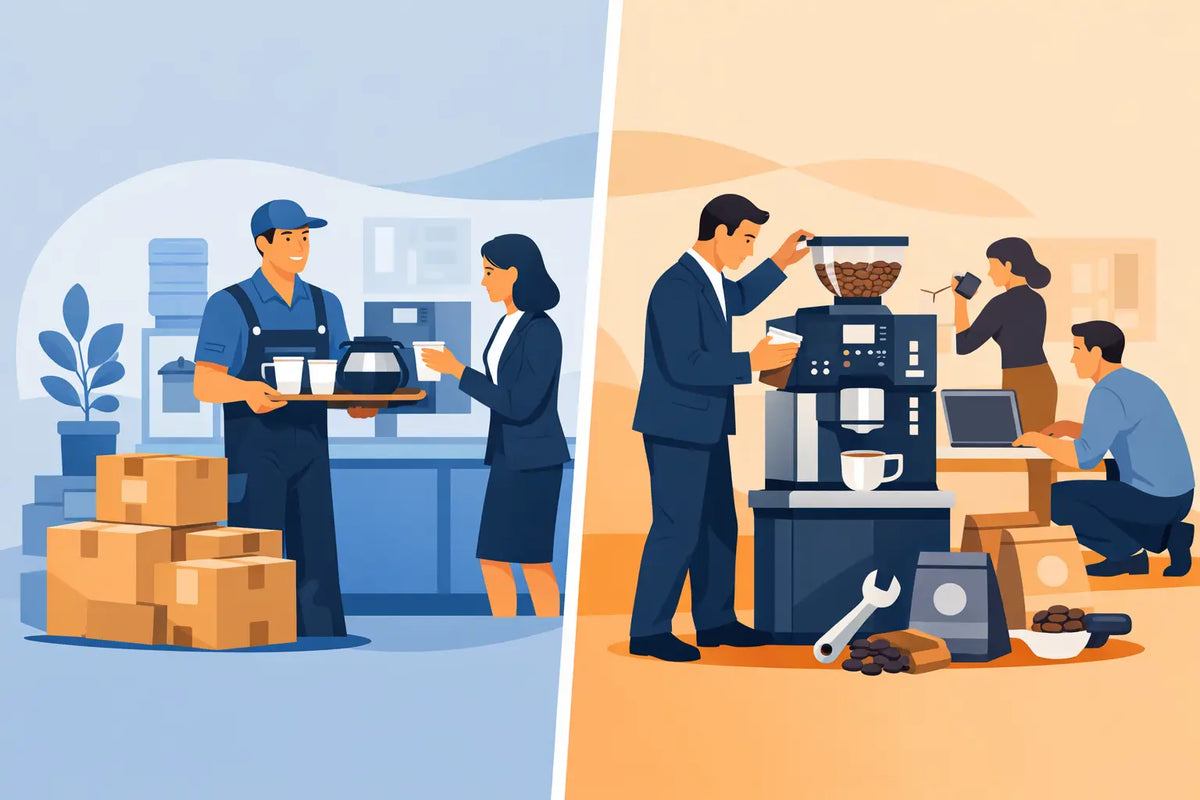
Waste reduction works best when it is built into the service model rather than assigned as another task to an office manager. The Coffee Corp designs workplace beverage programs around each location’s space and consumption, pairing premium Colombian whole beans with professional automatic machines, supplies, and included maintenance.
That level of support matters because the details add up. Properly maintained machines dispense more consistently. Right-sized inventory stays fresher. On-demand drinks reduce pot waste. Capsule-free brewing removes a repetitive packaging stream. Together, those choices create a coffee program that is easier to manage and more aligned with the workplace experience employees expect.
The most practical next move is to walk to the coffee station and look at what is being thrown away over one workweek. The pattern will point to the right improvement, whether that is replacing pods, adjusting ordering, adding reusable mugs, or choosing a fully supported bean-to-cup system that makes every cup count.


Leave a comment
This site is protected by hCaptcha and the hCaptcha Privacy Policy and Terms of Service apply.