
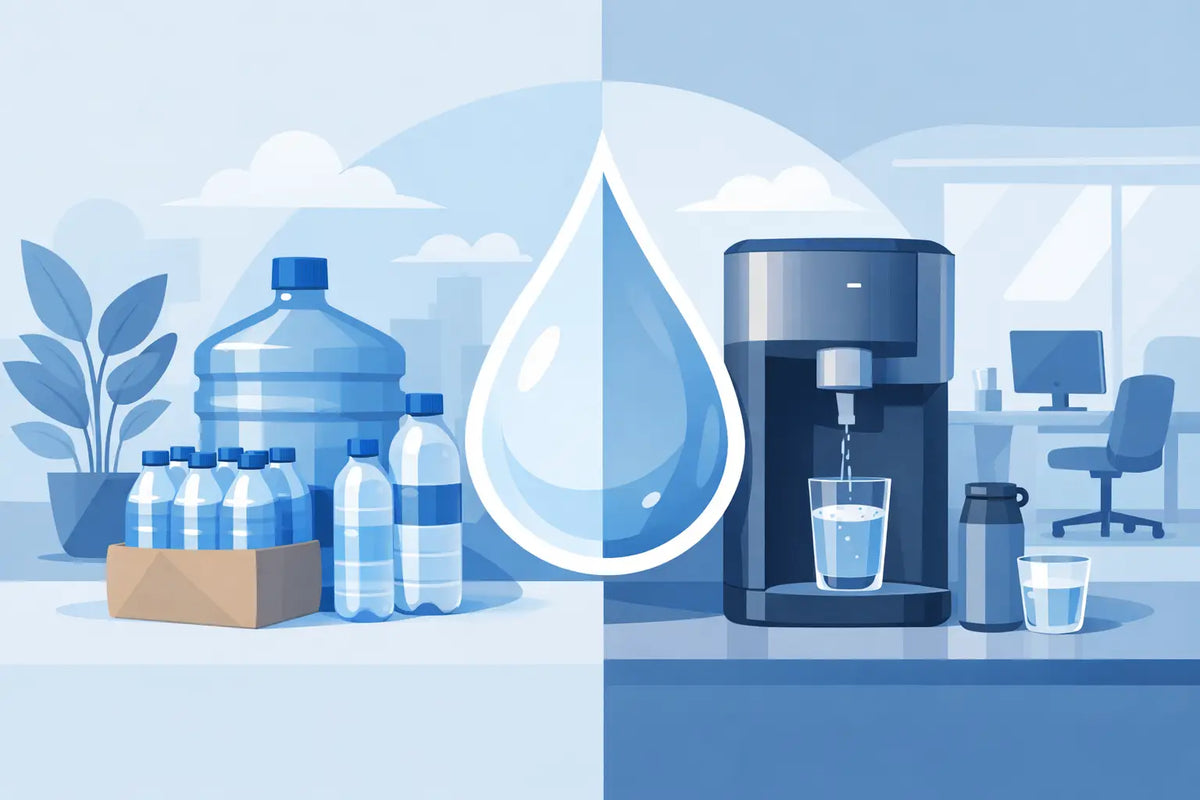
A stack of water cases in the reception area sends a message, even when no one says it out loud: hydration is something the workplace has to manage. Deliveries need coordination, empty bottles need storage, and someone is always checking whether there is enough water left for the afternoon rush. The bottled versus filtered water decision is not just about what people drink. It shapes your space, operating workload, sustainability goals, and the experience you offer employees and guests.
For an office, hospital, coworking space, residential building, or dealership, the right answer depends on consumption, layout, and expectations. Bottled water can be familiar and useful in specific situations. Filtered water systems can reduce recurring handling while giving people a more elevated daily amenity. The better choice is the one that supports your location without creating another task list for your team.
Bottled Versus Filtered Water: The Workplace Decision
Bottled water is straightforward. Cases arrive, employees recognize the brands, and individual bottles are easy to place in meeting rooms, guest lounges, vehicles, or event spaces. For a one-time event, a temporary site, or a location with very low water consumption, bottles may be the practical option. There is no equipment installation and no need to consider plumbing access.
The trade-off is that every bottle has to be purchased, delivered, carried, chilled, displayed, collected, and discarded. Those steps may feel minor one at a time, but they add up quickly in a busy workplace. When the supply runs low, hydration becomes an urgent errand instead of a reliable service.
Filtered water changes the model. Rather than managing a steady flow of packaged beverages, your team provides water at the point of use. A properly selected cooler or flavored-water system can serve still, sparkling, chilled, and flavored options from one convenient station. It gives employees a reason to refill throughout the day while helping facilities teams replace inventory management with a managed beverage solution.
Where Bottled Water Still Makes Sense
Bottles are not automatically the wrong choice. A remote sales event, a construction-adjacent temporary office, or a small location without suitable access for equipment may need packaged water. Bottles also work well as a limited backup supply for emergencies or for guests on the move.
The problem starts when bottled water becomes the default answer for a high-traffic, permanent location. If your team is repeatedly ordering cases, clearing carton piles, and moving empty plastic containers to recycling, the convenience is likely costing more time and space than it appears to.
What Filtered Water Changes
A filtered water station turns hydration into a visible workplace amenity rather than a supply closet item. Employees can fill a reusable bottle before a meeting, choose sparkling water with lunch, or enjoy a flavored option instead of reaching for a sugary canned drink. Visitors see a polished, modern offering that feels considered.
For workplace leaders, the operational benefit is just as meaningful. The right provider assesses traffic patterns, available space, and usage before recommending equipment. Ongoing service matters here. A dispenser is only valuable when it stays clean, stocked where applicable, and ready for daily demand.
Cost Is More Than the Price Per Bottle
Comparing the unit price of bottled water to the price of a filtered water program does not tell the full story. Bottled water has obvious recurring costs: product, delivery, and potentially refrigeration. It also has hidden costs in staff time, storage space, disposal handling, and the occasional last-minute purchase when deliveries do not line up with demand.
Consider a typical office manager preparing for a client meeting. If the refrigerator is empty, someone may leave the building to buy more water. If cases arrive early, they occupy valuable storage space. If they arrive late, the workplace looks unprepared. These interruptions are difficult to capture on an invoice, but they affect the day.
A filtered system usually has an upfront setup consideration and an ongoing service arrangement. For higher-use locations, the economics can become more predictable because usage is served through the system instead of through a growing volume of individual packages. The best evaluation looks at total cost of ownership: purchasing, labor, storage, waste, service, and the value of a better employee and guest experience.
A Better Fit for Sustainability Goals
Many organizations want to reduce single-use plastic, but sustainability efforts only succeed when the replacement is easy to use. Asking employees to bring reusable bottles while offering no convenient refill option will only go so far. A well-placed filtered water station makes the preferred choice the effortless one.
This can be especially valuable in offices and shared environments with frequent foot traffic. Instead of loading refrigerators with individual bottles or cans, a central station supports repeat refills throughout the day. The reduction in packaging, cardboard, and delivery volume can support practical waste-reduction goals without asking employees to compromise on choice.
Still, filtered water is not a blanket solution for every use case. Organizations that regularly host off-site events, send teams into the field, or serve guests who need a take-away option may keep a limited bottled-water supply. The goal is not to eliminate every bottle. It is to stop using bottles where a better permanent solution exists.
Taste, Trust, and the Daily Experience
Water quality is personal. If employees do not like the taste of available water, they may drink less of it or choose soda, energy drinks, and other packaged options instead. That is why filtration and equipment quality matter. A workplace water solution should make every pour feel fresh, consistent, and worth choosing.
Variety can also raise participation. Chilled still water meets a basic need, while sparkling and lightly flavored choices create a more engaging experience. In a workplace, these small moments matter. They encourage breaks, conversations, and healthier routines without slowing down the day.
Systems such as Bevi can be especially effective in locations where teams want more choice without adding more cans, bottles, or vendor orders. For a coworking space or employee-focused office, flavored sparkling water can feel like a premium perk. For a medical or professional setting, a straightforward filtered water cooler may be the better fit. The best program matches the setting rather than forcing every location into the same format.
How to Choose the Right Water Setup
Start with demand. Look at how many people use the location each day, how many guests you host, and where demand peaks. A small executive suite has different needs than a dealership showroom with a steady customer flow or a hospital department serving multiple shifts.
Next, consider placement. A water station should be close enough to daily activity that people will use it, but not so close to a bottleneck that it creates congestion. Break rooms, collaboration areas, waiting lounges, and reception-adjacent spaces can all work well, depending on your floor plan. Equipment size, drainage, and water access should be part of the planning conversation early.
Then look honestly at the workload behind your current program. Who orders water? Who receives deliveries? Who stocks refrigerators? Who handles the empties? If no one can answer clearly, the task is probably being absorbed by several people throughout the week. A managed filtered-water program can bring that invisible work into a simpler, more accountable service model.
Finally, decide what you want hydration to communicate. If your workplace is investing in employee experience, customer hospitality, or a more sustainable operation, water should support that standard. It should be easy to access, enjoyable to drink, and dependable every day.
A thoughtful water setup will not replace a strong workplace culture, but it can make the culture easier to feel. When employees and guests can get a great drink without hunting for supplies or settling for what is left in the fridge, the workplace runs with a little more energy and a lot less friction.


Leave a comment
This site is protected by hCaptcha and the hCaptcha Privacy Policy and Terms of Service apply.