

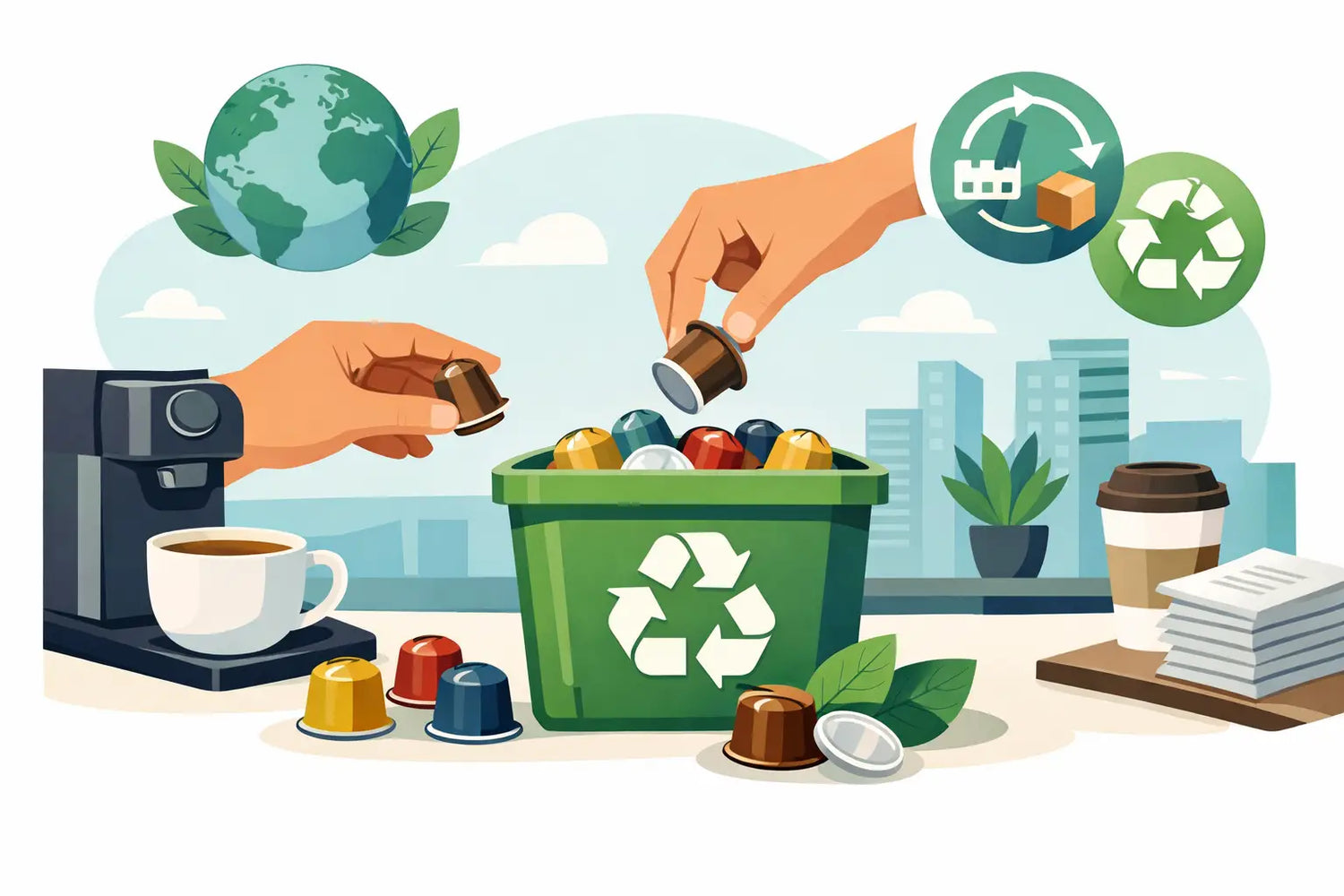
A busy office can go through hundreds of coffee capsules in a week. They are convenient at the point of use, but that convenience often creates a less visible problem for facilities teams: a growing stream of mixed-material waste that someone still has to sort, store, and remove. So, are coffee capsules recyclable? Sometimes - but the practical answer for most workplaces is far more complicated than dropping a pod into the recycling bin.
Are coffee capsules recyclable in the real world?
Coffee capsules can be recyclable when they are made from a material accepted by a local recycling program and prepared correctly. Aluminum capsules are widely recyclable as a material. Certain plastic pods may also be accepted in some communities. But that does not mean every used capsule placed in a recycling bin will become a new product.
The gap between recyclable and actually recycled is where workplace programs tend to break down. Used pods contain coffee grounds, moisture, foil lids, plastic filters, and sometimes mixed materials that require special handling. Many municipal recycling facilities cannot separate small capsules effectively. Some pods are simply too small to make it through sorting equipment, while others contaminate recycling loads if they arrive full of grounds.
A capsule brand may offer a take-back program, which can be a responsible option when participation is consistent. Yet it adds another process to the beverage program: collecting used pods, assigning someone to manage bags or boxes, storing them, and arranging shipment or pickup. For a workplace already balancing supplies, maintenance, and employee needs, that extra step can be easy to miss.
Why recycling capsules at work is harder than it sounds
At home, one person may be willing to rinse a pod, separate components, and save it for a specialty collection. In an office, hospital, dealership, or coworking space, coffee service needs to work across dozens or hundreds of daily users. The system has to account for behavior, not just good intentions.
Material is only one part of the equation
Aluminum has real recycling value, but used aluminum capsules still need to reach the right stream. If a local program does not accept them, a standard recycling bin is not a solution. Plastic capsules present even more variation because resin types and regional acceptance rules differ.
Paper-based or compostable pods may sound simpler, but they also have limits. Many require industrial composting conditions, and they may not break down in a landfill or a standard office compost bin. Before selecting any capsule format based on sustainability claims, decision-makers should verify exactly what their waste provider accepts and what happens after collection.
Coffee grounds create a contamination issue
Coffee grounds are organic material, not traditional recyclables. A small amount may not seem significant, but high-volume pod use creates a meaningful volume of wet waste inside bins. Recycling programs often require pods to be empty and clean enough for processing, which is not a realistic expectation when employees are moving between meetings, serving guests, or grabbing coffee before a shift.
Collection programs require ownership
Specialty recycling only works when one person or team owns the process. That includes placing collection containers in the right locations, preventing trash from entering them, ordering shipping materials, monitoring capacity, and coordinating collection. Without clear ownership, a recycling program can turn into another overflowing back-of-house bin.
The workplace cost of single-serve capsule waste
The environmental impact matters, but it is not the only consideration. Capsules can also create operational friction that shows up in supply rooms, loading areas, and invoices.
First, there is inventory complexity. Offices must forecast capsule flavors, keep enough stock for peak days, replace empty boxes, and manage employee preferences. A missed order can leave a breakroom with a coffee machine but no usable coffee.
Then there is waste volume. Even a small capsule takes up space once multiplied by a large team and daily consumption. Mixed waste streams are harder to manage, and a recycling initiative that depends on perfect sorting can create confusion rather than progress.
Finally, capsule systems can limit the coffee experience. Employees and guests often want an espresso, an Americano, a cappuccino, or a stronger cup without searching through a crowded drawer of pod varieties. A premium workplace amenity should feel polished at every stage, from drink choice to cleanup.
A lower-waste alternative: fresh bean-to-cup coffee
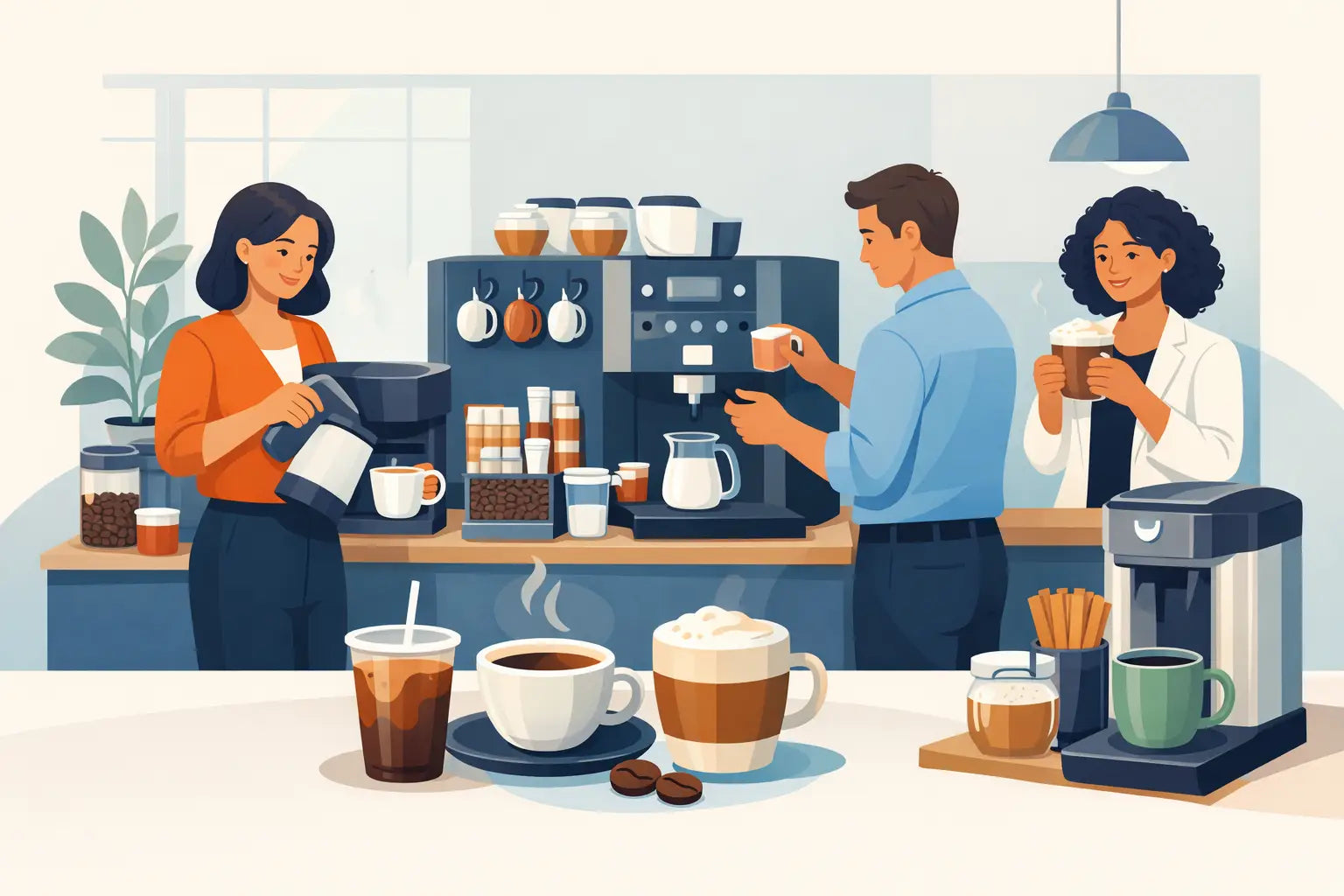
For high-use workplaces, a bean-to-cup system removes the capsule from the equation entirely. Whole beans are stored in the machine, freshly ground for each drink, and brewed on demand. The result is a coffee experience built around fresh preparation rather than disposable packaging.
This does not mean bean-to-cup coffee produces zero waste. Coffee grounds remain, and machines need regular cleaning. The difference is that spent grounds are collected in a single internal container instead of being wrapped in hundreds of individual capsules. Depending on the property and local services, grounds may be composted or handled as ordinary organic waste. Either way, the waste stream is simpler to understand and manage.
For workplace leaders, the larger advantage is operational. A professional bean-to-cup machine can provide customized coffee drinks in under 60 seconds while reducing the need to stock multiple pod types. With a managed service program, beans, consumables, preventive care, and maintenance can be coordinated as one experience rather than spread across vendors and internal tasks.
The Coffee Corp designs capsule-free coffee programs around a location's space, daily beverage volume, and hospitality goals. That approach matters because a 20-person office, a residential lobby, and a high-traffic dealership do not need the same setup. The right equipment should make great coffee easy without adding work for the people responsible for the space.
How to evaluate a more sustainable coffee program
The best choice depends on how much coffee your location serves, what waste infrastructure is available, and how much hands-on management your team can realistically support. Start by looking beyond a package label or a recycling symbol.
Ask whether local recycling accepts the exact capsule material and whether used capsules must be emptied, rinsed, or mailed separately. Consider who will own those tasks on a busy day. If there is no clear answer, the recycling plan may be more aspirational than dependable.
Next, calculate the number of single-serve units your location uses each month. High-volume environments tend to see the clearest benefit from moving to whole-bean service, since each cup avoids another pod, lid, or wrapper. A modern bean-to-cup machine can also give employees more drink variety without creating a larger inventory burden.
It is also worth evaluating support. A machine that makes excellent coffee but requires staff to troubleshoot errors, schedule repairs, and chase supplies can drain time from higher-value work. Managed maintenance and replenishment help turn coffee from a recurring facilities problem into a reliable workplace amenity.
Common questions about recyclable coffee capsules
Can aluminum coffee capsules go in the regular recycling bin?
Only if your local recycling provider explicitly accepts them. Aluminum itself is recyclable, but small capsules may not be captured by sorting equipment, and most must be empty of grounds before recycling. A brand-specific collection program may be required.
Are compostable coffee pods always better?
Not necessarily. Compostable pods need the right end-of-life conditions, often through an industrial composting facility. If your property does not have access to that service, the pod may still go to landfill.
Is bean-to-cup coffee better for a large office?
For many high-consumption workplaces, yes. Freshly ground whole-bean coffee can reduce disposable capsule waste, simplify inventory, and offer a more premium drink experience. The right fit still depends on traffic, available space, preferred beverages, and service expectations.
A better coffee program should not ask employees to become waste-sorting experts. Choose a solution that delivers fresh, dependable drinks while making the responsible option the easiest one to use every day.


Leave a comment
This site is protected by hCaptcha and the hCaptcha Privacy Policy and Terms of Service apply.