
The right coffee setup should not create another facilities task. It should give employees and guests a great drink in under a minute, fit the available space, and keep running without someone chasing down beans, milk, filters, repairs, or invoices. This commercial coffee equipment guide is built for workplace leaders who want premium coffee without adding operational friction.
For most offices, residential buildings, coworking locations, hospitals, and dealerships, the best equipment decision is not about buying the most elaborate machine. It is about matching drink demand, user expectations, water access, counter space, and service coverage to a program your team can actually manage.
Start With the Experience You Want to Deliver
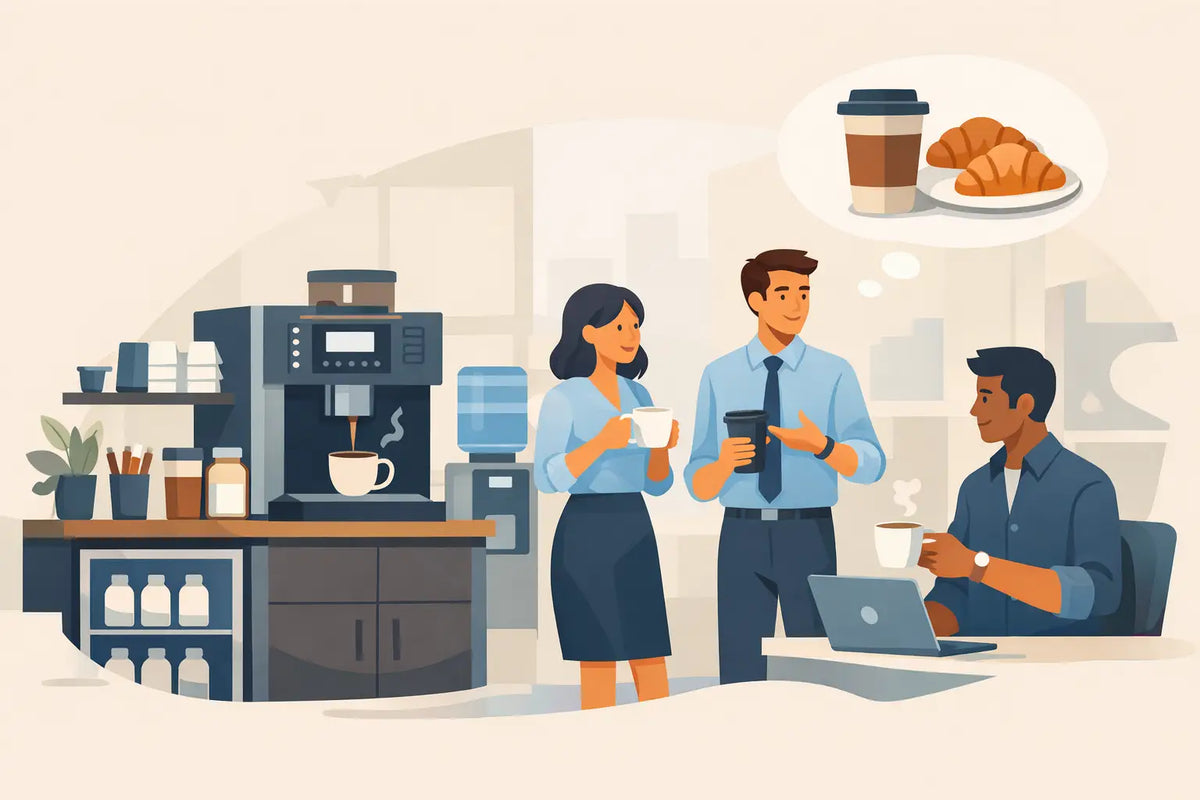
Coffee equipment shapes more than the break room. A slow, inconsistent brewer tells employees that coffee is an afterthought. A fast bean-to-cup system with espresso, cappuccino, latte, and hot-water options creates a useful daily destination - one that supports quick resets, informal conversations, and a more polished visitor experience.
Begin with the people using it. An executive office may need a compact system that produces consistently good specialty drinks with minimal noise. A high-traffic coworking space needs speed, intuitive selection, and capacity for a steady stream of users. A hospital waiting area or automotive dealership needs an inviting self-service option that is easy for guests to understand and easy for staff to oversee.
The goal is not to offer every café drink imaginable. It is to provide the drinks people genuinely choose, at a quality that makes them skip the drive-through stop on the way to work.
Choose Equipment Based on Volume, Not Guesswork
Daily cup volume is the first practical filter. Underestimating demand leads to empty hoppers, full grounds bins, and a machine that cannot keep up during the morning rush. Overestimating demand can mean paying for capacity and features your location will not use.
A smaller workplace may need one compact professional bean-to-cup machine. A larger office or shared building may need a higher-capacity unit, multiple machines on separate floors, or a dedicated guest-facing station. Think about peak periods, not just the daily average. If 70 people arrive between 8:00 and 9:30 a.m., the equipment must handle that concentrated demand without long lines.
Also consider the audience mix. Employees who drink regular coffee may be well served by a bean-to-cup machine that offers coffee, espresso-based drinks, and hot water. A client-facing reception area may benefit from a machine with an especially simple touchscreen menu and a more refined beverage presentation. In locations with varying schedules, such as hospitals and residential buildings, availability and reliability matter around the clock.
A Commercial Coffee Equipment Guide to Machine Types
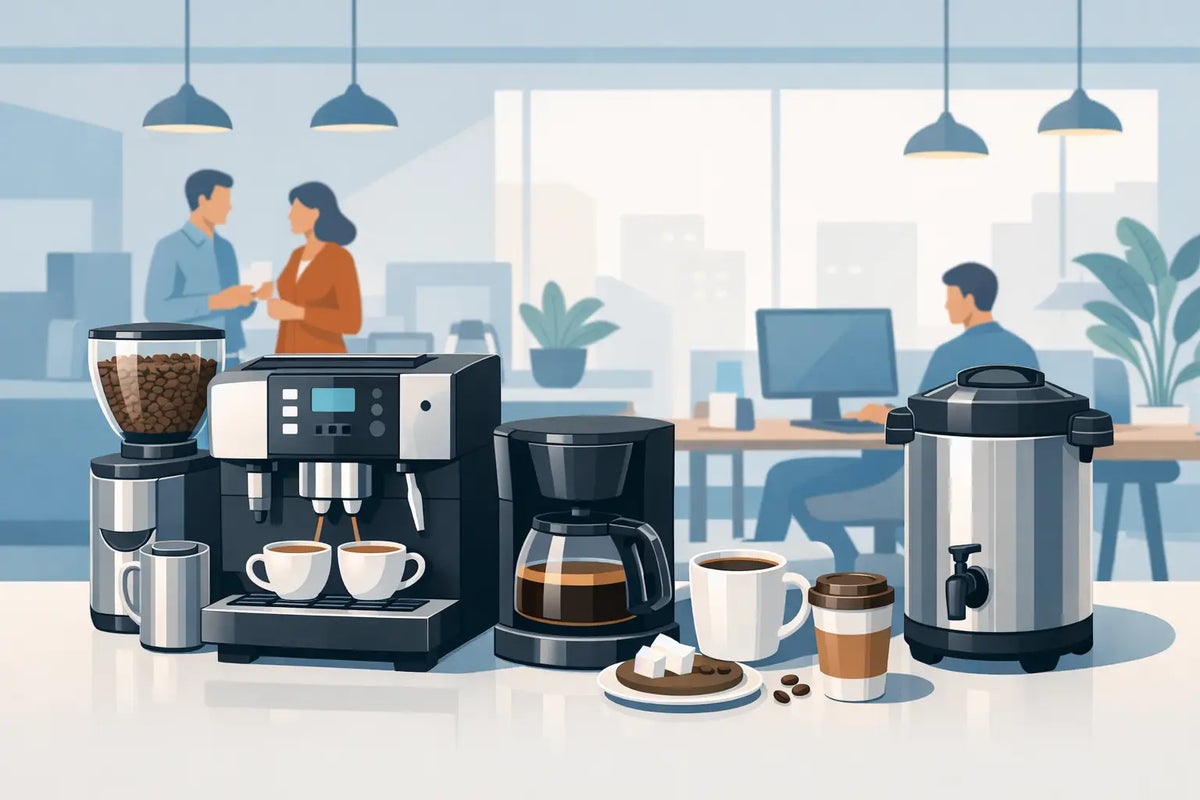
Traditional drip brewers remain a practical choice when a location mainly serves black coffee in carafes or large batches. They are familiar and can be cost-effective, but they offer limited personalization and require staff attention to brewing, holding time, and cleanup.
Single-serve pod machines offer convenience, but the ongoing capsule waste, restricted drink quality, and supply management can work against workplace sustainability and service goals. A pod station can also look less polished when drawers, boxes, and used capsules accumulate around it.
Fully automatic bean-to-cup machines are often the strongest fit for modern workplaces. They grind whole beans for each drink, prepare a customized beverage quickly, and eliminate the need for barista training. When paired with quality beans and professional maintenance, they create a café-style experience with far less hands-on work.
Traditional espresso equipment can produce excellent results, but it requires trained operators, routine calibration, and more cleaning discipline. It is a better fit for staffed foodservice environments than for a self-service office coffee area.
Look Beyond the Machine Itself
The equipment is only one part of the program. A reliable workplace coffee experience depends on what happens before, during, and after every cup.
Whole-bean quality matters because it is the foundation of the drink. Freshly grinding premium beans on demand gives coffee more aroma and flavor than pre-ground options that sit exposed to air. Milk handling matters too. Depending on the location, a machine may use fresh milk, a refrigerated milk system, or shelf-stable ingredients. Each option involves trade-offs between drink quality, cleaning requirements, space, and expected volume.
Water is equally important. A machine should be connected and filtered appropriately to protect flavor and help reduce scale buildup. Before choosing a unit, confirm plumbing access, electrical requirements, drainage needs, counter depth, ventilation, and clearance for refilling or service. A beautiful machine that blocks a hallway or cannot be properly connected becomes a daily frustration.
Ask who will refill ingredients, clean the machine, monitor alerts, and call for service. If the answer is an already-busy office manager or front-desk employee, a fully managed plan is usually more valuable than equipment ownership alone.
Prioritize Service Before Downtime Happens
Coffee equipment is used hard. Grinders wear, milk systems need cleaning, water filters need replacement, and high-volume locations occasionally need rapid support. The real test of a supplier is not the installation day. It is how the program performs six months later when a machine needs attention during a busy week.
Look for a provider that includes preventive maintenance, machine care, consumables, and responsive repairs in a clear service model. This approach protects consistency and gives your team one accountable partner instead of a separate equipment dealer, coffee distributor, technician, and water vendor.
The Coffee Corp designs managed beverage programs around a location’s volume, space, and hospitality goals. With a pay-per-cup approach, clients can provide premium Colombian whole-bean coffee and professional equipment without rental fees or the burden of stocking and maintaining the system themselves.
Compare Total Cost, Not the Purchase Price
A low upfront equipment price can be appealing, especially during a budget review. But purchase cost is only one line item. Over the life of a machine, consider coffee, milk products, filters, cleaning supplies, technician visits, replacement parts, labor for replenishment, downtime, and waste disposal.
For some organizations, owning equipment makes sense when they have experienced foodservice staff, predictable demand, and the capacity to manage supplies and maintenance internally. For many workplace teams, it does not. A managed pay-per-cup model makes costs easier to forecast while shifting routine operational work to the provider.
There is also a cost to poor adoption. If the coffee tastes weak, the machine is confusing, or it is frequently out of service, employees will buy coffee elsewhere. The workplace still pays for the amenity, but it misses the culture, convenience, and hospitality benefits it was meant to create.
Build a Beverage Station, Not Just a Coffee Corner
The strongest workplace programs consider hydration alongside coffee. Filtered water, ice, sparkling water, and flavored-water options give people more reasons to use the station throughout the day. They can also reduce the need to restock bottled water, cans, and other single-use beverages.
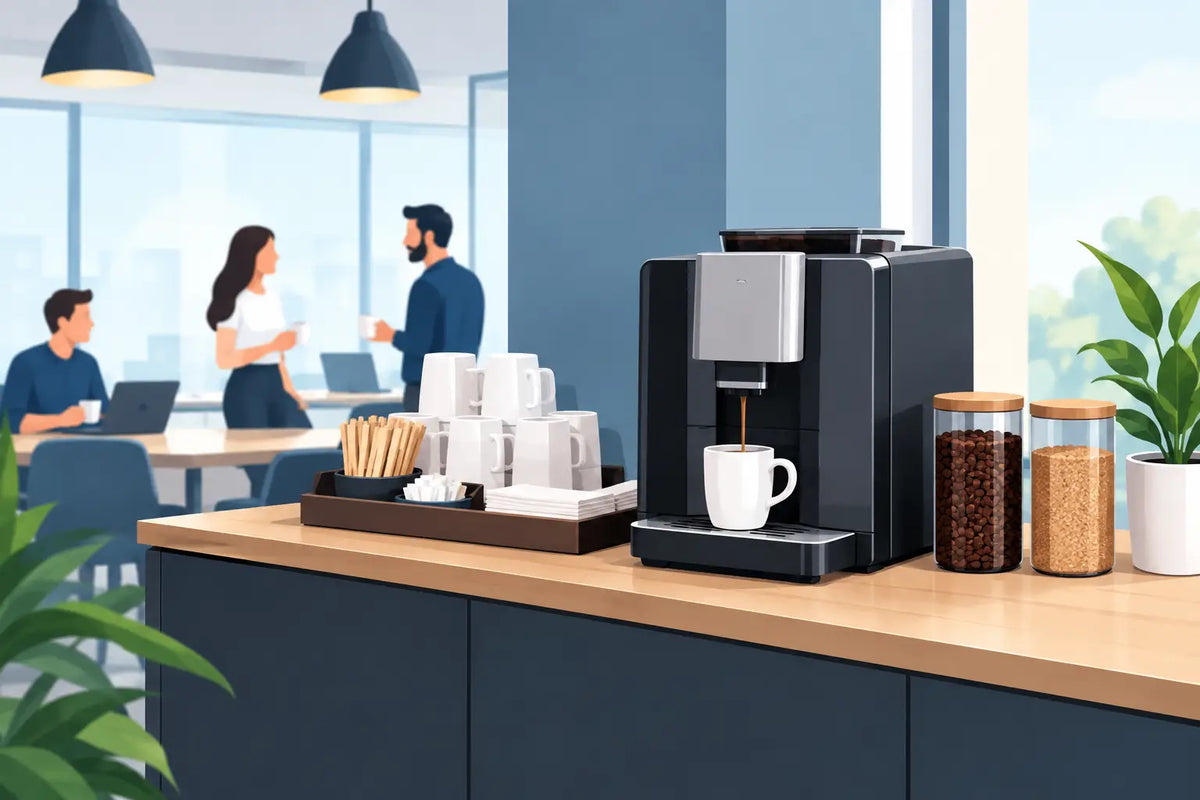
Placement is strategic. Put the station where people can access it without disrupting focused work, but not so far away that it becomes irrelevant. In a large office, a single central setup may encourage connection. In a multi-floor building, smaller stations may better serve the flow of the day. Keep the area clean, well-lit, and easy to navigate, with room for cups, lids, stirrers, and waste management where needed.
Questions to Settle Before You Choose
Before approving equipment, get clear answers to a few operational questions:
- How many drinks will the location serve on a typical day and during peak hours?
- Which drinks do employees, residents, patients, or guests expect most often?
- Is there water access, proper electrical capacity, and enough space for the selected system?
- Who owns replenishment, cleaning, preventive maintenance, and repairs?
- Does the program reduce capsule waste and unnecessary product inventory?
A great workplace coffee program earns its place through daily use. Choose equipment that makes a premium cup easy to enjoy, easy to support, and easy for your team to stop thinking about - except when someone says, “This is really good coffee.”

Leave a comment
This site is protected by hCaptcha and the hCaptcha Privacy Policy and Terms of Service apply.